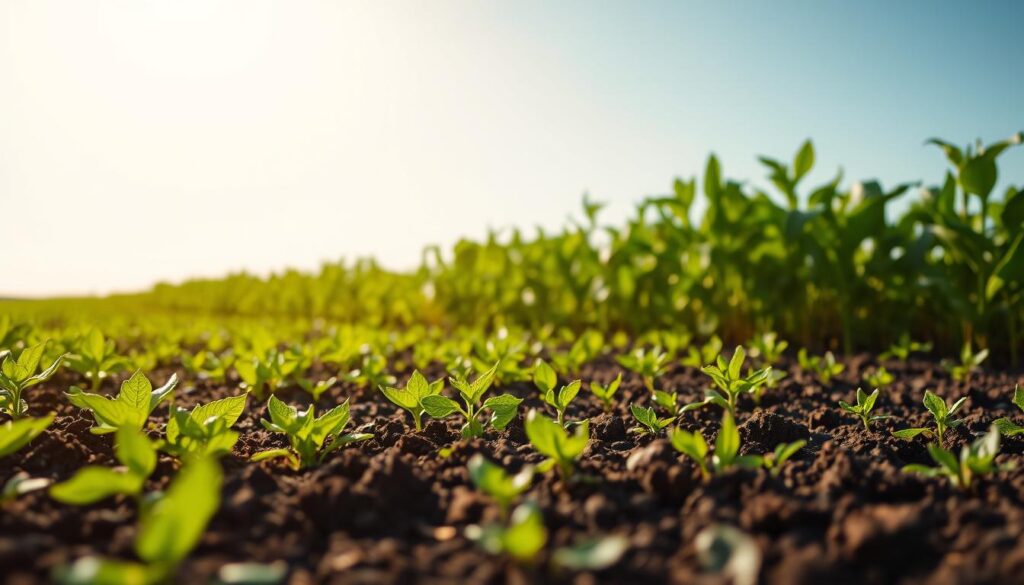
Agriculture is key to human life, and soil fertility is its core. The world’s population is set to hit 9.7 billion by 2050. This puts a huge strain on farms to grow more food. Did you know that almost 40% of the world’s farmland is already losing its fertility and power to grow crops?
Soil fertility means how well soil helps plants grow by giving them the nutrients they need. Keeping soil fertility up is vital for growing crops and keeping food on our plates. Good nutrient management is crucial for keeping soil healthy and crops thriving.
Key Takeaways
- Soil fertility is critical for agricultural productivity and food security.
- Degraded soil affects crop yields and nutritional quality.
- Nutrient management is essential for maintaining soil fertility.
- Sustainable practices can improve soil health and crop production.
- Global food security depends on maintaining fertile soils.
Understanding Soil Fertility and Its Significance
Soil fertility is key for better crop yields and green farming. It means the soil can help plants grow by giving them the nutrients they need.
Definition and Components of Soil Fertility
Soil fertility depends on nutrient content, pH levels, and organic matter. These parts help plants grow well. Nutrients include important ones like nitrogen, phosphorus, and potassium, plus others.
The Foundation of Agricultural Productivity
Soil fertility is the base of good farming. Without it, crops can’t grow well, leading to less food. Keeping soil fertile is vital for farming that lasts.
By managing soil fertility, farmers can grow better crops, increase yields, and help feed the world.
The Role of Soil Fertility in Crop Production and Food Security
Keeping soil fertile is key for growing lots of crops. This is important for food security worldwide. Soil health directly affects how much food we can grow, making it vital for farming.
Impact on Global Food Supply
Soil fertility greatly affects the world’s food supply. Soils that are rich in nutrients help crops grow better. This means more food for everyone, helping keep prices stable.
Soil health and crop growth are closely linked. Healthy soils help plants grow strong and healthy. This leads to more food and better prices for farmers.
Economic Implications for Farmers
Soil health has big economic benefits for farmers. Those who take care of their soil can grow more and better crops. This means more money for them.
| Soil Fertility Level | Crop Yield (tons/hectare) | Farmer Income ($/hectare) |
|---|---|---|
| Low | 1.5 | 500 |
| Medium | 3.0 | 1,000 |
| High | 4.5 | 1,500 |
Table: Shows how soil health, crop yields, and farmer income are connected. It shows the economic gains of having fertile soil.
Essential Soil Nutrients for Optimal Plant Growth
Knowing what nutrients plants need is key to keeping soil healthy. These nutrients are vital for growing crops well. They affect how much and how good the crops are.
Primary Macronutrients: Nitrogen, Phosphorus, and Potassium
Nitrogen (N), Phosphorus (P), and Potassium (K) are the main nutrients for plants. Nitrogen helps leaves grow and makes chlorophyll. Phosphorus is important for roots, flowers, and fruits. Potassium keeps plants healthy, fights off diseases, and helps with water balance.
Secondary Nutrients and Micronutrients
Plants also need secondary nutrients like calcium, magnesium, and sulfur. And micronutrients like iron, zinc, and boron. These help with many plant functions, like making enzymes and photosynthesis.
Nutrient Cycles in Agricultural Systems
Nutrient cycles are how nutrients move around in nature and in living things. It’s important to understand and manage these cycles to keep soil fertile. Good nutrient management means balancing what goes in and out of farms.
Key Factors Affecting Soil Fertility
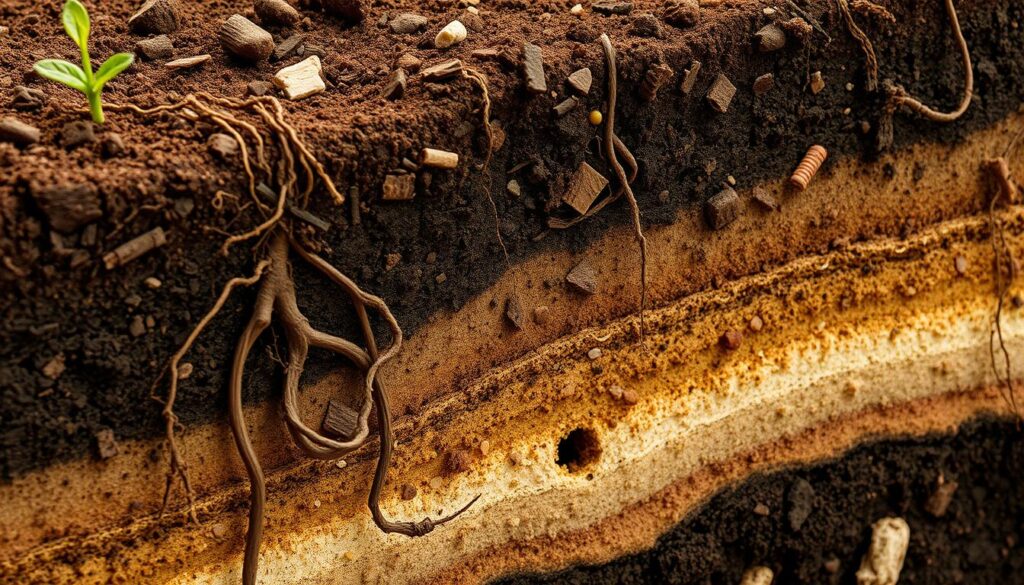
Soil fertility is shaped by many factors. These include physical, chemical, and biological properties. Knowing these is key to keeping soil healthy for crops.
Soil Texture and Structure
Soil texture and structure are very important. They affect how well the soil holds water, gets air, and keeps nutrients. A balanced soil texture helps roots grow well and supports microbes.
Soil pH and Salinity Levels
Soil pH and salinity levels matter a lot. Most plants do best in slightly acidic to neutral soil. High salinity can harm plant growth. It’s important to manage these levels with the right amendments and water.
Organic Matter Content and Soil Biology
Organic matter and soil biology are crucial. Organic matter stores nutrients, improves soil structure, and helps microbes. Keeping enough organic matter, like through composting, boosts soil fertility and health.
Impact of Soil Fertility on Crop Quality and Yield
Keeping soil fertile is key for high crop yields and nutritious food. Soil health affects crop growth, impacting both quality and quantity.
Nutrient Availability and Plant Development
Nutrients like Nitrogen, Phosphorus, and Potassium are vital for plants. Nitrogen helps leaves grow, Phosphorus aids in root and flower development, and Potassium boosts overall health.
Enough nutrients mean crops grow strong and fight off diseases better. Lack of nutrients can cause stunted growth, lower yields, and poor crop quality.
| Nutrient | Function | Impact on Crops |
|---|---|---|
| Nitrogen | Promotes leaf growth | Essential for vegetative growth |
| Phosphorus | Root development and flower/fruit formation | Critical for reproductive growth |
| Potassium | Overall plant health | Improves disease resistance |
Effects on Crop Nutritional Value
Soil fertility affects crop nutrition. Crops from fertile soils are more nutritious, with better protein and micronutrients.
Practices like crop rotation and organic amendments boost crop nutrition. This benefits both consumers and sustainable farming.
Soil Fertility Management Practices
Keeping soil fertile is key to farming that lasts. It means using many ways to make soil better. This helps crops grow well and taste great.
Organic Amendments: Manures and Composts
Manures and composts are essential for soil health. They add nutrients, make soil better, and help good microbes grow. For example, composting turns waste into something useful.
Chemical Fertilizers: Types and Applications
Chemical fertilizers give crops the nutrients they need to grow. But, we must use them carefully to protect the environment. Precision agriculture helps use fertilizers better, saving resources and the planet.
Crop Rotation and Cover Cropping Strategies
Crop rotation and cover cropping keep soil healthy. They help with nutrient cycling, stop erosion, and boost biodiversity. Legume cover crops, for instance, can make nitrogen, cutting down on synthetic fertilizers.
Good soil management is vital for farming that’s here to stay. By using organic stuff, chemical fertilizers wisely, and rotating crops, farmers can make their soil better and more productive.
Modern Techniques for Soil Fertility Assessment
Soil fertility assessment is key for good farming. With more food needed, knowing and caring for soil health is vital.
Soil Testing and Analysis Methods
Soil testing is a basic way to check soil health. It involves taking soil samples and testing them in labs. This shows nutrient levels, pH, and more.
Now, satellite imaging and geospatial analysis help too. They let farmers see soil differences and act on them.
“Soil testing is more than just checking nutrients,” says Dr. Jane Smith, a soil expert. “It’s about the soil’s health. With detailed testing, farmers can improve soil and crops.”
Precision Agriculture Technologies
New tech in precision agriculture changes how we manage soil. GPS-guided farming and variable rate technology help apply fertilizers right. This saves resources and protects the environment.
- GPS-guided farming equipment ensures accurate application of fertilizers.
- Variable rate technology adjusts input application based on soil conditions.
- Precision irrigation systems optimize water use.
Biofertilizers and Microbial Inoculants
Biofertilizers and microbial inoculants are big in soil care. They have living microbes that help plants grow. This makes soil healthier and reduces chemical use.
John Doe, an ag expert, says, “Biofertilizers boost soil and help nature. They’re good for farming and the planet.”
Using these new methods, farmers can make soil better. This leads to better crops and greener farming.
Challenges and Future Prospects in Soil Fertility Management
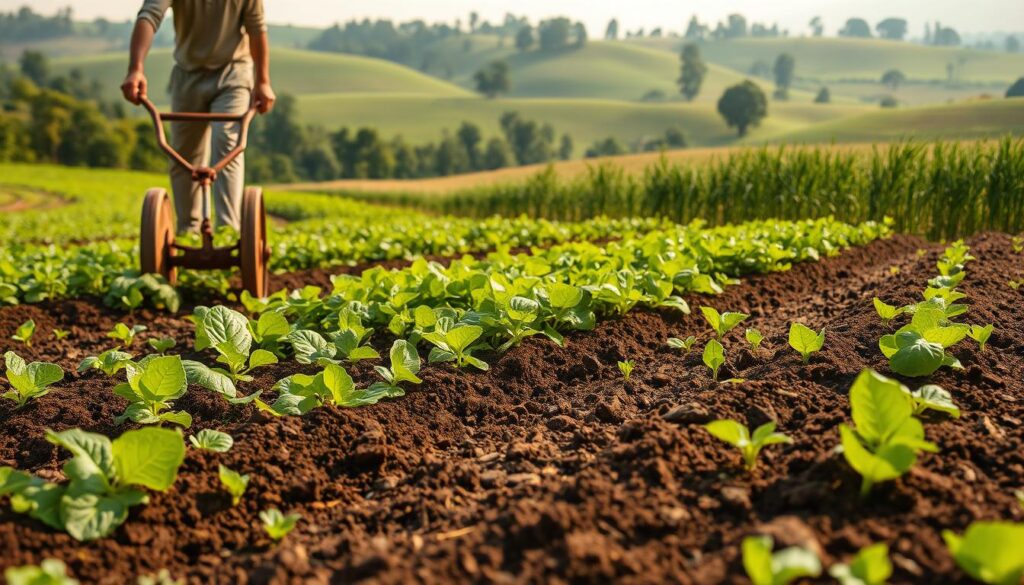
Soil fertility faces threats from erosion and nutrient imbalance. These issues harm farm productivity and threaten food security and the environment.
Current Challenges: Erosion, Nutrient Imbalance, and Degradation
Soil fertility is declining due to erosion, nutrient imbalance, and less organic matter. Erosion takes away the nutrient-rich topsoil. Nutrient imbalance hurts plant growth and raises fertilizer costs.
- Erosion: Loss of topsoil due to water or wind.
- Nutrient Imbalance: Inadequate or excessive nutrient levels.
- Degradation: Reduction in soil quality due to various factors.
Government and Research Initiatives
Governments and research groups are tackling these problems. They set up soil testing labs to check soil health. They also offer training and subsidies for sustainable farming.
“Investing in soil health is crucial for long-term agricultural productivity and environmental sustainability.”
Emerging Technologies: Climate-Smart Farming and AI-Based Soil Mapping
New tech like climate-smart farming and AI-based soil mapping will change soil management. Climate-smart farming helps farmers deal with climate change. AI-based soil mapping gives detailed soil info for better management.
Maintaining Soil Fertility for Future Generations
Soil fertility is key for growing crops and ensuring food security. Understanding its importance is crucial for farming success. Good soil health means better crops and higher yields, which is vital for sustainable farming.
To keep farming productive over time, we must use sustainable soil management. This means adding organic matter, rotating crops, and using cover crops. We also need to use new technologies like precision farming and biofertilizers.
By focusing on soil health and using sustainable methods, we can grow more food. This improves food security and helps protect the environment. Good soil management is essential for feeding the world’s growing population while keeping our soil healthy for the future.