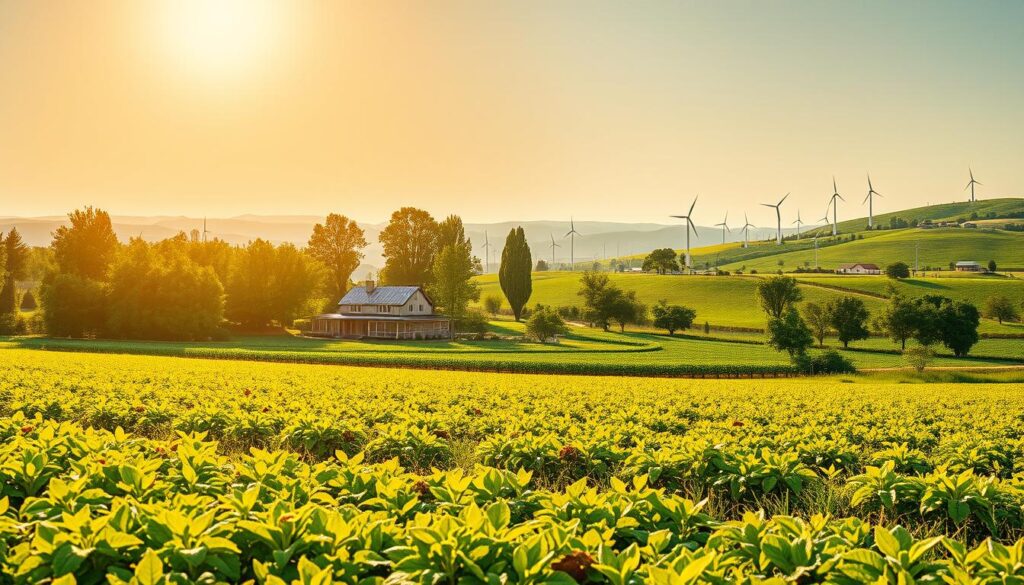
Agriculture is key to Pakistan’s economy, with irrigation playing a crucial role. The world’s population is growing fast. This means food demand will rise by 50% by 2025. So, sustainable agriculture practices are more vital than ever.
Modern irrigation has changed how we grow crops. It makes crops grow better and uses water more wisely. Farmers can cut down on water waste and grow more food. This helps make sustainable agriculture a reality.
Key Takeaways
- Irrigation is crucial for sustainable agriculture in Pakistan.
- Advanced irrigation systems improve water-use efficiency.
- Sustainable agriculture practices enhance crop yields.
- Irrigation contributes to food security and economic benefits.
- Modern agriculture relies heavily on irrigation.
The Current State of Agriculture in Pakistan
Agriculture is key to Pakistan’s economy, making up a big part of its GDP. It not only ensures food for everyone but also gives jobs to many people.
Agricultural Contribution to Pakistan’s Economy
The agricultural sector adds about 19% to Pakistan’s GDP. It also supports around 42% of the population. This sector is a big source of foreign money through crop exports.
Major Crops and Farming Regions
Pakistan grows many crops like cotton, wheat, rice, sugarcane, and maize. The fertile Indus River basin is crucial for farming. Important farming areas are Punjab, Sindh, and parts of Khyber Pakhtunkhwa.
Water Resource Challenges
Water scarcity is a big problem for Pakistan’s farming. The country struggles with using water well, climate change, and growing population. Efficient irrigation systems are needed to solve these issues.
Some major challenges are:
- More water needed because of growing population
- Changes in weather affecting rain
- Not using water well in farming
Fixing these problems is vital for Pakistan’s farming to keep going.
Global Food Security Challenges in 2025
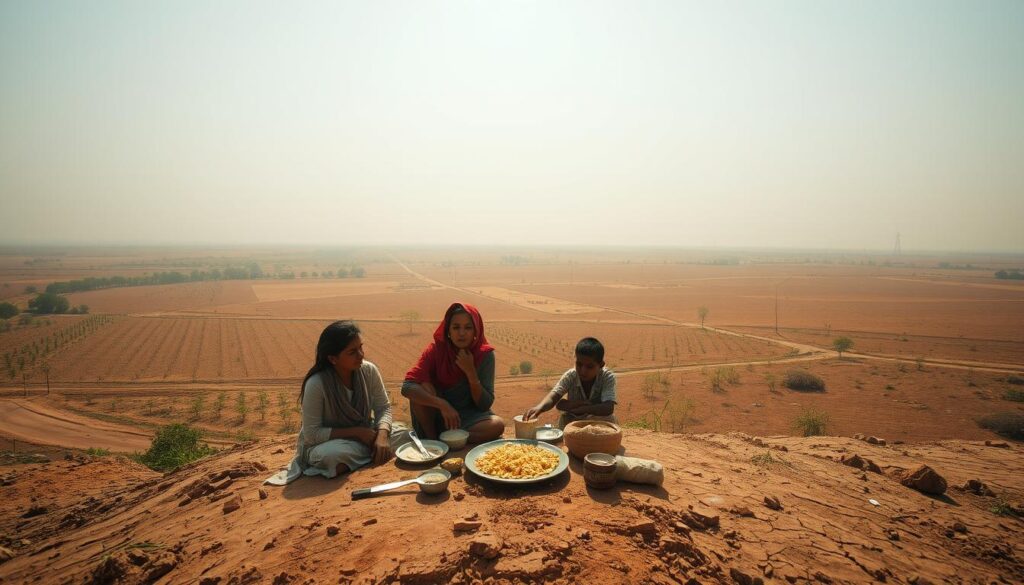
By 2025, the world will face two big challenges. The global population is expected to hit about 8 billion. This will put a lot of pressure on farms to grow more food.
Rising Population and Food Demand
The growing global population means more food is needed. To meet this demand, farms must produce more efficiently. They need to use resources better to grow food sustainably.
Impact of Climate Variability on Food Production
Climate change is changing weather patterns. This leads to more droughts and floods, harming crops. Farmers and policymakers must find ways to adapt to these changes.
Pakistan’s Role in Regional Food Security
Pakistan is key to food security in the region. Its farms are productive, and its location is strategic. Improving irrigation and using sustainable farming can help Pakistan meet its food needs and support the region.
| Region | Food Production (2020) | Projected Food Production (2025) |
|---|---|---|
| Pakistan | 40 million tons | 45 million tons |
| South Asia | 300 million tons | 350 million tons |
| Global | 4 billion tons | 4.5 billion tons |
To tackle food security in 2025, we need a broad approach. We must boost farm productivity, manage water better, and use farming practices that can handle climate change. Pakistan’s efforts are crucial for food security in the region.
The Importance of Irrigation in Modern Agriculture in 2025
As we approach 2025, irrigation’s role in farming is growing more crucial. It has been key in farming, letting farmers grow crops in dry areas.
Evolution of Irrigation Practices in Pakistan
Pakistan has made big strides in irrigation. It moved from old flood methods to new drip and sprinkler systems. These changes help use water better.
The Indus Basin Irrigation System (IBIS) is huge, helping Pakistan’s farms grow crops like wheat, cotton, and rice.
Indus Basin Irrigation System
The IBIS is a vast network of canals and waterways. It brings water from the Indus River to farms. It’s vital for millions of farmers’ lives.
Bridging the Gap Between Water Supply and Demand
Pakistan faces a big challenge: not enough water for everyone. As the population grows, so does the need for food. This puts more pressure on water resources.
| Water Source | Supply (cubic meters) | Demand (cubic meters) |
|---|---|---|
| Indus River | 1000 | 1200 |
| Tributaries | 500 | 600 |
| Groundwater | 300 | 400 |
To solve this, new ideas are needed. We must use water-saving tech and better water management.
Climate Change and Its Effects on Agricultural Water Resources
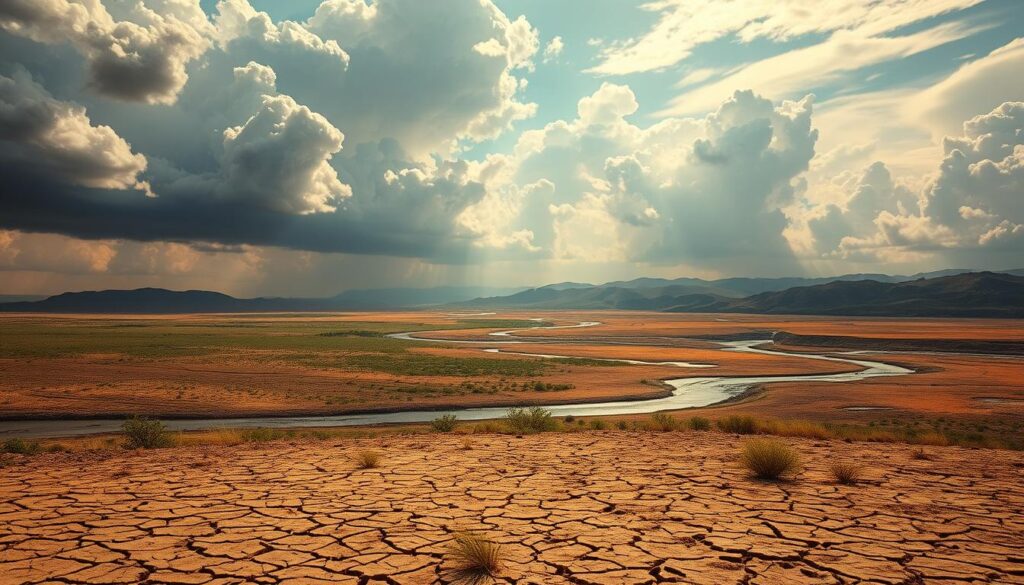
Climate change is changing the way we farm in Pakistan, especially with water. The changing weather is making water harder to get and less reliable for farming. Farming is very important for Pakistan’s economy.
Changing Rainfall Patterns in Pakistan
Climate change is changing when and how much rain falls. Pakistan’s weather is different in different places. Some areas get a lot of rain, while others get very little. This makes it hard to plan and manage water for farming.
Drought Frequency and Intensity
Droughts are happening more often and are getting worse. Droughts make it hard to find water for irrigation. Farmers need to use crops that can handle drought and better irrigation systems.
Glacier Melt and River Flow Variations
Glaciers melting because of warmer temperatures change river flow. The Indus River, key for Pakistan’s farming, gets its water from glaciers. Changes in glacier melting can make river flow unpredictable, affecting water for farming.
| Impact | Description | Consequence |
|---|---|---|
| Changing Rainfall Patterns | Unpredictable rainfall | Affects agricultural planning |
| Drought Frequency and Intensity | Increased droughts | Reduces water for irrigation |
| Glacier Melt and River Flow | Fluctuations in river flow | Impacts water supply for agriculture |
In conclusion, climate change is a big problem for water in farming in Pakistan. We need to find ways to adapt, like better irrigation and water management. This will help deal with the challenges of climate change.
Water-Use Efficiency: The Key to Sustainable Irrigation
The key to sustainable irrigation is water-use efficiency. Pakistan’s agricultural sector is working hard to meet this challenge. With agriculture being a big part of the country, saving water is now more important than ever.
Traditional vs. Modern Irrigation Methods
For centuries, Pakistan used traditional irrigation like flood irrigation. But it wastes a lot of water. Modern methods like drip and sprinkler irrigation save a lot more water. They send water straight to the roots, cutting down on evaporation and runoff.
Reducing Water Wastage in Agricultural Systems
It’s key to cut down water waste in farming. This can be done by using new irrigation tech and water-saving practices. For example, mulch and cover crops keep the soil moist, so you don’t need to water as often.
Water Conservation Policies in Pakistan
Pakistan has set up policies to save water and boost water-use efficiency. They’re working to update irrigation systems and encourage farmers to use water-saving tech. They’re also running campaigns to teach farmers about efficient irrigation.
By focusing on sustainable irrigation and better water-use efficiency, Pakistan can have a greener future in farming. This means using new irrigation tech and good water management policies.
Enhancing Crop Yield and Quality Through Irrigation
Irrigation is key for better crop yield and quality, especially in Pakistan. It gives farmers a steady water supply. This helps them grow crops well, even when it’s dry or the weather is unpredictable.
Irrigation’s Impact on Major Pakistani Crops
Crops like wheat, rice, and vegetables in Pakistan do well with irrigation. Proper irrigation management means these crops get the right water at the right time. This leads to higher yields and better quality crops. For example, wheat needs careful water control to grow well.
Yield Stability in Unpredictable Weather Conditions
Irrigation keeps yields steady, even when the weather is bad. It reduces risks from weather changes. This lets farmers count on a steady income from their crops. This stability is key for food security and the local economy.
In short, irrigation is essential for better crops in Pakistan. It helps farmers and policymakers improve how crops are grown. This leads to more food and a stronger economy.
Year-Round Farming Enabled by Irrigation Systems
Irrigation systems have changed farming in Pakistan, making it possible to grow crops all year. This big change lets farmers plant crops outside the usual seasons. It boosts the amount of food grown and helps ensure everyone has enough to eat.
Multiple Cropping Cycles: Rabi and Kharif Seasons
Irrigation systems have made it possible for farmers to grow crops in both the Rabi and Kharif seasons. This has greatly increased how much farmers can grow. Now, farmers can switch crops and use their land all year.
Off-Season Vegetable Production Opportunities
Irrigation lets farmers grow off-season vegetables. This way, they can make more money and keep markets supplied with fresh food all year.
Extending Growing Seasons in Different Regions of Pakistan
Irrigation systems have also helped farmers grow crops longer in many parts of Pakistan. With a steady water supply, farmers can farm in places that were too dry before. This opens up new areas for farming.
Soil Health Management and Fertilizer Optimization
Keeping soil healthy is key for better crop yields and food safety. Using balanced irrigation helps a lot. It boosts nutrient absorption, cuts down on fertilizer waste, and fights soil salinization.
Nutrient Uptake and Balanced Irrigation
Good irrigation management means crops get the right water. This leads to efficient nutrient uptake. It keeps the soil fertile and structured, which is crucial for crops to grow well.
Preventing Fertilizer Leaching and Wastage
Too much water can cause fertilizer leaching. This means nutrients are lost, making them less effective and possibly harming water. With precise irrigation, farmers can avoid this and use fertilizers better.
Combating Soil Salinization
Soil salinization is a big problem in irrigated lands. It makes the soil unable to support plants. Balanced irrigation practices and smart water use can fight this and keep the soil healthy.
By improving soil health and fertilizer use with balanced irrigation, Pakistan’s farming can grow more sustainably. This boosts food security and helps farmers’ lives.
Irrigation Technology Integration in Pakistani Agriculture
Irrigation technology is changing Pakistani agriculture for the better. It makes farming more resilient and productive. Advanced irrigation systems are now used, improving water use and boosting crop yields.
Smart Irrigation Systems and IoT Applications
Smart irrigation systems, using IoT, are getting popular in Pakistan. They let farmers check soil moisture and temperature live. This helps use water better and grow more crops.
Remote Sensing and Satellite-Based Irrigation Management
Remote sensing and satellite tech help watch over crops and manage water. They give farmers data to make smart choices. This leads to better water use and less waste.
Mobile Applications for Small-Scale Farmers
Mobile apps help small farmers manage their water better. They offer tips on when to water and how to save water. This makes new irrigation tech available to more people.
Government Initiatives for Technology Adoption
The Pakistani government is pushing for more irrigation tech use. They offer subsidies, training, and invest in new irrigation.
“The government’s support is crucial in driving the adoption of irrigation technology, ultimately enhancing the sustainability of Pakistan’s agricultural sector.”
| Technology | Benefits | Adoption Rate |
|---|---|---|
| Smart Irrigation Systems | Water conservation, increased crop yields | 20% |
| Remote Sensing | Improved crop monitoring, reduced water waste | 15% |
| Mobile Applications | Accessible irrigation management, guidance on water-saving techniques | 10% |
Economic Benefits of Sustainable Irrigation Practices
Sustainable irrigation is changing farming in Pakistan for the better. It brings big economic wins. Farmers get better crops and more money by using new irrigation systems.
Cost-Benefit Analysis of Modern Irrigation Systems
Modern irrigation systems cost a lot at first. But, they save money in the long run. They use water better and waste less, cutting down on costs.
Long-term Economic Sustainability for Farmers
These practices help farmers stay financially stable. They get steady yields and better crops. This makes it easier for farmers to plan their money and avoid big losses.
Export Potential of Irrigated Crops
Irrigated crops are of higher quality. They do well in both local and global markets. Pakistan’s exports can grow by focusing on these crops.
Rural Development Through Irrigation Infrastructure
Irrigation systems help farmers and the whole rural area. They bring water, which boosts local jobs and growth. This helps the economy in rural areas.
In short, sustainable irrigation in Pakistan has many benefits. It saves money, helps farmers long-term, boosts exports, and grows rural areas.
Conclusion: The Future of Irrigated Agriculture in Pakistan
Irrigated agriculture is key to Pakistan’s farming sector. It boosts the economy and ensures food for everyone. The Indus Basin Irrigation System is essential, supporting major crops and farming areas.
The outlook for irrigated farming in Pakistan looks good. New technologies and policies could make water use more efficient and crops more bountiful. Using smart irrigation and IoT can cut down water waste and boost farm output.
But, Pakistan’s farming faces big hurdles like climate change, water scarcity, and soil salinization. Overcoming these challenges is vital for a sustainable and productive farm sector. With technology, better water management, and smart policies, Pakistan can reach its full farming potential. This will help the economy grow and ensure food for all.