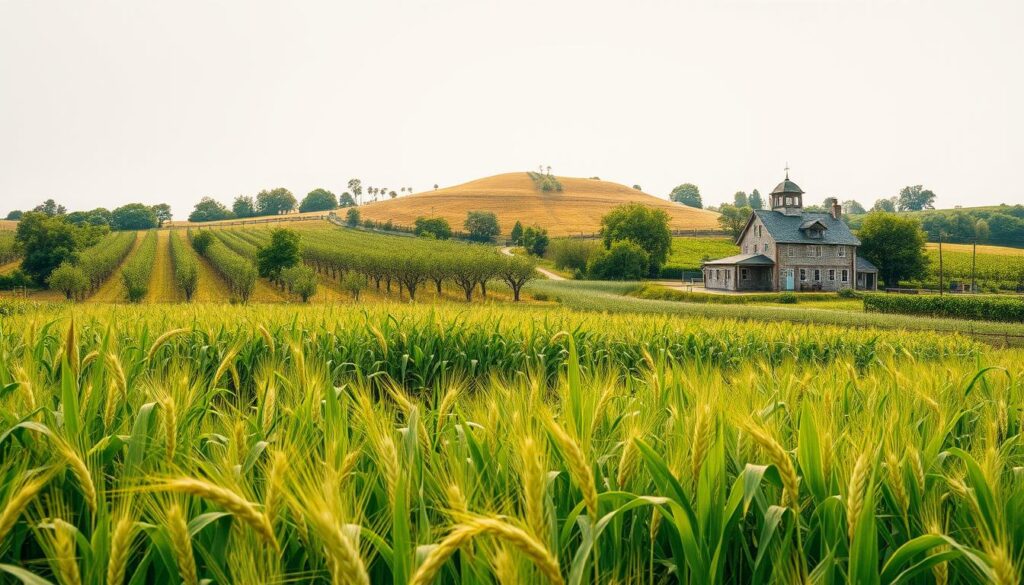
Have you ever wondered how farmers in India decide which crops to plant and when? The answer lies in understanding the different growing seasons and the major crops suited to each season.
India’s agricultural calendar is divided into three main seasons: Kharif, Rabi, and Zaid. Agricultural planning around these seasons is crucial for food security. Kharif crops are planted during the monsoon season, Rabi crops in the winter, and Zaid crops in the summer.
Understanding these seasons and the crops they support is vital for farmers, policymakers, and consumers alike. It helps in planning and decision-making, ensuring that the country’s agricultural output meets the demands of its population.
Key Takeaways
- India’s agricultural calendar includes three main seasons: Kharif, Rabi, and Zaid.
- Understanding growing seasons is crucial for agricultural planning.
- Kharif crops are planted during the monsoon season.
- Rabi crops are planted in the winter season.
- Zaid crops are planted in the summer season.
- Agricultural planning around these seasons ensures food security.
The Significance of Crop Growing Seasons
The significance of crop growing seasons cannot be overstated, as they play a vital role in food security and economic stability. Crop growing seasons directly influence agricultural productivity and, consequently, the availability of food resources.
Impact on Agricultural Planning and Food Security
Effective agricultural planning relies heavily on understanding crop growing seasons. By knowing the optimal planting and harvesting times, farmers can maximize their yields, contributing to food security. This knowledge helps in planning the cultivation of crops that are suitable for specific seasons, thereby enhancing overall agricultural productivity.
Economic Implications for Farmers and Markets
The economic implications of crop growing seasons are significant for both farmers and markets. Farmers who align their planting schedules with the optimal growing seasons can benefit from higher yields and better quality crops, leading to increased income. Moreover, markets that are well-stocked with seasonal produce can stabilize food prices and meet consumer demand effectively.
In conclusion, understanding and leveraging crop growing seasons is essential for enhancing agricultural productivity, ensuring food security, and stabilizing economic outcomes for farmers and markets alike.
Understanding Agricultural Seasons
India’s agricultural landscape is characterized by three distinct seasons: Kharif, Rabi, and Zaid. These seasons are crucial for determining the types of crops that can be grown and harvested throughout the year.
The Kharif Season
The Kharif season, also known as the monsoon cultivation season, is a significant period for agricultural activities in India. It typically begins with the onset of the monsoon.
Timing: Sowing April-July, Harvesting October-December
During the Kharif season, crops are sown between April and July, and harvested between October and December. This season is ideal for crops that require a lot of water, such as rice and cotton.
The Rabi Season
The Rabi season, or winter cultivation, follows the Kharif season and is characterized by cooler temperatures.
Timing: Sowing October-December, Harvesting March-May
Crops are sown between October and December, and harvested between March and May. Wheat, barley, and mustard are some of the major crops grown during this season.
The Zaid Season
The Zaid season, which falls between the Rabi and Kharif seasons, is a short period during which crops are grown.
Timing and Characteristics
The Zaid season typically occurs during the summer months, from March to July. Crops grown during this season are usually those that mature quickly, such as vegetables and pulses.
Here’s a summary of the three agricultural seasons:
| Season | Sowing Time | Harvesting Time | Major Crops |
|---|---|---|---|
| Kharif | April-July | October-December | Rice, Cotton |
| Rabi | October-December | March-May | Wheat, Barley, Mustard |
| Zaid | March-July | May-July | Vegetables, Pulses |
Factors Influencing Crop Seasons
Understanding the factors that influence crop seasons is crucial for effective agricultural planning. Crop seasons are determined by a combination of environmental and geographical factors.
Climate and Rainfall Patterns
Climate plays a significant role in determining the suitability of a region for various crops. Rainfall patterns are equally important, as they directly affect the water availability for crops. Regions with distinct wet and dry seasons have different crop calendars.
- Areas with high rainfall are suitable for water-intensive crops.
- Regions with low rainfall require drought-resistant crop varieties.
Temperature Requirements
Different crops have specific temperature requirements for optimal growth. Temperature influences the rate of photosynthesis, seed germination, and pest activity. Understanding these requirements helps farmers choose the right crops for the prevailing temperatures in their region.
Soil Conditions and Regional Variations
Soil conditions vary significantly across different regions, affecting the nutrient availability and water-holding capacity. Regional variations in soil type, from clay to sandy loam, dictate the suitability of certain crops. For instance, crops like rice thrive in waterlogged conditions, while others like wheat prefer well-drained soils.
Major Kharif Crops and Their Cultivation
During the Kharif season, several major crops are cultivated, contributing substantially to the agricultural output. These crops are not only vital for food security but also play a significant role in the economy.
Cotton: The Fiber Crop
Cotton is one of the most important Kharif crops, known for its fiber. It is widely cultivated in regions with suitable climatic conditions.
Sowing April-May, Harvesting October-November
The sowing of cotton typically occurs in April-May, with harvesting done around October-November. Proper soil preparation and timely irrigation are crucial for a good yield.
Maize: The Versatile Grain
Maize is another significant Kharif crop, valued for its versatility in both food and industrial applications.
Sowing February-July, Harvesting June-September
Maize is sown between February and July, with the harvesting period ranging from June to September. Efficient farming practices, including crop rotation, can enhance maize production.
Sugarcane: The Long-Duration Crop
Sugarcane is a long-duration crop that thrives during the Kharif season. It is a major source of sugar and other by-products.
Sowing February-March, Harvesting November-December
Sugarcane is typically sown in February-March and harvested around November-December. It requires a substantial amount of water and nutrients, making irrigation management critical.
| Crop | Sowing Period | Harvesting Period |
|---|---|---|
| Cotton | April-May | October-November |
| Maize | February-July | June-September |
| Sugarcane | February-March | November-December |
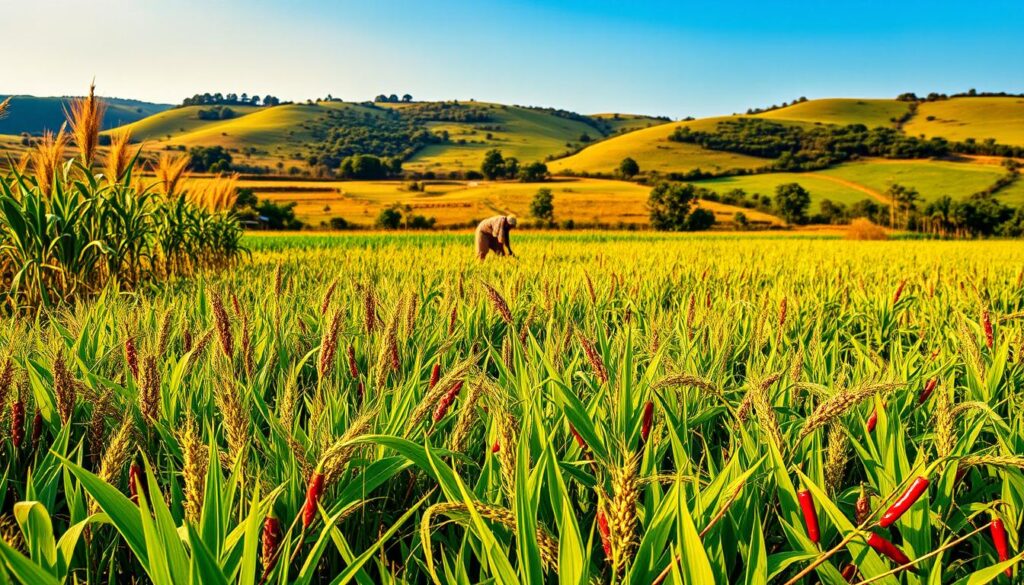
Millets and Sorghum: Drought-Resistant Kharif Options
Drought-resistant crops like millets and sorghum are vital for sustainable agriculture during the Kharif season. These crops are not only hardy but also provide a range of benefits for farmers and consumers alike.
Growing Requirements and Techniques
Millets and sorghum are known for their ability to thrive in challenging weather conditions. They require minimal irrigation and can grow in poor soil, making them ideal for regions with limited water resources.
Sowing May-July, Harvesting September-November
The cultivation of millets and sorghum typically involves sowing in the months of May to July, with harvesting done between September and November. This period aligns with the Kharif season, making them suitable crops for the monsoon period.
Nutritional Value and Market Potential
Both millets and sorghum are rich in nutrients, providing high fiber, protein, and micronutrients. Their nutritional value makes them attractive to health-conscious consumers, thereby opening up new market opportunities for farmers.
The demand for these crops is on the rise, driven by their nutritional benefits and the growing interest in sustainable and resilient agriculture. As a result, farmers can benefit from a potentially lucrative market.
Major Crops and Their Growing Seasons: Rabi Cultivation
The Rabi season is a crucial period for cultivating various crops in regions with distinct seasonal patterns. It is during this time that farmers grow crops that are essential for both domestic consumption and international trade.
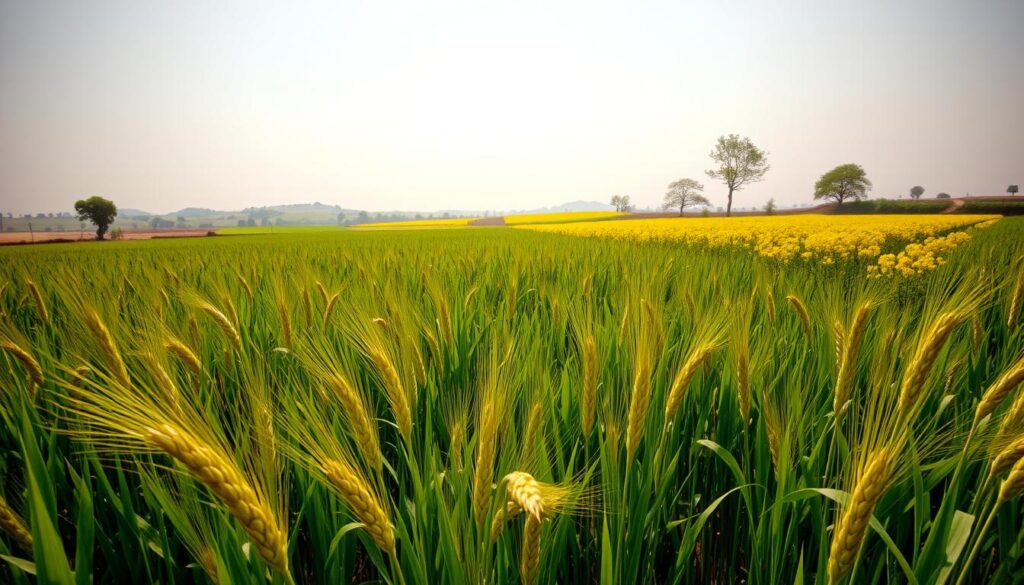
Wheat: The Winter Staple
Wheat is one of the most significant crops grown during the Rabi season. It is a staple food in many parts of the world and is cultivated extensively in regions with suitable climatic conditions.
Sowing and Harvesting Timeline
The sowing of wheat typically begins in October or November, depending on the region, and is harvested in March or April. Timely sowing and harvesting are crucial for a good yield.
Barley, Mustard, and Gram
Besides wheat, other important Rabi crops include barley, mustard, and gram. These crops are grown under varying conditions but are generally more resilient to the cooler temperatures of the winter season.
Optimal Growing Conditions
Barley, mustard, and gram require well-drained soil and adequate moisture. Mustard, for instance, thrives in areas with minimal rainfall during the harvesting period.
Vegetables and Oilseeds in Rabi Season
The Rabi season is also a time for growing a variety of vegetables and oilseeds. These crops are not only nutritious but also provide farmers with additional income streams.
| Crop | Sowing Time | Harvesting Time |
|---|---|---|
| Wheat | October-November | March-April |
| Barley | October-November | February-March |
| Mustard | October-November | February-March |
| Gram | October-November | February-March |
Zaid Crops: Maximizing the Summer Season
Maximizing the summer season with Zaid crops can significantly enhance agricultural productivity. Zaid crops are grown between the Rabi and Kharif seasons, making them an essential part of the agricultural cycle.
Cucumber, Watermelon, and Muskmelon
Cucumber, watermelon, and muskmelon are popular Zaid crops that thrive in the summer season. These crops are not only profitable for farmers but also require minimal care. They are well-suited for the warm weather conditions of the Zaid season.
Short-Duration Vegetables and Pulses
In addition to cucumbers and melons, short-duration vegetables and pulses are also grown during the Zaid season. These crops have a short growth cycle, allowing farmers to harvest them quickly and prepare the land for the next crop cycle.
Water Management for Zaid Cultivation
Effective water management is crucial for Zaid crops, as they are grown during the hot summer months. Farmers must ensure that their crops receive adequate water supply, often through irrigation. Proper water management can significantly impact the yield and quality of Zaid crops.
By focusing on these aspects, farmers can maximize their yield during the Zaid season, contributing to overall agricultural productivity.
The Importance of Knowing Crop Seasons
Understanding crop seasons is crucial for farmers to maximize their yield and profit. By knowing the appropriate seasons for different crops, farmers can plan their agricultural activities more effectively.
Planning for Maximum Yield and Profit
Planning is key to achieving maximum yield and profit in agriculture. Farmers who understand the growing seasons can choose the right crops for the right time, ensuring they make the most of the favorable conditions. This knowledge helps in optimizing the use of resources such as water, fertilizers, and pesticides.
For instance, planting crops during their optimal season can lead to healthier plants and higher productivity. This, in turn, can increase profitability for farmers by reducing the need for additional resources and minimizing losses due to unfavorable weather conditions.
Adapting to Climate Change Challenges
Climate change poses significant challenges to agriculture, with changing weather patterns and increased frequency of extreme weather events. Understanding crop seasons helps farmers adapt to these changes by selecting crops that are more resilient to the new climate conditions.
By adjusting their planting schedules according to the changing climate, farmers can mitigate some of the negative impacts. This adaptability is crucial for ensuring food security and the sustainability of agricultural practices.
Sustainable Crop Rotation Practices
Sustainable crop rotation is another benefit of understanding crop seasons. Rotating crops according to their seasonal requirements helps maintain soil health, reduce pests and diseases, and increase biodiversity.
This practice not only improves the overall productivity of the land but also contributes to environmental sustainability. By adopting sustainable crop rotation practices, farmers can ensure the long-term viability of their agricultural activities.
Modern Techniques for Optimizing Growing Seasons
Modern techniques are revolutionizing the way farmers approach crop cultivation across various seasons. By adopting innovative practices and leveraging technology, farmers can significantly enhance their crop yields and contribute to global food security.
Climate-Smart Agricultural Practices
Climate-smart agriculture is an approach that aims to promote agricultural practices that improve resilience to climate change. This involves implementing techniques such as crop rotation, conservation tillage, and the use of drought-resistant crop varieties. These practices not only help in mitigating the effects of climate change but also improve soil health and biodiversity.
For instance, conservation tillage reduces soil disturbance, which helps in preserving soil moisture and reducing erosion. Crop rotation, on the other hand, enhances soil fertility and structure, leading to better crop yields.
Technology and Forecasting in Seasonal Planning
Technology plays a crucial role in modern agriculture, particularly in seasonal planning. Advanced weather forecasting systems and precision agriculture technologies enable farmers to make informed decisions about planting, irrigation, and harvesting. These technologies help in optimizing resource use and reducing the risks associated with weather variability.
| Technology | Application | Benefit |
|---|---|---|
| Weather Forecasting | Predicting rainfall and temperature patterns | Better planning for planting and harvesting |
| Precision Agriculture | Optimizing irrigation and fertilizer application | Reduced waste and improved crop yields |
Irrigation and Water Conservation Methods
Effective irrigation and water conservation are critical for optimizing crop yields, especially during dry seasons. Techniques such as drip irrigation and mulching help in reducing water loss and ensuring that crops receive adequate moisture. Drip irrigation, for example, delivers water directly to the roots of plants, minimizing evaporation and runoff.
Implementing these modern techniques requires an understanding of the local climate, soil conditions, and crop requirements. By adopting climate-smart practices, leveraging technology, and optimizing irrigation, farmers can significantly improve their agricultural productivity.
Conclusion
Understanding major crops and their growing seasons is crucial for effective agricultural planning and ensuring food security. The diverse range of crops grown during different seasons, such as Kharif, Rabi, and Zaid, highlights the complexity and richness of agricultural practices.
By grasping the significance of these growing seasons, farmers and agricultural stakeholders can make informed decisions to maximize yields, adapt to climate change challenges, and implement sustainable crop rotation practices. This knowledge is vital for optimizing resource allocation, improving crop resilience, and enhancing overall agricultural productivity.
As the global population continues to grow, the importance of understanding major crops and their growing seasons will only continue to increase. By leveraging this knowledge, we can work towards a more food-secure future, where agricultural practices are tailored to meet the demands of a changing world.