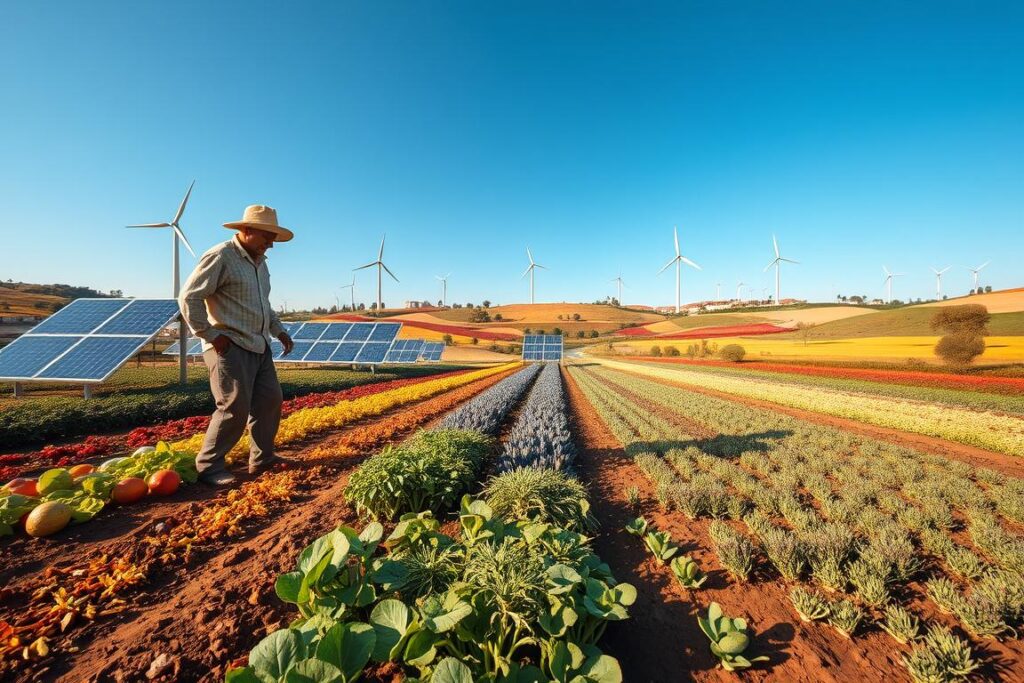
As the world faces environmental changes, a big question is: How will global food production’s economic landscape change?
A warming world is affecting us all, with rising temperatures and unpredictable weather hitting crop yields hard. This impacts food security and the economy big time.
Linking environmental factors to economic stability is complex. It’s key to understand this to fight the bad effects on global agriculture.
Key Takeaways
- The economic effects of climate changes on farming are huge and varied.
- Using sustainable methods is crucial for facing climate uncertainty.
- Working together globally is needed to tackle the economic impacts on farming.
- Adapting to climate changes can lessen the blow on crops and food security.
- Keeping agriculture’s economy stable is linked to environmental care.
The Current State of Global Agriculture in a Changing Climate
Global agriculture is facing big challenges due to climate change. Rising temperatures, changes in rain, and more extreme weather are hurting farm productivity and the economy worldwide.
Key Agricultural Production Trends
The climate change is changing how we grow food. Shifts in growing seasons and production patterns are key changes.
Shifting Growing Seasons and Production Patterns
Warmer weather is making plants bloom earlier. This messes up the traditional growing seasons. It can cause problems with getting enough water and pollinators for crops.
Changing Crop Yields and Economic Implications
Climate change is changing how much food we can grow. Some places are growing less, while others are growing more. These changes are affecting farmers’ money and food prices all over the world.
| Region | Crop Yield Change | Economic Impact |
|---|---|---|
| North America | -5% | Decreased farmer income |
| Europe | +2% | Stable food prices |
| Africa | -10% | Increased food insecurity |
Observable Climate Change Effects on Farming
Farmers are feeling the effects of climate change. They’re seeing changes in temperature, rain, and more extreme weather.
Temperature and Precipitation Changes
Higher temperatures and different rain patterns are changing where and how we grow crops. This can make it harder to find water and stress crops out.
Extreme Weather Events and Agricultural Losses
More frequent and severe weather events, like droughts and floods, are happening. These can destroy crops and cause big economic losses for farmers and the whole agricultural industry.
Understanding Climate Change Agriculture Economics
Climate change is hitting agriculture hard, with both direct and indirect costs. The farming sector is big for the global economy. Knowing how climate change affects it is key to finding ways to fight it.
Direct Economic Costs of Climate Disruptions
Climate changes cause direct costs like crop losses and damage to farms. These costs hit the agricultural economy right away.
Quantifying Crop Losses and Yield Reductions
Crops can lose a lot due to droughts, floods, and heatwaves. For example, a study by the International Fund for Agricultural Development found yield drops of up to 50% in some places.
Infrastructure Damage and Recovery Expenses
Damage to farm buildings and irrigation systems also costs a lot. Fixing this takes a lot of money, taking away from other important needs.
| Economic Impact | Description | Estimated Cost |
|---|---|---|
| Crop Losses | Yield reductions due to climate-related events | $10 billion annually |
| Infrastructure Damage | Destruction of farm infrastructure | $5 billion annually |
Indirect Economic Ripple Effects
Climate change also has indirect effects, like on jobs and rural areas.
Labor Market Impacts in Agricultural Communities
Changes in the weather can mess with farm jobs. Farmers and workers might have to adjust, leading to job shortages or too many workers. This affects local economies.
Rural Economic Stability and Migration Patterns
Climate change can make rural areas unstable, leading people to move. This changes the area’s population and economy over time.
Regional Economic Vulnerabilities and Impacts
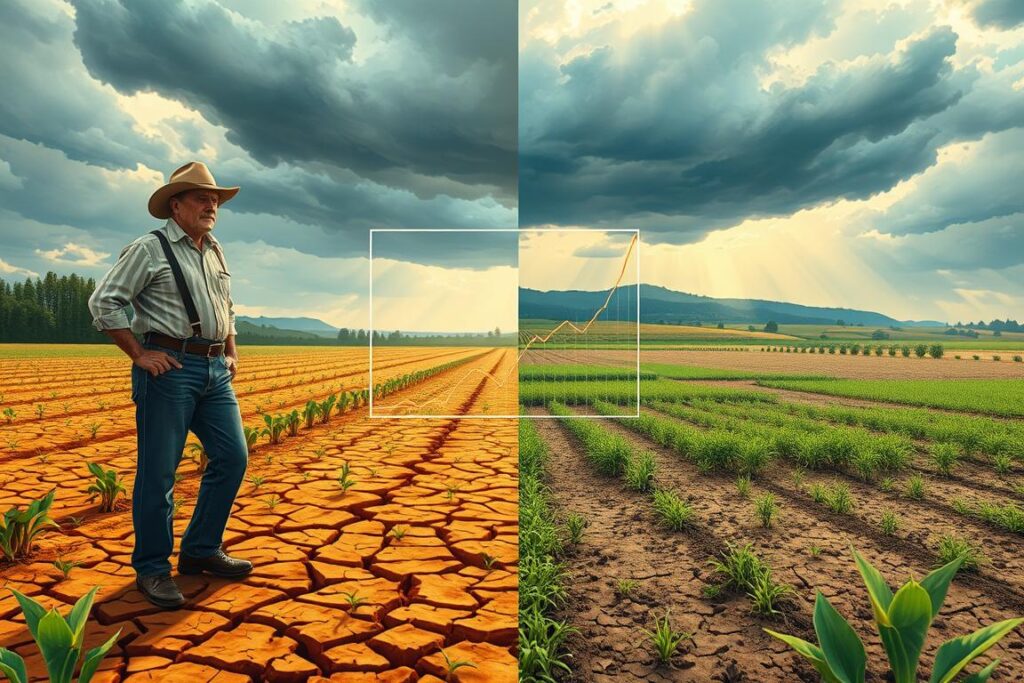
Climate change affects agriculture differently around the world. Each region faces unique challenges that need specific solutions. This makes adapting to climate change crucial for farmers everywhere.
Developing Nations: Disproportionate Economic Burden
Developing countries struggle more with climate change because they can’t adapt as easily. Subsistence farming communities are especially at risk. They depend on rain and lack access to irrigation and new farming tech.
Subsistence Farming Challenges and Food Security
Subsistence farmers in poor countries find it hard to keep food on the table. Unpredictable rain and more extreme weather hurt their crops. This makes food harder to find and less stable.
Limited Adaptation Resources and Economic Consequences
These countries lack the resources to fight climate change. They can’t get credit, new tech, or climate info. This makes it hard for farmers to adapt, leading to big economic losses.
Developed Agricultural Economies: Shifting Production Patterns
Rich countries are changing how they farm because of climate change. They’re using climate-resilient farming and tech to keep farming productive.
U.S. Agricultural Belt Changes and Economic Adjustments
The U.S. Agricultural Belt is changing due to climate change. Farmers are moving to new crops and using conservation agriculture. These changes affect their money, like insurance and subsidies.
European and Australian Agricultural Transformations
Europe and Australia are also changing their farms because of climate change. They’re investing in irrigation and drought-resistant crops. This shows a move towards climate-resilient agriculture.
Economic Impact Disparities Across Regions
Climate change’s economic effects on farming vary by region. This shows the need for specific agriculture adaptation strategies. It’s important to compare these impacts to help vulnerable areas.
| Region | Economic Impact | Adaptation Strategies |
|---|---|---|
| Developing Nations | High economic vulnerability due to limited adaptation capacity | Improving access to climate information, credit, and adaptive technologies |
| Developed Economies | Shifting production patterns and adopting climate-resilient practices | Investing in irrigation infrastructure, conservation agriculture, and climate-smart agriculture |
Crop-Specific Economic Consequences
Rising temperatures and changing weather patterns are changing the face of global farming. Climate change is affecting crop yields, quality, and prices. It’s key to understand these impacts to help farmers and protect the economy.
Staple Crops: Yield Changes and Price Volatility
Staple crops like corn, wheat, and rice are vital for food security. But climate change is making them unstable. Changes in weather are cutting yields and making prices unpredictable.
Corn, Wheat, and Rice: Global Economic Pillars Under Threat
Corn, wheat, and rice are crucial for food and the economy. Climate changes can cause price hikes, threatening food security and economic stability. For example, droughts in corn areas can lead to shortages and higher prices.
Soybean and Other Protein Sources: Market Disruptions
Soybeans and other protein sources face climate challenges. Weather extremes can harm crops, cut yields, and mess with markets. This affects the livestock industry and raises costs for everyone.
High-Value Crops: Quality Degradation and Market Effects
High-value crops like coffee, chocolate, and wine are sensitive to climate change. Rising temperatures and changed weather can lower their quality and value. This hurts farmers’ earnings and impacts related industries.
Coffee, Chocolate, and Wine: Luxury Crop Economics
Coffee, chocolate, and wine are valuable crops. Climate change threatens their quality and quantity. For instance, warmer weather can make coffee beans less valuable. This increases costs and lowers prices, hurting farmers and businesses.
Fruit and Vegetable Production: Shifting Geographic Suitability
Climate change is changing where fruits and vegetables can grow. As temperatures rise, some areas become less suitable, while others become better. This shift changes production patterns, affecting local and global markets.
Food Security and Market Dynamics
Climate change is making food security and market changes worse all over the world. It affects everything from farming to how we eat. The mix of climate change, food availability, and market changes is a big challenge for food systems globally.
Price Fluctuations and Consumer Impacts
Climate changes disrupt farming, causing price swings that hit consumers hard. Food price inflation can hurt family budgets, especially for those who are already struggling.
Food Affordability Challenges for Vulnerable Populations
For those who are already struggling, climate-driven price hikes make food hard to afford. Economic resilience is key to helping these communities deal with food price ups and downs.
Dietary Shifts and Nutritional Economics
When food prices and availability change, our diets can shift too. This can affect our health over time. It’s important to understand these changes to make good nutrition policies.
Supply Chain Disruptions
Climate change is causing supply chain disruptions, affecting how food moves from farm to table. These issues can lead to food waste and shortages, making food insecurity worse.
Transportation and Storage Challenges
Extreme weather damages roads and storage, causing delays and spoilage. This hurts both producers and consumers, leading to higher costs.
Processing and Distribution Economic Impacts
Supply chain problems have big economic effects, hitting producers, processors, and distributors hard. Business continuity planning is vital to reduce these impacts.
Global Trade Pattern Shifts
Climate change is changing global trade, as countries adjust to new farming realities. Emerging exporters are taking advantage of these changes, while others struggle to keep their market share.
Emerging Agricultural Exporters and Market Realignment
New players are entering the global agricultural market, thanks to climate changes. This shift offers chances for growth and cooperation.
Trade Policy Responses to Climate-Driven Scarcity
Countries are using trade policies to deal with climate-driven food shortages. International cooperation is key to making sure these policies help food security worldwide.
Adaptation Strategies and Their Economic Implications
Understanding the economic side of adapting to climate change is key for farming to stay sustainable. The farming world faces big challenges from climate change. But, with the right strategies, it can become more resilient and avoid big economic losses.
Cost-Benefit Analysis of Climate-Resilient Farming
Starting climate-resilient farming needs a careful look at costs and benefits. We must weigh the upfront costs against the long-term gains. Climate-resilient farming practices make crops less vulnerable to weather changes. They also help farming stay productive over time.
Short-term Investment vs. Long-term Economic Gains
The first steps in climate-resilient farming cost a lot. This includes money for new tech and buildings. But, the benefits down the line, like better crops and less damage from weather, make it worth it.
Risk Management and Insurance Innovations
New ways to manage risks and insurance are vital for farmers. These help protect farmers from financial hits from climate shocks. They offer a safety net for farmers.
Investment Requirements for Agricultural Adaptation
Adapting farming to climate change needs a lot of investment. It’s not just about money. It also means adopting new tech and building new infrastructure.
Infrastructure and Technology Needs
Investing in climate-resilient infrastructure and tech is crucial. This includes things like better irrigation, greenhouses, and other tools. They help farmers deal with changing weather.
Financing Models for Climate-Adaptive Agriculture
Creating new ways to fund climate-adaptive farming is essential. This could be through partnerships, subsidies, or special insurance for farmers. It’s all about finding ways to support farmers in adapting to climate change.
Economic Opportunities in Climate-Smart Agriculture
Climate-smart agriculture is key for the environment and the economy. It helps farmers and communities do well financially, even with climate change.
Emerging Markets for Resilient Agricultural Products
More people want to buy products that are good for the planet and can handle climate change. This means new chances for farmers who use smart climate practices.
Consumer Demand Shifts and Premium Markets
Customers are ready to spend more for food that’s good for the planet and can stand up to climate change. This opens up new markets for crops that are climate-resilient.
New Crop Varieties and Their Economic Potential
New crops that can handle climate change are a big economic win. They help farmers grow more and better food, even when the weather is tough.
Economic Benefits of Sustainable Farming Practices
Sustainable farming, like regenerative agriculture, brings many economic benefits. It makes soil better, cuts down on outside help, and boosts biodiversity. All these help farms make more money and stay stable.
Regenerative Agriculture’s Return on Investment
Regenerative agriculture is a smart choice for farmers. It makes soil healthier and reduces erosion. This means more food and lower costs for farmers.
Diversification Strategies and Economic Stability
Diversifying what they grow is a smart move for farmers. It helps them not rely on just one crop. This makes them more ready for climate surprises.
Policy Frameworks and Economic Incentives
Policy frameworks and economic incentives are key in making agriculture more resilient to climate change. They help farmers adopt sustainable practices and reduce economic losses. This is crucial as the agricultural sector deals with climate change’s challenges.
Agricultural Subsidies and Climate Considerations
Agricultural subsidies are a big tool for policy makers. By adding climate considerations, governments can encourage farmers to use climate-resilient methods.
U.S. Farm Bill Evolution and Climate Resilience
The U.S. Farm Bill now includes climate change and resilience provisions. New programs focus on conservation and climate-smart agriculture.
International Subsidy Reform Movements
There’s a push to reform agricultural subsidies globally to fight climate change. Groups like the OECD aim to align subsidies with climate goals.
Carbon Markets and Farming Practices
Carbon markets offer a financial incentive for farmers to go green. By sequestering carbon in soil, farmers can earn credits and money.
Soil Carbon Sequestration Economics
Soil carbon sequestration increases soil carbon through practices like reduced tillage. It boosts soil health and earns carbon credits.
Emissions Reduction Credits in Agriculture
Farmers can earn credits by cutting greenhouse gas emissions. This includes using efficient equipment and renewable energy.
International Cooperation and Economic Support Mechanisms
Global cooperation is vital for tackling climate change’s effects on agriculture. Support like climate finance and technology transfer helps developing countries.
Climate Finance for Agricultural Adaptation
Climate finance is crucial for supporting adaptation efforts, especially in developing countries. It helps implement climate-resilient practices and technologies.
Technology Transfer and Capacity Building Economics
Technology transfer and capacity building are key for developing climate-resilient agriculture. They involve training, knowledge sharing, and technology transfer.
| Policy/Incentive | Description | Economic Benefit |
|---|---|---|
| Agricultural Subsidies | Government support for farmers adopting climate-resilient practices | Increased financial stability for farmers |
| Carbon Markets | Mechanism for farmers to sell carbon credits generated through climate-friendly practices | Additional income stream for farmers |
| Climate Finance | Financial support for climate change adaptation and mitigation efforts | Enhanced resilience and productivity in agriculture |
Future Projections: Economic Modeling of Agricultural Systems
Looking ahead, economic modeling of agriculture is key to tackling climate change. It’s vital to grasp the economic effects on farming to craft good adaptation plans.
Short-term Economic Forecasts (2030-2050)
In the short term, agriculture faces a mix of challenges and chances. Climate change will likely impact crop yields and farm output.
Regional Economic Winners and Losers
Some areas might gain economically from climate shifts, while others could lose. For example, better growing conditions could boost farm productivity in certain spots.
Adaptation Investment Timelines and Returns
Investing in climate-proof farming practices and tech is essential. The payoff for these investments will differ, with some showing results in just a few decades.
Long-term Economic Scenarios (2050-2100)
Further ahead, the outlook for agriculture under climate change is one of big change. The global food market might see a major overhaul.
Transformative Agricultural System Changes
We’ll see big changes in farming, like the use of new, climate-resilient tech and methods.
Global Food Economy Restructuring Possibilities
The global food market could change a lot, with possible shifts in trade and markets. This could open up new economic chances for some places.
Economic modeling is vital for grasping these future trends and finding effective ways to adapt. By studying both short and long-term economic views, we can help farming communities and support sustainable growth.
Conclusion: Building Economically Resilient Agricultural Systems
Building strong agricultural systems is key when facing climate change. By using climate-resilient farming, we can lessen the economic harm from climate issues. This means using farming methods that are good for the environment and also make money.
Good policies and economic help are important for this change. Governments and global groups can give farmers subsidies and insurance. They can also help farmers make money from using green farming methods.
Investing in climate-resilient farming brings big economic wins. It makes sure we have enough food, keeps prices stable, and helps the economy grow in a green way. As we go on, we need to keep improving these farming practices. This will help farmers and make our food system stronger.