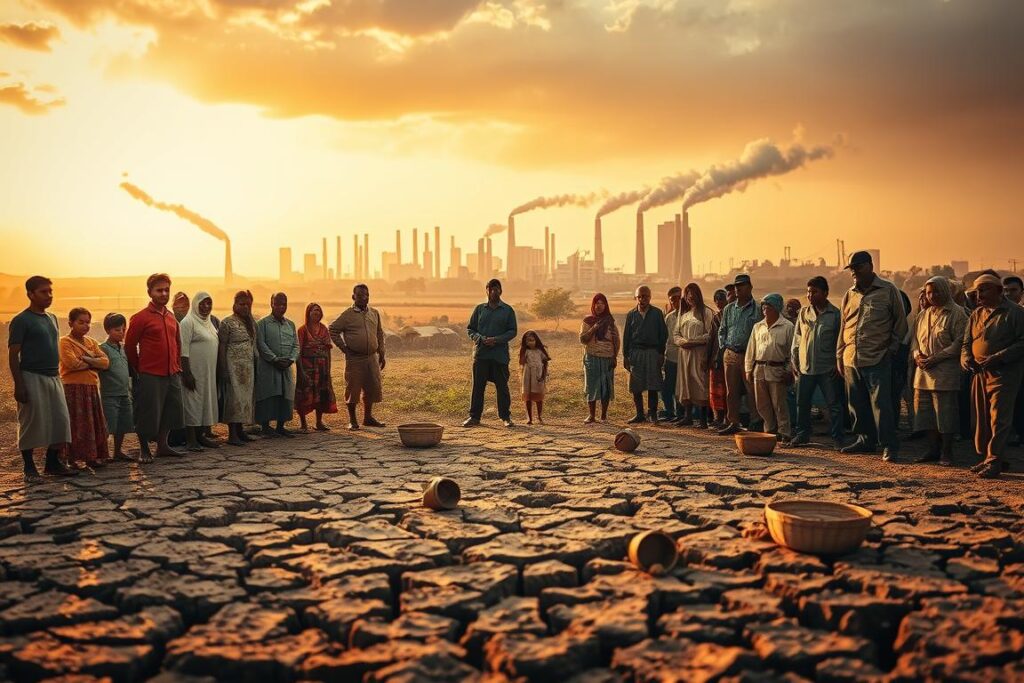
Can we ignore the growing threat of global hunger? Millions worldwide struggle to get nutritious food. This sparks a global crisis that needs urgent action.
The global food security crisis is complex. It’s linked to economic issues and policy choices. With rising poverty, climate change, and conflict, finding effective solutions is critical.
Next, we’ll look at the economic challenges making global hunger worse. We’ll also discuss policy solutions to lessen its impact.
Key Takeaways
- The global food security crisis affects millions worldwide.
- Economic challenges play a significant role in the crisis.
- Effective policy solutions are crucial to addressing the issue.
- Climate change and conflict exacerbate global hunger.
- A comprehensive approach is needed to mitigate the crisis.
The Current State of Global Food Security
The world’s food security situation is complex and needs careful thought. It’s important to understand the challenges and chances for the future. Knowing where we stand now helps us make better policies and actions.
Defining Food Security and Insecurity
Food security means everyone has enough, safe, and healthy food all the time. On the other hand, food insecurity happens when people or groups can’t get enough food. This can lead to malnutrition, bad health, and lower productivity.
Key Statistics on Global Hunger
Millions of people around the world face hunger and malnutrition. Here are some important numbers:
- Over 820 million people globally suffer from hunger.
- 2 billion people experience moderate or severe food insecurity.
- Malnutrition is responsible for nearly 45% of deaths in children under 5.
Prevalence of Malnutrition
Malnutrition is a big health issue, especially in poor countries. It’s closely tied to food insecurity. Without enough nutritious food, people can miss out on important nutrients and face health problems.
Food Scarcity Hotspots
Places hit by conflict, climate disasters, or economic troubles often face food shortages.
The United Nations says, “Ending hunger and malnutrition is key to sustainable development. It ensures everyone gets the nutritious food they need.”
“The future of food security depends on our ability to address the complex interplay between economic, environmental, and social factors.”
Understanding the Global Food Security Crisis
To tackle the global food security crisis, we must look at its history and current issues. Food security has always been a problem, but it’s getting more complex.
Historical Context of Food Insecurity
Food insecurity has long been tied to famine and hunger epidemic. These have been caused by natural disasters, wars, and economic troubles. Knowing these past events helps us understand today’s challenges.
Current Trends in Food Access
Today, the food security crisis is shaped by climate change, conflict, and economic gaps. Food access is key, with big differences between cities and countryside.
Urban vs. Rural Disparities
Urban places have better ways to get food out, but rural areas struggle. They lack access to markets and resources. This makes food insecurity worse.
Vulnerable Populations
Some groups, like the poor, kids, and the elderly, are hit hard by food insecurity. We need special policies to help them.
Root Causes of Food Insecurity
Food insecurity comes from many factors like the environment, politics, and economy. We need to understand these causes well to find good solutions.
Climate Change and Environmental Factors
Climate change makes food insecurity worse. It changes how hot it gets and how much rain falls, hurting farms and food supplies.
Drought and Extreme Weather Events
Droughts and big weather events like hurricanes and floods can destroy crops and animals. This leads to less food. Climate-resilient agriculture helps fight these problems.
Soil Degradation and Water Scarcity
Soil getting worse and not enough water make growing food hard. Sustainable farming practices that save water and improve soil are key for food security.
Conflict and Political Instability
War and political trouble cause food insecurity. Conflicts can mess up food delivery, causing shortages and famine.
Poverty and Economic Inequality
Poor people and those with little money often can’t get enough food. This makes hunger and poverty worse.
To fix food insecurity, we need to tackle many issues. This includes using climate-friendly farming, solving conflicts, and helping poor people financially.
The COVID-19 Pandemic’s Impact on Food Security
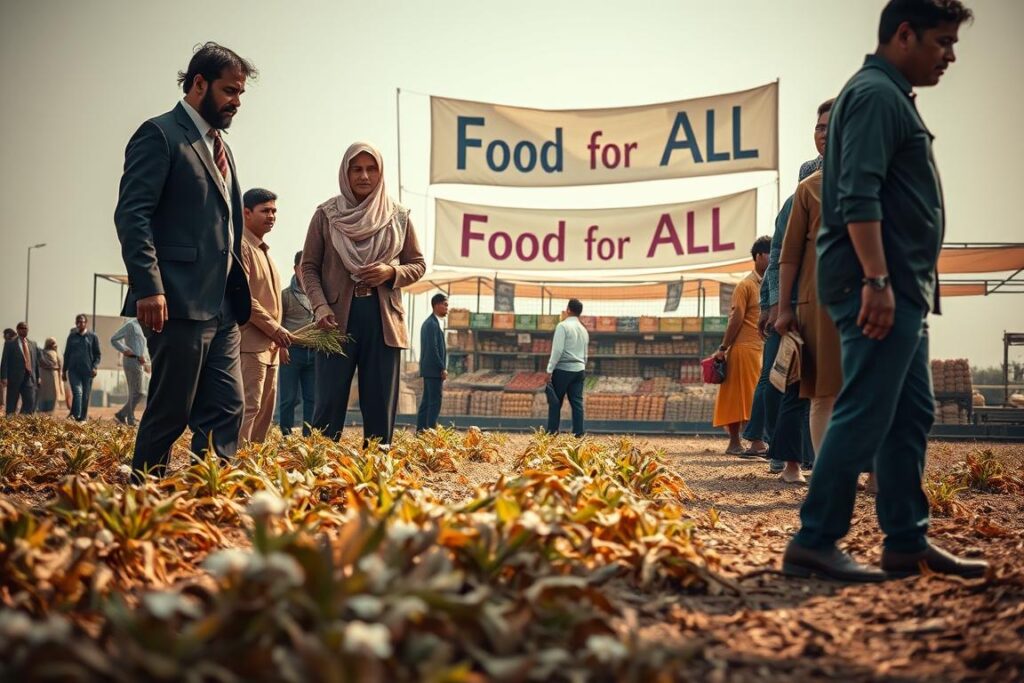
The COVID-19 pandemic brought big challenges to food security worldwide. It affected supply chains, economies, and societies. This made food systems more vulnerable.
Supply Chain Disruptions
The pandemic caused big problems for food supply chains. Lockdowns, border closures, and social distancing led to labor shortages and delays. This resulted in food spoilage, less availability, and higher prices.
Economic Downturns and Income Loss
The pandemic’s economic effects were severe, with many job losses and income cuts. Vulnerable populations found it harder to get nutritious food. The economic downturn made food insecurity worse, especially for low-income families.
Policy Responses to Pandemic-Related Food Insecurity
Governments and international groups took action to address food security issues. They started food assistance programs, cash transfers, and support for farmers. These efforts aimed to reduce the pandemic’s impact on food access.
The pandemic showed us the need for strong food systems. It’s vital to tackle underlying vulnerabilities. As we deal with COVID-19, we must focus on food security. We need to find lasting solutions for everyone to have access to nutritious food.
Economic Dimensions of the Food Security Crisis
The global food security crisis has deep economic roots. It includes food prices, trade, and market failures. These factors are key to grasping the food insecurity puzzle.
Food Price Volatility and Inflation
Food price swings are a big worry. They make food less affordable for those who need it most. Inflation makes things worse, cutting down what people can buy. This problem affects everyone, worldwide, and hits food security hard.
Global Trade Dynamics
Global trade is crucial for food security. Export restrictions and import dependencies are major players. Export limits can cut off food in other countries. Import needs make countries shaky in global markets.
Export Restrictions
Export limits hurt food security, especially for import-heavy countries. They cause shortages and higher prices. This makes food harder to get and more expensive.
Import Dependencies
Countries relying on imports are at risk in global food markets. They can get better by diversifying food sources and backing local farming.
Market Failures in Food Distribution
Food distribution market failures cause problems. They lead to unfair and inefficient food access. Fixing these issues is vital for fair food distribution and access to healthy food for all.
In summary, the economic side of the food security crisis is complex. Understanding it is key to making policies that help solve food insecurity.
Food Insecurity in the United States
The United States is known for its rich agriculture. Yet, it struggles with food insecurity. This problem affects not just low-income families but also the middle class and individuals.
Prevalence and Demographics
About 12% of the U.S. population faces food insecurity. This means over 38 million people, including kids and the elderly, struggle to get nutritious food.
Urban Food Deserts
Urban food deserts lack access to healthy, affordable food. They’re often in low-income neighborhoods. People there often eat at convenience stores or fast food, leading to health problems like obesity and diabetes.
Economic Inequality and Food Access
Economic inequality is a big factor in food insecurity. Those with lower incomes struggle more because of high living costs and limited money.
Racial and Geographic Disparities
Racial and geographic disparities make things worse. Communities of color and rural areas face more food insecurity. This is due to systemic inequalities and lack of resources.
Impact on Children and Elderly
Children face developmental issues and poor school performance. The elderly are at higher risk for health problems and malnutrition. It’s important to address these disparities to fight food insecurity.
Economic inequality is a key issue. It directly impacts someone’s ability to buy food. Policies to reduce economic inequality can help solve food insecurity.
Agricultural Economics and Food Production
Understanding agricultural economics is crucial for solving global food production challenges. The economic structure of farming affects food security. Agricultural economics looks at farming methods, subsidies, and market trends.
Industrial vs. Small-Scale Farming
The debate between industrial and small-scale farming continues. Industrial farming is known for high yields and efficiency. Small-scale farming focuses on sustainability and local food systems.
Small-scale farming is key for food security in developing countries.
Subsidies and Market Distortions
Agricultural subsidies greatly impact food production. They are meant to help farmers but can cause market distortions. Subsidies often favor big farms over small ones, changing agricultural economies.
Sustainable Agriculture Economics
Sustainable agriculture is about being kind to the environment and society. It’s about understanding the long-term costs and benefits. As we move towards sustainable food systems, sustainable agriculture’s economic value grows.
In summary, agricultural economics is essential for food production. By understanding the differences between farming types, fixing subsidies, and promoting sustainable practices, we can ensure a food-secure future.
International Policy Frameworks Addressing the Food Security Crisis

International policies are key in solving the global food crisis. They use sustainable goals and trade agreements to help. These efforts aim to make food available and accessible to all.
United Nations Sustainable Development Goals
The United Nations’ Sustainable Development Goals (SDGs) focus on ending hunger and improving food security. SDG 2: Zero Hunger is especially important. It sets targets to measure progress in these areas.
World Trade Organization Agricultural Agreements
The World Trade Organization (WTO) helps with international trade in agriculture. Its agreements aim to remove trade barriers. This makes food more secure and available.
Regional Cooperation Initiatives
Regional efforts are also vital for food security. They bring together countries to tackle common food issues. This includes improving farming and trade.
| Initiative | Description | Impact on Food Security |
|---|---|---|
| SDG 2: Zero Hunger | Aims to end hunger and promote sustainable agriculture | Improves food availability and access |
| WTO Agricultural Agreement | Reduces trade barriers and promotes fair competition | Enhances food trade and availability |
| Regional Cooperation Initiatives | Promotes collaboration among neighboring countries | Addresses regional food security challenges |
In conclusion, international policies are crucial for solving the global food crisis. They foster cooperation and set goals to ensure everyone has enough food.
National Economic Policies and Food Security
Food security is greatly affected by national economic policies. These policies can make food more or less accessible, depending on how they are set up and carried out.
Food Subsidy Programs
Food subsidy programs are key in national economic policies to boost food security. They make food cheaper for those who need it most.
SNAP and WIC in the United States
In the United States, SNAP and WIC are big food subsidy programs. SNAP helps low-income people and families buy food. WIC supports pregnant and postpartum women, infants, and young kids with nutrition help.
SNAP has important features:
- It’s based on income and family size.
- It uses EBT cards for easy access.
- It also offers nutrition education and counseling.
Global Best Practices
Worldwide, countries use food subsidy programs to tackle food insecurity. For example, Brazil’s Bolsa Familia program gives money to families. It also requires them to meet health and education goals.
Some global best practices are:
- Targeted help for the most needy.
- Conditional cash transfers for health and education.
- Linking with other social protection efforts.
Agricultural Support Policies
Agricultural support policies, like subsidies and investments in farming, are crucial for food security. They help make food more available and stable.
Social Protection Measures
Social protection measures, like cash transfers and job guarantees, are also vital. They protect the poor from economic downturns and help them get food.
The Role of Private Sector and Innovation
The world faces a big challenge with food insecurity. The private sector’s role in innovation is more important than ever. Companies are stepping up to help solve this problem.
Corporate Social Responsibility Initiatives
Many companies are adding food security to their corporate social responsibility (CSR) plans. For example, Unilever and Nestle have started programs to improve farming and food distribution in poor areas. These efforts help with food security and support sustainable business.
Public-Private Partnerships
Public-private partnerships (PPPs) are making a big difference. Companies work with governments and NGOs to fund and run big projects. For example, the Alliance for a Green Revolution in Africa (AGRA) has boosted farming in several African countries.
Technological Solutions to Food Insecurity
Innovation is key to the private sector’s help in food security. New tech, like digital agriculture and supply chain improvements, is changing how food is made and shared.
Digital Agriculture
Digital agriculture uses tech and data to make farming better. With drones and satellite imaging, farmers can grow more and waste less.
Supply Chain Innovations
Improvements in the supply chain are also vital. Companies are using
The private sector can lead the way in solving the global food crisis. As
“The future of food security depends on our ability to innovate and collaborate across sectors.”
, we need to keep investing in private sector solutions.
Future Challenges and Opportunities
The world’s food security is facing big challenges and opportunities. As more people live in cities, getting enough nutritious food will get harder. This is because the population is growing and changing how we eat.
Population Growth and Urbanization
The world’s population is expected to hit 9.7 billion by 2050. This will put more pressure on food systems. More people moving to cities will also change what we eat. We’ll need to adapt food production, processing, and distribution to meet city needs.
Climate Change Adaptation Strategies
Climate change is a big threat to food security. Rising temperatures and changing weather patterns hurt crops and food. We must develop agricultural practices that can handle climate change. This includes using drought-resistant crops and conservation agriculture.
Emerging Technologies and Food Systems
New technologies are changing food systems for the better. They make food production more efficient and sustainable. Two key areas are:
Vertical Farming
Vertical farming grows crops in layers, often indoors. It boosts crop yields and saves land and resources.
Alternative Proteins
Plant-based and lab-grown meat are sustainable protein options. They cut down on greenhouse gas emissions and meet protein demand.
| Technology | Description | Potential Impact |
|---|---|---|
| Vertical Farming | Growing crops in vertically stacked layers | Increased crop yields, reduced land use |
| Alternative Proteins | Plant-based and lab-grown meat alternatives | Reduced greenhouse gas emissions, sustainable protein source |
Conclusion: Building Resilient Food Systems
The global food security crisis is a big problem that needs many solutions. Climate change, economic gaps, and conflicts all play a part. We must build strong food systems to tackle these issues.
Strong food systems can handle and bounce back from problems, making sure everyone gets the food they need. We can do this by supporting green farming, making supply chains better, and helping small farmers. Also, investing in new farming tech can make food systems more resilient.
Fixing the food security crisis needs teamwork from governments, businesses, and community groups. Together, we can create and use good policies and programs. Our aim is to make sure everyone has enough food, and building strong food systems is key to this.
In short, we need to keep innovating, investing, and working together. This will help us build food systems that can face and overcome the food security crisis.