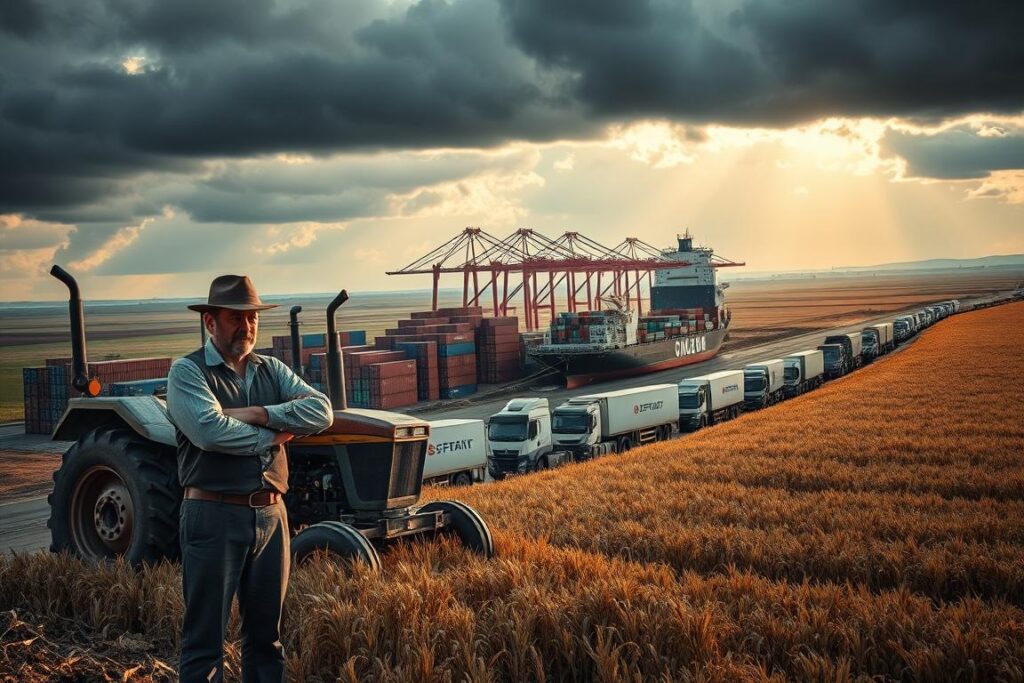
Can the global economy handle the shock of agricultural industry supply chain challenges?
The world’s food systems are facing big problems. These issues are causing trouble everywhere, affecting both economies and communities.
With the agricultural sector facing big challenges, it’s key to understand supply chain disruptions agriculture. This knowledge is vital for lessening their impact on the global economy.
Key Takeaways
- The global economy is vulnerable to agricultural supply chain disruptions.
- Understanding supply chain challenges is crucial for economic stability.
- Agricultural disruptions can have far-reaching economic impacts.
- The need for resilient supply chains is more pressing than ever.
- Mitigating these disruptions requires a multifaceted approach.
The Current State of Global Agricultural Supply Chains
Today’s agricultural supply chains are vast networks around the world. They connect farmers, producers, distributors, and consumers. These systems are key to keeping food on our plates and feeding a growing population.
Key Components of Modern Agricultural Supply Chains
The main parts are production, processing, storage, transportation, and distribution. Each step is vital. They all need to work well for products to get to us smoothly.
Interconnectedness of Global Food Systems
Global food systems are deeply connected, with cross-border dependencies being a big part. This connection is clear in:
Cross-Border Dependencies
Many countries need imports to feed their people. This makes international trade very important. Problems in one area can affect others far away.
Just-in-Time Inventory Challenges
Using just-in-time inventory can save money but is risky. Small issues can cause big shortages quickly.
| Component | Description | Challenge |
|---|---|---|
| Production | Cultivation and harvesting | Weather conditions |
| Processing | Transforming raw products | Labor shortages |
| Transportation | Moving goods to markets | Logistical bottlenecks |
Understanding Supply Chain Disruptions in Agriculture
It’s key to grasp the complexities of supply chain disruptions in agriculture to lessen their effects. These disruptions can happen at any stage, from growing to getting the products to market. Many things can cause them.
Definition and Categories of Agricultural Disruptions
Agricultural supply chain disruptions are any issues that stop the usual flow of goods and services in farming. They fall into operational, environmental, and geopolitical types. Operational issues might be about logistics or broken equipment. Environmental problems could be extreme weather or pests. Geopolitical issues include trade rules, conflicts, and new laws.
Historical Patterns of Supply Chain Vulnerabilities
Agricultural supply chains have faced many disruptions over time. For example, a 2011 drought in the U.S. cut down corn yields, affecting animal feed and biofuels. Trade restrictions due to global tensions also impact farm exports.
Lessons from Past Disruption Events
Looking back at past disruptions helps us understand supply chain weaknesses. The COVID-19 pandemic showed how crucial being flexible and resilient is. By studying these events, we can spot patterns and find ways to prevent or lessen the damage.
| Disruption Category | Examples | Impact |
|---|---|---|
| Operational | Logistical issues, equipment failures | Delayed deliveries, increased costs |
| Environmental | Extreme weather, pest infestations | Crop yield losses, reduced quality |
| Geopolitical | Trade policies, conflicts | Export/import restrictions, market volatility |
Major Causes of Agricultural Supply Chain Disruptions
Global agricultural supply chains face many challenges. These can harm food security, economic stability, and people’s lives who depend on farming.
Climate Change and Extreme Weather Events
Climate change is a big problem for farming. Weather like droughts and floods can hurt crops a lot.
Drought Impacts on Production
Droughts make it hard to water crops, which can reduce yields. For example, a bad drought in key farming areas can cause big losses, like in the U.S. recently.
Flooding and Infrastructure Damage
Flooding can damage crops and harm roads and storage places. “The impact of extreme weather events on agricultural supply chains cannot be overstated.”
Geopolitical Conflicts and Trade Restrictions
Wars and trade limits can block the movement of goods. This can cause shortages and higher prices in some areas.
Labor Shortages and Workforce Challenges
Not enough workers, due to migration or disease, can slow down farming. Using good agriculture supply chain management strategies can help solve this.
Transportation and Logistics Bottlenecks
Issues like crowded ports or missing cold storage can slow down the delivery of fresh goods.
“Effective logistics management is crucial for maintaining the integrity of agricultural products throughout the supply chain.”
To fix these problems, we need better logistics. This includes investing in cold storage and improving how we move goods. These steps are key tomitigating supply chain disruptions in agriculture.
The COVID-19 Pandemic: A Case Study in Supply Chain Vulnerability
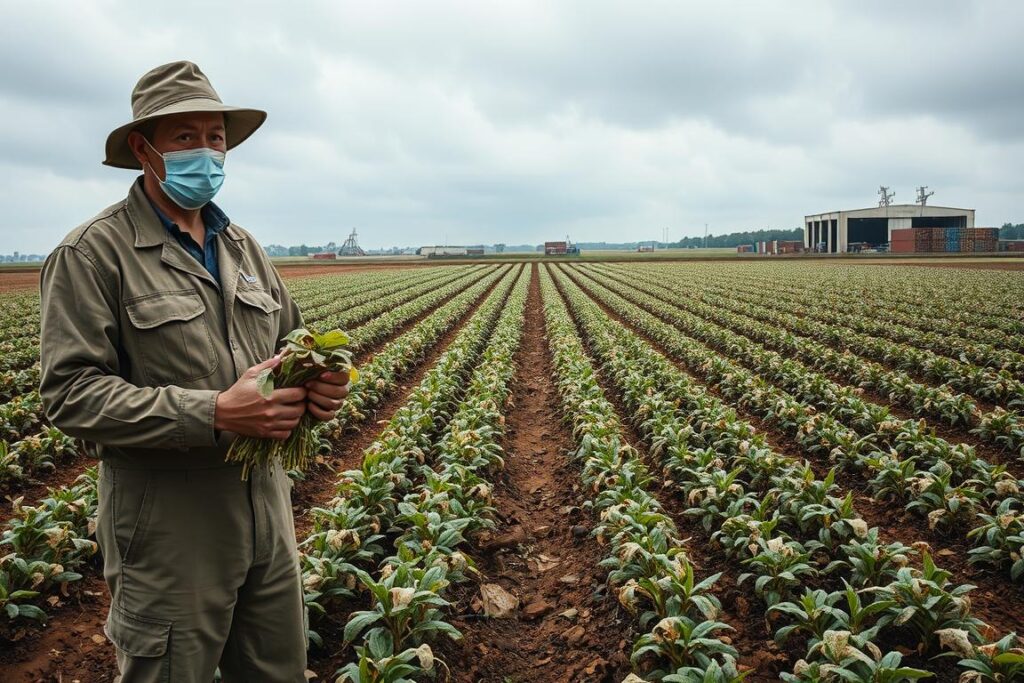
The COVID-19 pandemic has brought big challenges to global agricultural supply chains. It showed us how vulnerable these systems are. As the virus spread, it messed up the networks of production, processing, and distribution in the global food system.
Initial Shock and Response Mechanisms
The pandemic’s start caused widespread lockdowns, border closures, and a big drop in labor. This led to delays in harvesting and processing and disruptions to transportation networks. To fight back, many countries and companies took emergency steps. They repatriated workers, adopted new tech, and changed their supply chain plans.
Lasting Structural Changes to Agricultural Supply Chains
The pandemic pushed existing trends in agricultural supply chains forward. It made digital technologies and resilient and flexible supply chain models more important. It also showed new weaknesses, like the need for just-in-time delivery systems and more diverse supply chains.
Acceleration of Existing Trends
The pandemic sped up the use of automation and data analytics in agriculture. Companies are now working harder to make their supply chains more resilient. They’re using diversification and advanced tech to do this.
New Vulnerabilities Exposed
The crisis showed how key risk management and contingency planning are in agricultural supply chains. It’s clear that supply chains need to be more flexible and quick to respond to surprises.
Economic Impacts of Disrupted Agricultural Supply Chains
The disruption in agricultural supply chains has far-reaching economic consequences globally. As supply chains are interrupted, the effects ripple through the economy. This impacts various stakeholders from farmers to consumers.
Price Volatility and Food Inflation
One of the immediate economic impacts is price volatility. When supply chains are disrupted, the availability of food products decreases. This leads to increased prices. This food inflation affects consumers worldwide, especially in regions heavily reliant on imported goods.
Food Security Concerns in Vulnerable Populations
Disrupted supply chains exacerbate food security concerns, especially in vulnerable populations. Communities that are already struggling to access nutritious food face increased challenges. This leads to potential health and social issues.
“The global food system is facing unprecedented challenges. Ensuring food security for all requires immediate attention to the vulnerabilities in our supply chains.”
Financial Impacts on Farmers and Producers
Farmers and producers are significantly affected by supply chain disruptions. The financial impacts vary between small farms and corporate agriculture.
Small Farm Vulnerability
Small farms are particularly vulnerable due to limited resources and less resilience to shocks. Disruptions can lead to significant financial strain. This potentially threatens their viability.
Corporate Agriculture Resilience
In contrast, corporate agriculture often has more resources to mitigate some of the impacts. However, they still face challenges. These include logistical and supply chain issues that can affect their operations.
| Impact | Small Farms | Corporate Agriculture |
|---|---|---|
| Financial Resilience | Low | High |
| Resource Availability | Limited | Abundant |
| Supply Chain Adaptability | Difficult | Moderate |
Regional Vulnerabilities: How Different Areas Are Affected
Agricultural supply chain disruptions affect different regions in different ways. This is because of things like economic stability, infrastructure, and climate. Each area has its own unique challenges.
Developing Nations and Food Dependency Challenges
Developing nations are often more vulnerable. They rely heavily on imported food and have less economic strength. When supply chains get disrupted, food shortages and price hikes can happen, making food hard to get.
Advanced Economies and Consumer Impact Patterns
In richer countries, people feel the effects of supply chain problems through price changes and less product choice. These countries have better infrastructure, but they’re still hit by global supply chain issues.
United States Agricultural Supply Chain Vulnerabilities
The United States plays a big role in global agriculture. It faces its own challenges. Regional production differences and the gap between rural and urban areas make supply chain resilience complex.
Regional Production Differences
In the United States, different areas grow different crops. For example, the Midwest is key for corn and soybeans, while California grows a lot of fruits and veggies. This makes some areas more vulnerable to certain disruptions.
Rural areas, where most farming happens, face different challenges than cities. They often have less access to resources and infrastructure. This can make supply chains less efficient and harder to fix when problems arise.
Supply Chain Disruptions Agriculture: Cascading Effects Across Industries
Agricultural supply chain disruptions affect many industries, not just farming. They impact the food system, touching various sectors in big ways.
Food Processing and Manufacturing Challenges
Food processing and manufacturing are hit hard by these disruptions. When raw materials are hard to find or late, making products becomes tough. This can raise costs and cut down on what’s available. For example, a wheat shortage can hurt bakeries and food makers that use wheat a lot.
Retail Distribution Network Strains
Retail networks also struggle with these disruptions. Grocery stores and supermarkets might run out of fresh produce. This leads to empty shelves and unhappy customers. It can also mean lost sales and harm to a store’s reputation.
Restaurant and Hospitality Sector Adaptations
The restaurant and hospitality sectors face challenges too. They need to change fast to keep serving and meet customer needs.
Menu Engineering Responses
Restaurants might change their menus to deal with ingredient shortages. By tweaking their menus, they can lessen the disruption’s impact. This way, they can still offer appealing choices to customers.
Sourcing Strategy Shifts
Another move is to change how they source ingredients. Restaurants and hospitality places might look for new suppliers or adjust how they buy. Being flexible is key to keeping operations going when supply chains are stressed.
Understanding how agricultural supply chain disruptions affect industries helps them prepare and respond. This makes the food system more resilient.
Technological Solutions for Supply Chain Resilience

Technology is key in making agricultural supply chains stronger. It changes how these chains work, making them better at handling problems.
Blockchain and Traceability Systems Implementation
Blockchain technology is making supply chains more open and safe. It keeps a permanent record of where food comes from. This helps avoid bad food and keeps everyone safe.
Artificial Intelligence and Predictive Analytics Applications
Artificial Intelligence (AI) and predictive analytics help predict and solve problems. AI looks at lots of data to guess weather, demand, and where things might get stuck. This helps make smart choices early on.
Internet of Things (IoT) in Agricultural Monitoring
The Internet of Things (IoT) changes how we watch over farms. It lets us track crops, soil, and tools in real time. This keeps crops healthy and saves money.
Smart Farming Integration
IoT is also key in smart farming. It helps automate and improve farming. This makes farming better for the planet and more efficient.
Real-time Supply Chain Visibility Tools
Tools that show what’s happening now, thanks to IoT and other tech, help everyone stay informed. This makes planning easier and helps fix problems faster.
Using these tech solutions, supply chains can get stronger and more efficient. As farming changes, using these technologies will be vital. It will help solve future problems and keep food safe for everyone.
Policy Responses to Agricultural Supply Chain Disruptions
Fixing supply chain problems in farming needs a mix of actions. Governments and global groups are working on plans to make farming supply chains stronger.
National Food Security Strategy Development
Countries are making plans to keep food safe from supply chain issues. They’re investing in farm infrastructure, boosting local food, and setting up early warning systems.
International Cooperation and Trade Agreement Reforms
Working together globally is key to solving supply chain problems. Making trade agreements better can help by cutting down on tariffs and barriers. Regional trade agreements also help make supply chains stronger.
Regulatory Frameworks for Enhanced Resilience
New rules are being made to make supply chains more reliable. These rules cover food safety, labor, and environmental protection.
U.S. Policy Initiatives
The U.S. has started programs to help farm supply chains. They support local farmers, improve rural infrastructure, and encourage agricultural technology.
Global Governance Approaches
There’s a push for global solutions to supply chain issues. This includes international food security deals, managing global food stocks, and setting global standards for supply chain strength.
With these policies, governments can lessen the effects of supply chain problems. This helps keep the food supply stable for everyone.
Building Resilient Agricultural Supply Chains
The world of agriculture is always changing. Making supply chains strong is now more important than ever. This is key to keeping food safe and the economy stable.
Diversification Strategies for Risk Mitigation
Diversifying is a smart move to lower risks in farming. Growing different crops and working with various suppliers helps. It makes farming more stable and opens up new markets.
Strengthening Local and Regional Food Systems
Supporting local food systems is also crucial. It helps communities not rely so much on distant farms. This boosts local economies and gives people fresher, better food.
Risk Management and Contingency Planning Frameworks
Good planning is essential for strong farming supply chains. It’s about spotting risks, planning how to deal with them, and being ready for emergencies. Insurance innovations and cooperative models for smallholders are key tools.
Insurance Innovations
Special insurance for farmers can protect them from losses. New types of insurance, like index-based, are more effective and efficient.
Cooperative Models for Smallholders
Cooperatives help small farmers by giving them strength in numbers. They get better access to markets and resources. This makes small farmers more resilient and financially stable.
Future Trends in Agricultural Supply Chain Management
Agricultural supply chain management is on the verge of a big change. It needs to be more resilient, sustainable, and efficient. The world faces challenges like climate change, food security, and environmental sustainability. The agricultural sector is adapting by using new technologies and practices.
Sustainable and Regenerative Practices Integration
Sustainable and regenerative practices are key in modern agricultural supply chain management. These practices improve soil health, cut down on chemical use, and boost biodiversity. Studies show that farms using these practices can lower greenhouse gas emissions and improve soil carbon sequestration.
“The shift towards regenerative agriculture is not just a trend; it’s a necessity for ensuring the long-term viability of our food systems,” says a leading agricultural expert.
Vertical Integration and Direct-to-Consumer Models
Vertical integration and direct-to-consumer models are becoming popular. They offer better control over the supply chain, improved efficiency, and more customer engagement. By cutting out intermediaries, agricultural businesses can save costs and increase profits.
Climate-Adaptive Supply Chain Design Principles
Climate-adaptive supply chain design principles are vital for resilience against climate change. This includes:
- Developing water-efficient distribution systems to minimize water waste
- Implementing energy-independent cold chains to reduce reliance on fossil fuels
Water-Efficient Distribution Systems
Water-efficient distribution systems aim to use water wisely throughout the supply chain. This is done through advanced irrigation systems and water-saving technologies.
Energy-Independent Cold Chains
Energy-independent cold chains use renewable energy, like solar power, to keep perishable goods safe during transport and storage.
By adopting these trends, agricultural supply chain management can become more resilient, sustainable, and efficient. This will help ensure global food security and environmental sustainability.
Conclusion: Securing Global Food Systems Against Disruption
The global agricultural supply chain is complex and faces many challenges. These include climate change and geopolitical conflicts. Supply chain disruptions in agriculture can affect food security, economies, and communities worldwide.
To tackle these issues, the agricultural industry needs to use resilient supply chain strategies. Technologies like blockchain, AI, and IoT can improve traceability and predictability. Strengthening local and regional food systems and diversifying can also help.
Fixing agricultural supply chain challenges needs a team effort from governments, producers, and stakeholders. Working together, we can create a stronger global food system. This system will be ready to face disruptions and ensure food security for future generations.