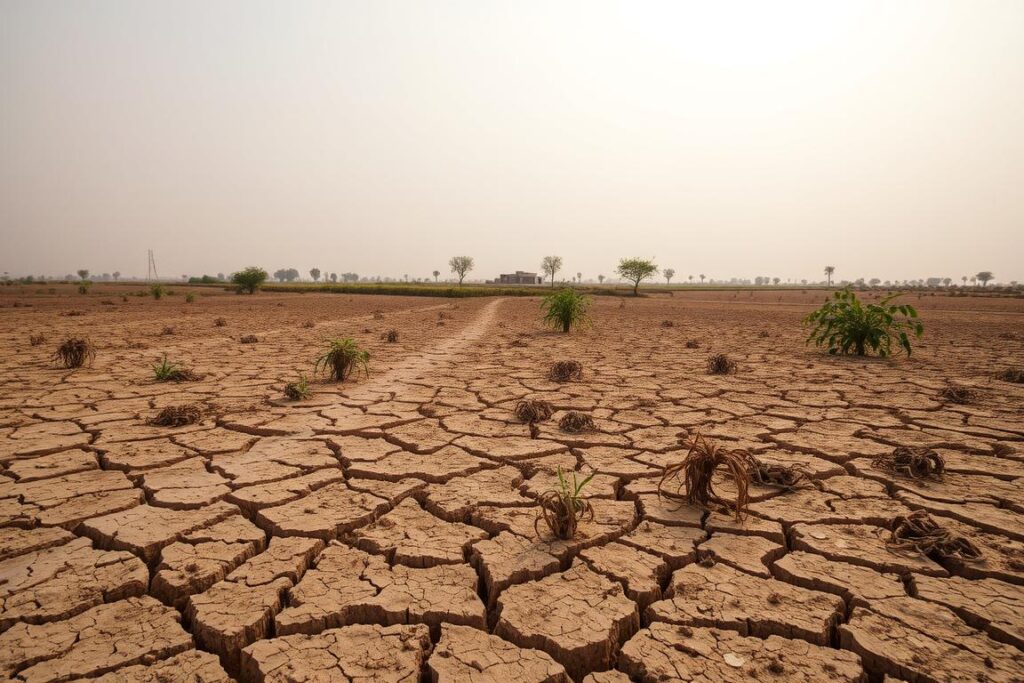
Pakistan is facing big challenges from climate change. The big question is: How will the changing climate affect Pakistan’s agricultural productivity and economy?
Pakistan’s economy depends a lot on agriculture. This makes it very vulnerable to climate change. Rising temperatures and unpredictable weather are changing the country’s farms. This leads to agricultural losses with big consequences.
It’s very important to understand this issue through research. This is key to finding ways to lessen these impacts. It helps keep the country’s food safe and its economy stable.
Key Takeaways
- Pakistan’s agriculture is highly susceptible to climate change.
- Rising temperatures affect crop yields and quality.
- Unpredictable weather patterns lead to agricultural losses.
- Research is crucial for developing mitigation strategies.
- Economic stability is closely linked to agricultural productivity.
Understanding Climate Change and Its Economic Repercussions
Climate change is affecting the economy worldwide. It’s not just an environmental problem. It also impacts economic stability and growth, especially in areas that rely heavily on farming.
Definition of Climate Change
Climate change means the Earth is getting warmer over time. This warming is mainly because of human actions that release greenhouse gases. The effects of climate change are huge, changing weather, sea levels, and ecosystems everywhere.
Overview of Economic Impacts Globally
The economic effects of climate change are vast and varied. Some major impacts include:
- Natural disasters happening more often and being worse, causing big economic losses.
- Changes in weather and water affecting how well crops grow.
- Rising sea levels causing damage to coastlines and flooding, affecting buildings and homes.
Worldwide, the economic costs of climate change are huge. For example, a report by the International Monetary Fund (IMF) shows that climate disasters can greatly reduce GDP in affected countries.
| Region | Projected Economic Loss by 2050 | Projected Economic Loss by 2100 |
|---|---|---|
| South Asia | $100 billion | $500 billion |
| Sub-Saharan Africa | $50 billion | $300 billion |
| Global | $1 trillion | $5 trillion |
Importance of Agriculture in Economic Framework
Agriculture is key to the economy in many countries, especially in developing ones. It creates jobs and adds a lot to GDP. In Pakistan, for example, agriculture makes up about 20% of GDP and employs nearly 40% of the workforce.
Agriculture is more than just an economic factor. It’s also crucial for food and rural development. But, it’s very sensitive to climate change. Changes in weather can hurt crop growth.
Economic Losses in Pakistan Due to Climate Change
Climate change is a big threat to Pakistan’s economy. It affects the country’s agriculture a lot. Pakistan relies heavily on farming, making it very vulnerable to climate change.
Key Statistics on Economic Impact
The economic losses in Pakistan due to climate change are huge. Studies say the country could lose up to 2.2% of its GDP annually by 2050. This is due to disasters and changes in weather.
The agricultural sector, a big part of Pakistan’s economy, will suffer a lot. In recent years, Pakistan has seen many climate-related disasters. These have caused big economic losses.
For example, the 2022 floods damaged over $10 billion worth of property. This shows how vulnerable Pakistan’s economy is to climate change.
Comparison with Other Countries
Pakistan is very vulnerable to climate change compared to other countries. Neighbors like India and Bangladesh also face big economic losses from climate change. But Pakistan’s unique geography makes it even more susceptible.
A study showed Pakistan’s farming is hit harder by temperature changes than its neighbors. This makes Pakistan’s agriculture more vulnerable.
Long-term Projections for Pakistan’s Economy
Long-term projections are not good if climate change keeps going. By 2100, Pakistan’s GDP could drop by up to 9%. This is because of climate change’s effects on farming, water, and other sectors.
The government and international groups are working on solutions. They aim to make Pakistan’s economy more resilient to climate change. This includes better irrigation, climate-friendly farming, and disaster preparedness.
Agriculture as a Pillar of Pakistan’s Economy
Agriculture is key to Pakistan’s economy, supporting many people. It’s not just about jobs; it also boosts the national GDP. But, it faces challenges too.
Role of Agriculture in Employment
Agriculture is a big job creator in Pakistan. About 40% of the labor force works in this field. It’s vital for rural areas and the national economy.
Jobs in agriculture vary, from farming to supporting industries. This variety helps keep rural areas thriving and reduces city migration.
Contribution to GDP
Agriculture is a big part of Pakistan’s GDP. It makes up about 20-25% of the country’s GDP. This sector’s impact goes beyond just farming, affecting related industries too.
Agriculture also helps with foreign exchange. Exports like cotton, rice, and fruits bring in a lot of money for the country.
Vulnerabilities Within the Agricultural Sector
The agricultural sector in Pakistan has big challenges. Climate risks and crop productivity decline are major concerns. Climate change causes unpredictable weather, harming crops and productivity.
- Higher temperatures and changing rain patterns hurt crop yields and quality.
- Old farming methods and lack of new technologies make things worse.
- Water scarcity, partly due to climate change, is a big problem for farming.
To tackle these issues, we need to use climate-smart farming, improve irrigation, and support research. This will help crops survive climate change.
A recent report says climate change is a big threat to Pakistan’s farming. We must act fast to make farming more resilient.
“The agricultural sector’s ability to adapt to climate change will be crucial in determining the future of Pakistan’s economy and food security.”
Climate Change Effects on Crop Production
Crop production is key to Pakistan’s economy but is facing big challenges from climate change. Rising temperatures and changes in rain patterns are major issues for farming.
Increased Temperature and Yield Reduction
Climate change is causing crops to grow less. Higher temperatures stress crops, making them age early and grow less. This is a big worry for crops that don’t like temperature changes.
For example, wheat, a main crop in Pakistan, is very sensitive to temperature changes. Even a small rise in temperature can hurt wheat yields a lot.
Changes in Precipitation Patterns
Changes in rain patterns also hurt crop production. Unpredictable rain can cause droughts or floods, both bad for crops. Droughts stress crops, while floods can destroy them.
Pakistan’s farming, which relies on rain, is very vulnerable to these changes. It needs more resilient farming practices because of the changing rain patterns.
Impact on Crop Diversity and Food Security
Climate change is also reducing crop diversity. Changes in weather can make some crops not grow well in certain areas. This loss of diversity is bad for food security, making farming less able to handle future climate shocks.
Keeping crop diversity is key to food security with climate change. We need to use practices that help keep crop diversity and make farming more resilient.
Water Resources and Climate Change Interplay
Pakistan’s water resources face threats from climate change. This change alters precipitation patterns and raises temperatures. It impacts the country’s agriculture, economy, and food security.
Diminishing Water Supplies
Climate change is causing a drop in water supplies. Changes in monsoon patterns and melting glaciers in the Himalayas are to blame. This affects water for irrigation, drinking, and other uses.
The impact on water resources is multifaceted:
- Reduced river flow during dry seasons
- Increased risk of floods due to heavy rainfall
- Changes in groundwater recharge rates
Effects on Irrigation Systems
Irrigation is key for Pakistan’s agriculture, which supports the economy. Climate change makes irrigation systems less reliable and efficient. This leads to crop failures and lower productivity.
The table below shows how climate change affects irrigation systems in Pakistan:
| Impact | Description | Potential Consequences |
|---|---|---|
| Reduced Water Availability | Less water in rivers and reservoirs | Crop failures, reduced agricultural productivity |
| Increased Flood Risk | Heavy rainfall events | Damage to crops, infrastructure, and loss of life |
| Changes in Water Quality | Increased salinity, pollution | Reduced water usability for irrigation and drinking |
Role of Climate Change in Water Management
Effective water management is key to fighting climate change’s water impacts. This means using efficient irrigation, promoting water saving, and creating policies for climate challenges.
By being proactive in water management, Pakistan can lessen climate change risks. This ensures a sustainable future for its water resources.
The Role of Policy in Addressing Economic Impacts
Dealing with climate change’s economic effects needs a mix of policies. These should focus on making farming more sustainable. Pakistan’s farming sector is key to its economy. So, it’s crucial to have good policies to fight climate change’s harm.
Current Policies and Regulations
Pakistan has set up policies to protect its farming from climate change. It aims to better irrigation, use crops that can handle climate change, and warn farmers about bad weather.
The country has a National Climate Change Policy and an Agriculture Policy. These aim for farming that’s good for the planet and can adapt to climate change. But, how well these policies work depends on how they’re put into action and if they get enough money.
| Policy/Initiative | Objective | Status |
|---|---|---|
| National Climate Change Policy | To address climate change impacts through adaptation and mitigation | Ongoing |
| Agriculture Policy | To promote sustainable agriculture practices | Implemented |
| Climate-Resilient Crop Varieties | To enhance crop resilience to climate change | In Progress |
Recommendations for Future Action
To tackle climate change’s effects on farming, we suggest a few steps:
- Make farming more resilient through research and development.
- Improve how we manage water to protect crops from changing weather.
- Help farmers with insurance to cover losses from extreme weather.
These ideas aim to improve on what we already have. They help fill the gaps in our current ways of dealing with climate change.
Importance of International Cooperation
Working together globally is key to fighting climate change. Pakistan can gain from partnerships by getting new tech, money, and knowledge.
By teaming up with global groups, Pakistan can learn and use the best ways to deal with climate change. This will help lessen the economic damage to its farming.
Key areas for international cooperation include:
- Climate change research and development.
- Training farmers and farming groups.
- Getting climate finance and technology.
Case Studies: Agriculture in Climate-Impacted Regions
Climate change is changing how we farm in vulnerable areas. Pakistan, with a big farming sector, feels the effects a lot.
Success Stories from Adaptation Strategies
In areas hit hard by climate change, some farming methods are working well. For example, using crops that can handle drought helps farmers in dry areas keep growing food.
“The adoption of climate-resilient agricultural practices is not just a necessity; it’s an opportunity for farmers to thrive in challenging conditions.”
Other good examples include using water wisely and farming in a way that’s good for the planet. These methods help farmers deal with climate change and make farming stronger.
Lessons Learned from Past Failures
Looking at past mistakes helps us learn for the future. One big lesson is the value of warning systems for bad weather. These systems can really help farmers and their communities.
- Early warning systems for weather events
- Diversifying crops to include ones that can handle climate change
- Teaching communities about climate change
Comparative Analysis of Resilient Regions
Studying areas that have adapted well to climate change shows what works. Key factors include good policies, investing in research, and involving communities.
| Region | Adaptation Strategies | Outcome |
|---|---|---|
| Region A | Drought-resistant crops, Efficient irrigation | Improved yield, Reduced water usage |
| Region B | Crop diversification, Community education | Increased resilience, Enhanced food security |
| Region C | Policy support, Research investment | Stronger agricultural sector, Better climate adaptation |
These case studies show how important it is to have strategies that fit each area. They also highlight the need for ongoing support and investment in farming to face climate change challenges.
Community Adaptation and Resilience Strategies
Community-led efforts are key in fighting climate change in Pakistan. They help tackle the big challenges climate change brings, especially in farming. Farming is a big part of Pakistan’s economy.
Grassroots Initiatives in Agriculture
Grassroots efforts are crucial for community adaptation. They include using drought-tolerant crops and better irrigation. For example, farmers in Punjab are using conservation agriculture. This keeps crop productivity up even when the weather changes.
- Adoption of climate-resilient crop varieties
- Improved irrigation management
- Soil conservation techniques
These local efforts boost farm productivity. They also help communities get through climate-related hard times.
Government Support and Local Engagement
Government support is key for community success. It provides money, technical help, and builds infrastructure for local projects. Also, involving locals in planning makes sure strategies fit their needs.
The Pakistani government is pushing for climate-smart agriculture. This means teaching farmers about climate-resilient farming. It also helps build climate-resilient farms and tools.
- Financial assistance for farmers
- Technical training on climate-resilient practices
- Infrastructure development for climate resilience
The Role of Education in Building Resilience
Education is vital for community resilience. It teaches people about climate change and how to adapt. This helps them make smart choices to stay resilient.
Teaching farmers about climate-resilient agricultural practices is very effective. These programs boost farm productivity. They also help cut down agricultural losses caused by climate change.
Conclusion: The Path Forward for Pakistan’s Economy
Climate change is a big threat to Pakistan’s economy, especially for farming. Rising temperatures and changes in rain patterns hurt crop yields. This makes food harder to find and puts a strain on water resources.
Key Research Outcomes
Research shows climate change is more than just an environmental problem. It’s also a big economic risk for Pakistan. The farming sector, key to the country’s economy, faces big challenges due to climate changes.
Action for a Resilient Future
To fight climate change’s effects in Pakistan, everyone needs to work together. We must improve irrigation, support farming that can handle climate changes, and back policies that help the economy stay strong.
Sustainable Practices for Economic Stability
Using sustainable practices is key for Pakistan’s economic future. By adding climate change solutions to farming and economic plans, Pakistan can lessen its risk to climate changes. This will help build a more stable and sustainable future.
8qbets… The name is short and catchy! A nice selection of different betting options. Have fun with 8qbets