Table of Contents
Can farmers in Pakistan beat the big farming challenges that hurt their work? Yes, by finding the main problems and fixing them.
Pakistan’s economy depends a lot on sustainable agriculture. Many people work in farming. But, farmers deal with big crop issues that lower their work and money.
Fixing agriculture problems is key for Pakistan’s economy and food safety. This article will look at the big challenges farmers face. It will also share ways to solve them, aiming for a better future for Pakistan’s farms.
The Current State of Agriculture in Pakistan
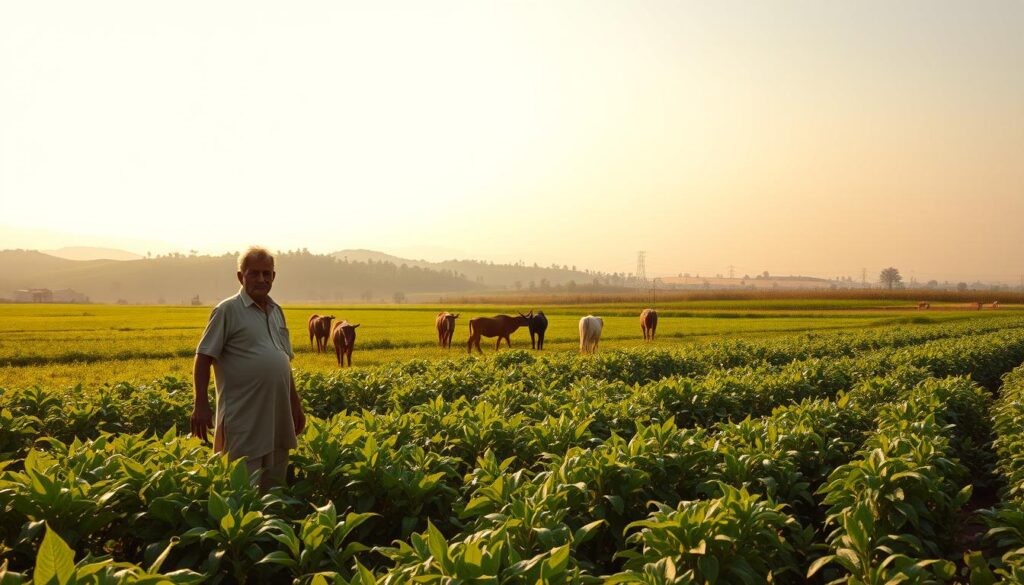
Agriculture is very important in Pakistan. It helps a lot with the country’s money. It also gives jobs to many people and helps everyone have food.
Economic Importance of the Agricultural Sector
The farming sector is big for Pakistan’s economy. It makes up about 20% of the country’s money. It also gives jobs to about 40% of the people. The sector helps bring in money from selling crops and products to other countries.
Major Crops and Farming Systems in Pakistan
Pakistan grows many crops like wheat, rice, cotton, and sugarcane. The farming ways vary from small farms to big ones. The Indus River and its streams help with water for farming.
Recent Agricultural Trends and Statistics
Recently, farming in Pakistan has grown. This is because of better farming methods and using new technology. But, farming still has problems like not enough water and bad soil.
| Crop | Production (tons) | Change (%) |
|---|---|---|
| Wheat | 25 million | +5% |
| Rice | 7 million | +3% |
| Cotton | 10 million | +2% |
Common Agriculture Problems Facing Pakistani Farmers
Pakistani farmers face many challenges that affect their work and lives. These issues vary by region. They have big effects on the country’s economy and food supply.
Overview of Key Challenges in Different Regions
Pakistan’s farms are different in each area. In Punjab, farmers deal with water scarcity and soil degradation. In Sindh, they battle pest infestation and crop failure.
- Crop failure due to inadequate irrigation systems
- Soil degradation resulting from intensive farming practices
- Pest infestation and disease outbreaks
Impact on National Food Security
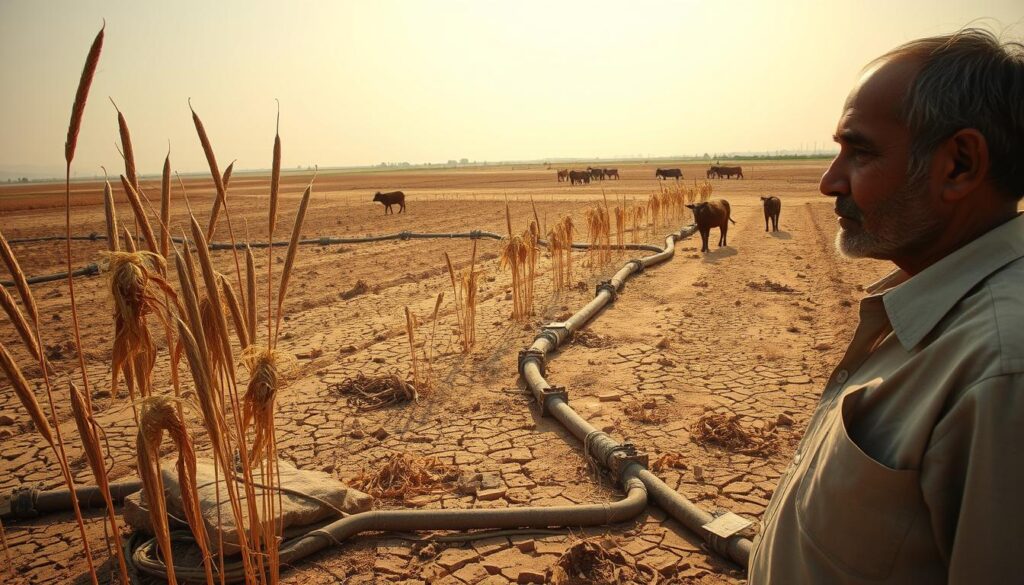
The problems faced by farmers hurt the country’s food security. Crop failure and less farming mean food shortages. This makes the country rely more on imports.
Socioeconomic Effects on Rural Communities
The problems also hurt rural communities a lot. These areas depend a lot on farming. Less farming means less money for farmers, affecting their lives.
To solve these issues, we need to find real solutions. We should use better farming methods, improve water systems, and help farmers learn and get resources.
Water Scarcity and Irrigation Challenges
Pakistan’s population is growing fast. This puts a lot of pressure on its water for farming. Farming is a big part of Pakistan’s economy and needs a lot of water.
Pakistan’s Water Crisis and Its Agricultural Impact
Pakistan’s farms are really struggling because of a big water crisis. Not enough water hurts crops, farmers, and the economy.
Key statistics highlighting the water crisis include:
| Indicator | Value | Impact |
|---|---|---|
| Water availability per capita | 964 cubic meters | Below the threshold for water scarcity |
| Irrigation water usage | 90% of total water resources | High dependency on irrigation |
Traditional vs. Modern Irrigation Methods
Old ways of watering, like flood irrigation, are still used in Pakistan. But they waste a lot of water.
New ways, like drip irrigation, are better. Drip irrigation sends water right to the roots, saving water.
Practical Water Conservation Solutions
It’s very important to save water in Pakistan’s farms.
Implementing Drip Irrigation Systems
Drip irrigation is a smart way to save water. It uses up to 50% less water than old methods.
Rainwater Harvesting Techniques for Small Farms
Collecting rainwater is also a good idea. It stores water for when it’s dry.
you can watch this video <div class=”wp-block-embed__wrapper”> https://www.youtube.com/watch?v=30zAWSINOgs </div></figure> <!– /wp:embed –>
Using new irrigation and saving water methods can help farmers. They can grow more crops with less water.
Soil Degradation and Fertility Management
Soil health is key for farming to last. But, in Pakistan, soil faces big problems. Erosion, salinization, and too much chemical fertilizer harm farming.
Soil Erosion and Salinization in Pakistani Farmlands
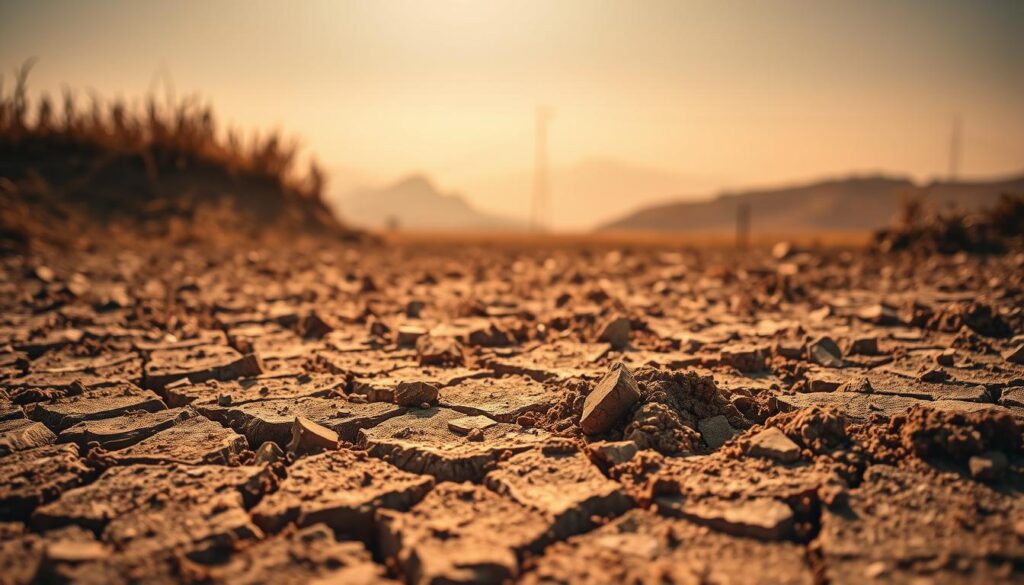
Soil erosion and salinization hurt Pakistani farms. Erosion takes away good soil. Salinization happens when too much salt builds up. Both hurt soil and crops.
Chemical Fertilizer Dependency and Its Consequences
Farmers in Pakistan use too many chemicals to grow more crops. But, this harms soil, water, and nature. Finding a better way is crucial.
Sustainable Soil Restoration Practices
Fixing soil health is important. Good ways include changing crops, adding organic stuff, and not tilling too much. These methods make soil better and healthier.
Effective Crop Rotation Strategies
Changing crops is a smart move. It keeps soil rich, fights pests, and grows more kinds of crops. Legumes are great for adding nitrogen.
Organic and Biological Soil Amendments
Using natural stuff to fix soil is also smart. Things like compost and manure make soil better without harming it.
| Soil Restoration Practice | Benefits |
|---|---|
| Crop Rotation | Improves soil fertility, reduces pests and diseases |
| Organic Amendments | Enhances soil structure, increases biodiversity |
| Conservation Tillage | Reduces soil erosion, conserves moisture |
By using these green methods, farmers in Pakistan can fix soil problems. This makes farming better and more lasting.
Pest and Disease Control Strategies
Keeping pests and diseases away is key for food safety and green farming in Pakistan. The country’s farms face many pests and diseases. These can cut down crop yields and hurt farmers’ lives.
Endemic Crop Pests and Diseases in Pakistan
Pakistan has many pests and diseases harming its crops. The cotton bollworm, wheat stem borer, and rice stem borer are big problems. Wheat rust, cotton blight, and rice blast also cause a lot of damage.
Major Pests and Diseases:
- Cotton Bollworm: Affects cotton crops, causing significant yield loss.
- Wheat Stem Borer: Damages wheat crops, reducing productivity.
- Rice Blast: A fungal disease affecting rice crops.
Limitations of Chemical Pesticide Use
Chemical pesticides are often used to fight pests and diseases. But, they have big problems. They can make pests resistant, pollute the environment, and harm farmers and those who eat the food.
| Issue | Description | Impact |
|---|---|---|
| Pesticide Resistance | Pests develop resistance to chemical pesticides. | Reduced efficacy of pest control measures. |
| Environmental Pollution | Chemical runoff into water bodies and soil. | Harms aquatic life and affects soil health. |
| Health Hazards | Exposure to toxic chemicals for farmers and consumers. | Increases risk of health problems. |
Integrated Pest Management Solutions
Integrated Pest Management (IPM) is a smart way to handle pests and diseases. It uses different methods together. This includes cultural, biological, and chemical controls.
Biological Control Methods for Pakistani Farms
Biological control uses natural enemies to fight pests. This is good for the environment and is a lasting solution.
Locally-Adapted Resistant Crop Varieties
Using crops that resist pests and diseases is smart. These are made to fit local needs through special breeding.
By using IPM, Pakistani farmers can cut down on chemical use. This helps the environment and makes crops grow better.
Climate Change Adaptation for Pakistani Agriculture
The way we farm in Pakistan is changing because of climate change. We need farming that can handle the heat, changes in rain, and more extreme weather.
Regional Climate Change Patterns and Projections
Pakistan’s climate is changing in different ways in different places. The country’s mountains and sea coast make its weather very varied. Experts say the heat will keep going up, which will affect farming a lot.
Vulnerability of Traditional Farming Systems
Old ways of farming in Pakistan are not good at dealing with climate change. Changes in weather hurt crops and animals. Farmers who stick to old ways might find it hard to keep up without help.
Climate-Resilient Agricultural Practices
It’s very important for Pakistan’s farms to use new ways to farm that can handle climate change. These new methods are made for the special problems of different areas.
Drought-Resistant Farming Techniques
Places with less rain need special farming that can survive without much water. This includes using crops that don’t need much water, keeping the soil moist, and using water wisely.
Crop Diversification and Timing Adjustments
Planting different crops and changing when to plant them helps farmers deal with climate change. Growing many crops makes farmers less dependent on one crop. This makes them more ready for weather surprises.
Support is needed to help farmers use these new ways of farming. They need help with weather info, new tools, and training. With these steps, Pakistani farmers can better face climate change. This will help keep food safe and farming strong.
Bridging the Technology Gap in Pakistani Farming
Pakistani farming is getting a big tech boost. This aims to make crops grow better and help farmers more. Using technology is key for farming to grow and stay strong.
Current State of Agricultural Technology Adoption
In Pakistan, some farmers use new tech, but many stick to old ways. The government and private groups are trying to help. They want more farmers to use technology.
Affordable Technology Solutions for Small-Scale Farmers
For small farmers, cost is a big issue. But, new ideas like mobile apps and sharing tech are helping. These make tech easier for small farmers to get.
Knowledge Transfer and Farmer Education Programs
Teaching farmers about new tech is very important. These programs show farmers how to use new tools. This helps them grow better crops.
Mobile Applications for Pakistani Farmers
Mobile apps give farmers updates on weather and prices. They also teach the best farming methods. These apps are very helpful for farmers.
Community-Based Technology Sharing Models
Training lead farmers to teach others is a good idea. This way, tech gets shared in the community. It helps more farmers use new technology.
Market Access and Economic Solutions
Helping farmers get to markets and get fair prices is key for Pakistan’s farming growth. Farmers in Pakistan face big challenges in getting to markets and getting good prices for their crops.
Supply Chain Challenges in Pakistan’s Agricultural Sector
The farming supply chain in Pakistan has big problems. There’s not enough storage, bad roads, and no good market info. These supply chain challenges cause a lot of waste and less money for farmers.
Price Volatility and Market Exploitation
Pakistani farmers deal with price volatility. Prices for their crops change a lot, making it hard to know what to expect. This can lead to middlemen taking advantage of them.
Improving Market Access and Fair Pricing
To fix these problems, we need better market access and fair pricing. Here’s how:
- Start farmer cooperatives to help farmers work together and get better deals.
- Offer value addition and processing to make crops worth more.
Farmer Cooperatives and Collective Marketing
Farmer cooperatives are very important. They help farmers share resources, knowledge, and get better prices by working together.
Value Addition and Processing Opportunities
Investing in value addition and processing can really help farmers. It makes their crops more valuable and brings in more money.
Conclusion
Pakistan’s farms face big challenges like water shortage, soil damage, and pests. These issues hurt food safety and farming’s future.
We need to use water wisely, make soil better, and cut down on harmful chemicals. This will help a lot.
Farmers can grow more food and fight climate change with new farming ways and tech. This makes food safer for everyone.
Fixing farming in Pakistan needs everyone to work together. Farmers, leaders, and others must join hands to find good solutions.
By choosing green farming and helping farmers sell more, Pakistan can make its farms better. This will keep everyone fed and healthy.
For more artice you can visit our website