Agriculture is the backbone of human civilization, but it faces significant challenges in maintaining productivity while ensuring environmental sustainability. Soil degradation affects nearly a quarter of the world’s agricultural land, threatening food security and ecosystem health.
Effective soil management is crucial for maintaining soil health, improving crop yields, and mitigating climate change. By adopting sustainable practices, farmers can enhance soil fertility, reduce erosion, and promote biodiversity.
Key Takeaways
- Soil degradation affects a significant portion of the world’s agricultural land.
- Sustainable soil management is essential for maintaining soil health and promoting ecosystem services.
- Adopting sustainable practices can improve crop yields and mitigate climate change.
- Soil fertility is crucial for agricultural productivity and environmental sustainability.
- Effective soil management can reduce erosion and promote biodiversity.
The Current State of Agricultural Soils
The current state of agricultural soils is a critical factor in determining the sustainability of farming practices. Healthy soils are the foundation of productive agriculture, supporting crop growth, and maintaining ecosystem services.
The Foundation of Agricultural Productivity
Agricultural productivity is heavily reliant on the health and fertility of the soil. Soils that are rich in organic matter, have good structure, and adequate nutrient levels can support higher crop yields and better resilience to environmental stresses.
Key factors influencing soil health include:
- Organic matter content
- Soil pH and nutrient availability
- Soil structure and water-holding capacity
- Biodiversity and microbial activity
Soil Degradation Challenges in the United States
The United States faces significant soil degradation challenges, including erosion, salinization, and nutrient depletion. Soil degradation not only affects agricultural productivity but also has broader environmental implications, such as water pollution and loss of biodiversity.
The Economic Impact of Poor Soil Health
Poor soil health can have substantial economic impacts on agriculture, including reduced crop yields, lower farm incomes, and increased costs for fertilizers and other inputs. A study by the National Resources Conservation Service highlighted the significant economic benefits of adopting conservation tillage and other soil health-improving practices.
The economic implications of soil degradation underscore the need for sustainable soil management practices that prioritize soil health and long-term productivity.
Understanding Sustainable Soil Management Practices for Modern Agriculture
The importance of sustainable soil management in contemporary agricultural practices cannot be overstated. As the global population continues to grow, the need for productive and resilient agricultural systems becomes increasingly critical.
Sustainability in agriculture encompasses a broad range of practices aimed at maintaining or enhancing the long-term productivity of the land. Defining sustainability in this context involves understanding its multifaceted nature.
Defining Sustainability in Agricultural Contexts
Sustainability in agriculture is about balancing the needs of the present without compromising the ability of future generations to meet their own needs. It involves adopting practices that are environmentally friendly, economically viable, and socially responsible.
The Three Pillars: Environmental, Economic, and Social Sustainability
The three pillars of sustainability are interlinked and equally important. Environmental sustainability focuses on preserving natural resources and ecosystems. Economic sustainability ensures that farming practices are profitable and contribute to the local economy. Social sustainability involves promoting social equity and improving the quality of life for farming communities.
Long-term Benefits of Sustainable Soil Management
Adopting sustainable soil management practices yields numerous long-term benefits, including improved soil health, increased biodiversity, and enhanced ecosystem services. These practices not only contribute to environmental stewardship but also promote agricultural productivity and resilience.
By embracing sustainable soil management, farmers can ensure the long-term viability of their operations while contributing to a healthier environment and more resilient communities.
Conservation Tillage and No-Till Farming
Conservation tillage and no-till farming represent a significant shift in agricultural practices, focusing on minimizing soil disturbance to achieve better soil health and structure. These approaches have gained popularity due to their potential to reduce soil erosion, improve water retention, and enhance soil biodiversity.
Principles of Reduced Tillage Systems
Reduced tillage systems are designed to minimize soil disturbance, thereby preserving soil organic matter and reducing erosion. Strip-till and zone-till approaches are variations that till only specific areas of the field, while leaving other areas untilled.
Strip-Till and Zone-Till Approaches
Strip-till involves tilling narrow strips, usually where the crop will be planted, while zone-till focuses on tilling a specific zone around the planting area. Both methods aim to balance the need for soil preparation with the benefits of reduced tillage.
Full No-Till Implementation
Full no-till farming eliminates tillage entirely, relying on precise planting equipment to sow seeds in undisturbed soil. This method maximizes soil health benefits, including improved soil structure and increased organic matter.
Equipment and Implementation Strategies
Successful implementation of conservation tillage and no-till farming requires specialized equipment, such as no-till drills and planters designed to operate in untilled soil. Farmers must also consider factors like crop selection, residue management, and weed control.
Measuring Soil Structure Improvements
Soil structure improvements can be measured through various indicators, including increased water infiltration rates, improved soil aggregate stability, and enhanced soil biota. Regular soil testing and monitoring are crucial for assessing the effectiveness of conservation tillage practices.
By adopting conservation tillage and no-till farming, farmers can contribute to more sustainable agricultural practices, enhancing soil health and reducing environmental impact.
Cover Cropping and Crop Rotation Strategies
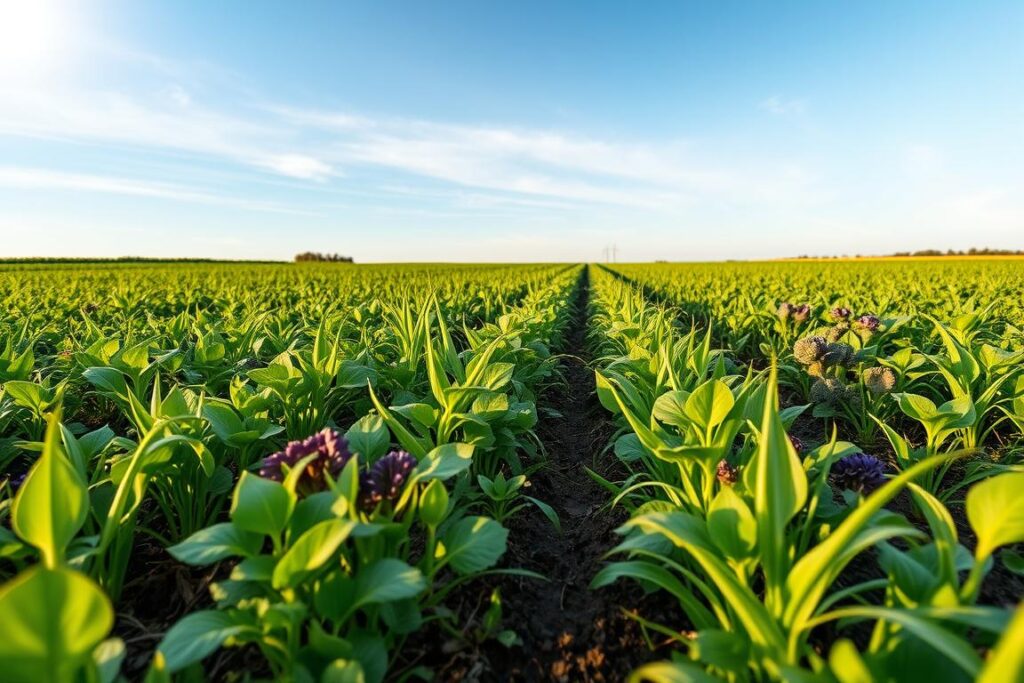
The integration of cover crops and crop rotations into farming practices is a key strategy for improving soil health and reducing environmental impact. These practices not only enhance soil fertility and structure but also contribute to biodiversity and ecosystem services. By adopting cover cropping and crop rotation, farmers can create more resilient and sustainable agricultural systems.
Selecting Appropriate Cover Crops for Your Region
Choosing the right cover crops is crucial for maximizing their benefits. Different regions and soil types require specific cover crops that can thrive in local conditions.
Legumes for Nitrogen Fixation
Legumes, such as clover and beans, are excellent for fixing atmospheric nitrogen into the soil, reducing the need for synthetic fertilizers. Legumes can fix up to 200 kg/ha of nitrogen, making it available for subsequent crops.
Grasses for Biomass and Erosion Control
Grasses like rye and oats are commonly used for their ability to produce high biomass and control erosion. They help in maintaining soil health by reducing soil erosion and improving soil structure.
Designing Effective Crop Rotations
Effective crop rotations involve planning a sequence of crops that improves soil health and reduces pests and diseases. A well-designed rotation can break disease cycles and improve nutrient availability.
- Rotate between different crop families to maximize diversity.
- Incorporate cover crops into the rotation to enhance soil health.
- Plan rotations based on the nutrient requirements and growth habits of crops.
Termination Timing and Methods
The timing and method of terminating cover crops are critical for their successful integration into cash crop systems. Termination should be done in a way that minimizes impact on the subsequent cash crop.
- Use appropriate termination methods such as mowing, rolling, or herbicides.
- Timing should be based on the growth stage of the cover crop and weather conditions.
Integration with Cash Crop Systems
Integrating cover crops and crop rotations with cash crop systems requires careful planning to ensure that these practices complement the cash crops. This integration can lead to improved soil health, reduced input costs, and increased overall farm productivity.
By adopting these strategies, farmers can enhance the sustainability of their agricultural practices, contributing to a healthier environment and more resilient farming systems.
Biological Soil Management
Biological soil management is a crucial aspect of modern agriculture, focusing on the complex interactions within the soil ecosystem. By understanding and enhancing the biological processes in soil, farmers can improve soil fertility, structure, and overall productivity.
Understanding the Soil Food Web
The soil food web is a complex network of organisms that live in the soil, including bacteria, fungi, protozoa, nematodes, and other microorganisms. These organisms play a vital role in decomposing organic matter, fixing nitrogen, and fighting plant diseases. A healthy soil food web is essential for maintaining soil fertility and supporting plant growth.
The soil food web is influenced by various factors, including soil type, organic matter content, and farming practices. By managing these factors, farmers can create a more favorable environment for beneficial microorganisms to thrive.
Beneficial Microorganisms and Their Functions
Beneficial microorganisms in the soil perform a range of functions that are critical for plant health and productivity. These include:
- Nitrogen fixation: Certain bacteria, such as Rhizobia, convert atmospheric nitrogen into a form that plants can use.
- Decomposition: Microorganisms break down organic matter, releasing nutrients that plants can absorb.
- Pathogen suppression: Some microorganisms produce compounds that inhibit the growth of plant pathogens.
Biostimulants and Microbial Inoculants
Biostimulants and microbial inoculants are products that contain microorganisms or substances that stimulate biological activity in the soil. These products can enhance soil fertility, improve plant growth, and increase crop yields. The use of biostimulants and microbial inoculants is becoming increasingly popular as farmers seek more sustainable and environmentally friendly practices.
Measuring Biological Activity in Soils
Measuring biological activity in soils is crucial for understanding the effectiveness of biological soil management practices. This can be done through various methods, including:
- Microbial biomass analysis: This measures the amount of microbial biomass in the soil.
- Respiration tests: These measure the rate of microbial respiration, indicating the level of biological activity.
- Soil enzyme assays: These measure the activity of specific enzymes involved in nutrient cycling.
By monitoring biological activity, farmers can make informed decisions about their soil management practices and adjust them as needed to optimize soil health.
Organic Matter Management and Composting
Effective organic matter management is crucial for maintaining soil health and fertility in modern agriculture. Organic matter plays a significant role in improving soil structure, increasing water retention, and supporting biodiversity.
Building Soil Carbon Levels
Building soil carbon levels is essential for enhancing soil fertility and mitigating climate change. Practices such as incorporating cover crops, reducing tillage, and adding organic amendments can significantly increase soil carbon.
Increasing soil carbon not only improves soil health but also contributes to carbon sequestration, making it a win-win strategy for farmers and the environment.
On-Farm Composting Techniques
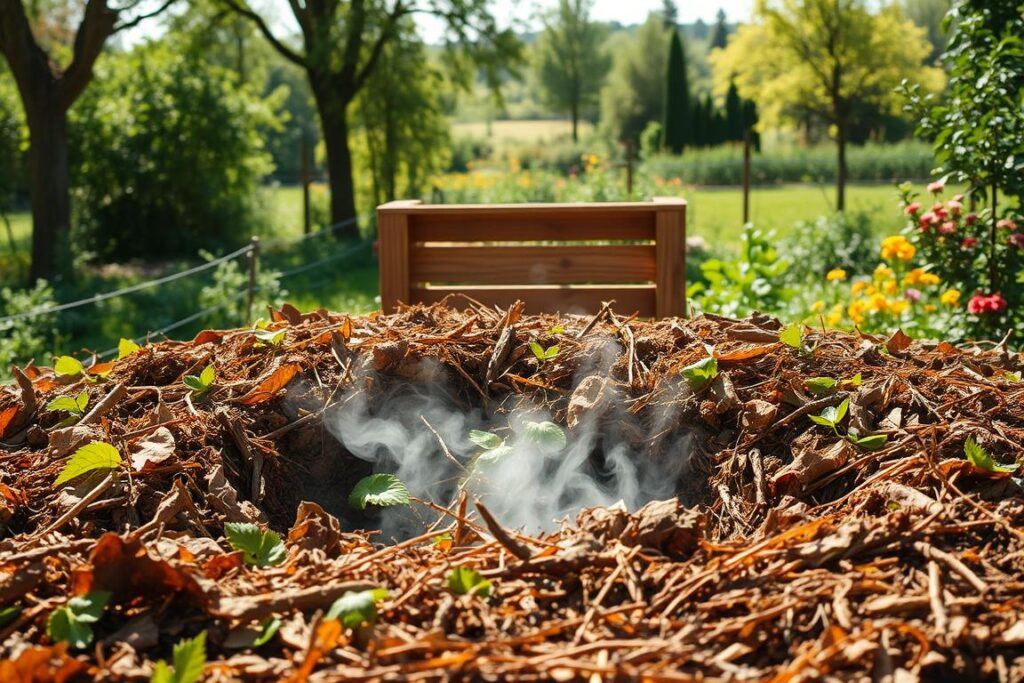
On-farm composting is a valuable practice for managing organic waste and creating a nutrient-rich soil amendment. Two effective methods are windrow composting and vermicomposting.
Windrow Composting Methods
Windrow composting involves piling organic materials into long rows (windrows) and regularly turning them to ensure aerobic decomposition. This method is effective for large-scale operations.
Vermicomposting for Specialty Applications
Vermicomposting, or worm composting, uses earthworms to break down organic matter. It’s particularly useful for small-scale or specialty farming operations, producing a high-quality compost.
Application Methods and Timing
The application of compost can be done through various methods, including incorporation into the soil before planting or as a top dressing during the growing season. Timing is critical to maximize the benefits of compost.
Proper timing ensures that the nutrients are available to the crops when needed, enhancing their effectiveness.
| Composting Method | Scale | Nutrient Content |
|---|---|---|
| Windrow Composting | Large | Variable |
| Vermicomposting | Small to Medium | High |
Precision Nutrient Management
In the quest for sustainable agriculture, precision nutrient management stands out as a key strategy for balancing crop productivity with environmental stewardship. This approach involves a combination of advanced technologies and traditional farming practices to optimize the use of nutrients.
Comprehensive Soil Testing Protocols
Effective precision nutrient management begins with comprehensive soil testing protocols. These protocols involve regular soil sampling to determine nutrient levels, pH, and other critical factors that influence soil fertility. By understanding the current state of their soil, farmers can make informed decisions about fertilizer applications.
Soil testing helps identify nutrient deficiencies and excesses, allowing for targeted interventions that improve soil health and reduce waste. Advanced soil testing techniques, including grid sampling and zone sampling, provide detailed insights into soil variability across the field.
Balanced Fertilization Approaches
Balanced fertilization is a cornerstone of precision nutrient management. This involves applying the right type and amount of fertilizers at the optimal time to meet crop demands. By synchronizing fertilizer applications with crop needs, farmers can enhance nutrient use efficiency and minimize losses.
A balanced fertilization approach considers the overall nutrient budget, including the contribution of organic amendments, crop residues, and soil reserves. This holistic view helps farmers maintain soil fertility while reducing the risk of nutrient imbalances.
Reducing Nutrient Runoff and Leaching
One of the significant benefits of precision nutrient management is the reduction of nutrient runoff and leaching. By applying fertilizers in a targeted and controlled manner, farmers can minimize the amount of nutrients that enter waterways, thereby protecting water quality.
Strategies such as split applications and the use of slow-release fertilizers help to synchronize nutrient availability with crop uptake, reducing the risk of nutrient loss.
Technology Tools for Variable Rate Applications
The integration of technology is a key enabler of precision nutrient management. Tools such as GPS-guided equipment, soil sensors, and data analytics platforms facilitate variable rate applications, allowing farmers to apply fertilizers at the optimal rate and timing for each specific area of the field.
By leveraging these technology tools, farmers can optimize their fertilizer use, improve crop yields, and reduce environmental impacts. The use of data-driven insights enables more precise decision-making, supporting the overall goal of sustainable agriculture.
Water Conservation and Soil Health
Soil health and water conservation are interlinked, playing a vital role in sustainable farming practices. Effective management of these resources is crucial for maintaining agricultural productivity while minimizing environmental impact.
Improving Soil Water Infiltration and Retention
Enhancing soil water infiltration and retention is key to water conservation. Practices such as cover cropping and reduced tillage help improve soil structure, allowing it to absorb and retain more water. This not only reduces the need for irrigation but also decreases runoff, minimizing soil erosion.
Drought Resilience Strategies
Building drought resilience involves implementing practices that help soils retain moisture during dry periods. Techniques such as mulching and incorporating organic matter into the soil can significantly enhance its water-holding capacity. Additionally, selecting drought-tolerant crop varieties can help maintain productivity during water scarcity.
Managing Excess Water and Drainage Systems
Effective management of excess water is equally important for soil health. Proper drainage systems prevent waterlogging, which can be detrimental to plant growth. Installing tile drainage or creating waterways can help redirect excess water, reducing the risk of soil erosion and improving overall soil health.
Conclusion
Effective sustainable soil management practices are crucial for achieving agricultural productivity while promoting environmental stewardship. By adopting conservation tillage, cover cropping, and crop rotation strategies, farmers can improve soil health, reduce erosion, and enhance biodiversity.
Incorporating biological soil management and organic matter management techniques can further enhance soil fertility and structure. Precision nutrient management and water conservation strategies also play a vital role in maintaining soil health and reducing environmental impacts.
By embracing a holistic approach to soil management, farmers and agricultural practitioners can contribute to a more sustainable food system, improve crop yields, and protect the environment for future generations. As the global population continues to grow, the importance of sustainable soil management will only continue to increase, making it essential to adopt these practices now.
Read Related Article Below