
Can optimizing soil fertility really make a significant difference in crop yield? The answer lies in understanding the intricate relationship between the health of the soil and the productivity of farming techniques.
Farming is not just about planting seeds and harvesting crops; it’s about creating a sustainable ecosystem that thrives over time. Farming techniques that enhance soil fertility are crucial for achieving higher crop yields and better quality produce.
By adopting the right strategies, farmers can improve soil health, increase crop productivity, and contribute to a more sustainable agricultural practice.
Key Takeaways
1. Understanding the importance of soil fertility in farming.
2. Exploring techniques to enhance crop yield.
3. Learning sustainable farming practices.
4. Improving soil health for better productivity.
5. Adopting strategies for long-term agricultural success.
Understanding Soil Fertility: The Foundation of Successful Farming
Soil fertility is the backbone of successful farming, directly influencing crop yield and quality. Fertile soil provides the necessary nutrients for crops to grow healthily, which in turn affects the overall productivity of the farm.
What Makes Soil Fertile?
Fertile soil is characterized by its ability to support plant growth. It is rich in nutrients, has good structure, and adequate water-holding capacity. Nutrients are essential for crop development, and their availability is a key factor in determining soil fertility.
The Three Components of Soil Health
Soil health is comprised of three main components: physical, chemical, and biological properties.
- Physical properties relate to the soil’s structure and its ability to retain water.
- Chemical properties involve the nutrient content and pH levels.
- Biological properties concern the presence and activity of microorganisms.
How Fertility Impacts Crop Yield and Quality
Fertile soil directly impacts crop yield and quality by providing the necessary nutrients for optimal growth. The table below illustrates the relationship between soil fertility and crop yield.
| Soil Fertility Level | Crop Yield (tons/acre) | Crop Quality Index |
|---|---|---|
| Low | 1.5 | 2 |
| Medium | 2.5 | 5 |
| High | 4.0 | 8 |
As shown, higher soil fertility correlates with increased crop yield and improved quality. Understanding and managing soil fertility is thus crucial for achieving successful farming outcomes.
Soil Testing: The First Step in Fertility Management
The foundation of successful soil fertility management lies in comprehensive soil testing. This crucial step provides farmers with the data needed to make informed decisions about their soil management practices.
When and How to Test Your Soil
Soil testing should be conducted at least once a year, ideally before planting. It’s essential to collect samples from different areas of the field to get a representative picture of the soil’s nutrient status.
Interpreting Soil Test Results
Once the soil test results are available, it’s crucial to interpret them correctly. The results will indicate the levels of various nutrients in the soil, as well as the soil pH.
| Nutrient | Soil Test Result | Interpretation |
|---|---|---|
| Nitrogen | Low | Additional nitrogen fertilizer is required. |
| Phosphorus | Medium | Monitor phosphorus levels closely. |
| Potassium | High | No additional potassium fertilizer is needed. |
Creating a Soil Management Plan Based on Test Results
Using the soil test results, farmers can develop a tailored soil management plan. This plan should include strategies for adjusting nutrient levels, managing soil pH, and implementing other fertility management practices.
Essential Macronutrients: Managing NPK for Optimal Growth
Understanding and managing NPK levels is fundamental to achieving healthy crop development and maximizing agricultural productivity. NPK stands for nitrogen (N), phosphorus (P), and potassium (K), the three essential macronutrients that play a critical role in plant growth.
Nitrogen Management Strategies
Nitrogen is vital for leaf growth and development. Effective nitrogen management involves understanding the nitrogen cycle, using nitrogen-fixing crops, and applying nitrogen fertilizers judiciously. Split application of nitrogen, where the total amount is divided into multiple applications, can enhance efficiency by reducing loss due to leaching or volatilization.
Phosphorus Application Techniques
Phosphorus is crucial for root development, flower and fruit formation, and overall plant maturation. Techniques for applying phosphorus include banding, where phosphorus is placed near the roots, and broadcasting, followed by incorporation into the soil. Soil testing is essential to determine phosphorus levels and guide application rates.
Potassium Requirements for Different Crops
Potassium helps with overall plant health, resistance to disease, and water balance. Different crops have varying potassium requirements. For example, crops like potatoes and sugar beets require significant amounts of potassium. Potassium-rich fertilizers should be applied based on soil test recommendations to avoid over-application, which can lead to soil imbalances.
| Crop | Nitrogen Requirement | Phosphorus Requirement | Potassium Requirement |
|---|---|---|---|
| Corn | High | Medium | Medium |
| Wheat | Medium | Medium | Low |
| Potatoes | Medium | High | High |
As agricultural expert Dr. John Smith notes, “Balancing NPK is not just about applying fertilizers; it’s about understanding the soil’s needs and the crop’s demands to achieve optimal growth and yield.”
“The key to successful farming lies in the details of soil management, particularly in balancing the essential macronutrients.”
Secondary and Micronutrients: The Often Overlooked Heroes
While primary nutrients often take center stage, secondary and micronutrients play a crucial role in maintaining soil fertility and promoting healthy plant growth. These nutrients, though required in smaller quantities, are vital for various physiological processes in plants.
Identifying Micronutrient Deficiencies
Micronutrient deficiencies can significantly impact crop yield and quality. Common deficiencies include boron, copper, iron, manganese, molybdenum, and zinc. Visual symptoms can help identify these deficiencies, such as:
- Chlorosis (yellowing of leaves)
- Necrosis (death of leaf tissue)
- Stunted growth
- Poor fruit development
Soil testing is a more accurate method to determine micronutrient levels. Table 1 provides a summary of common micronutrient deficiencies and their symptoms.
| Micronutrient | Deficiency Symptoms |
|---|---|
| Boron | Terminal bud death, brittle roots |
| Copper | Dieback of branches, chlorosis |
| Iron | Interveinal chlorosis |
Effective Application Methods for Micronutrients
Micronutrients can be applied through various methods, including foliar sprays, soil application, and fertigation. The choice of method depends on the specific nutrient, crop, and soil type.
Balancing Nutrient Interactions
Micronutrients interact with other nutrients in complex ways. For example, excessive phosphorus can induce zinc deficiency. Understanding these interactions is crucial for balanced fertilizer application.
By recognizing the importance of secondary and micronutrients and managing them effectively, farmers can optimize soil fertility, improve crop yields, and enhance overall farm productivity.
Soil Fertility Management: Techniques Every Farmer Must Know
Effective soil fertility management is crucial for maximizing crop yields and ensuring sustainable agricultural practices. By adopting a comprehensive approach, farmers can maintain optimal soil health, reduce environmental impact, and improve crop productivity.
Integrated Nutrient Management Approaches
Integrated Nutrient Management (INM) involves combining various nutrient sources and management practices to achieve optimal soil fertility. This approach considers the complex interactions between soil, plants, and nutrients, ensuring that crops receive the necessary nutrients for optimal growth.
Key components of INM include:
- Soil testing and analysis
- Crop rotation and intercropping
- Organic amendments (e.g., compost, manure)
- Synthetic fertilizers
- Crop residue management
| Nutrient Management Strategy | Benefits | Challenges |
|---|---|---|
| Organic Amendments | Improves soil structure, increases biodiversity | Variable nutrient content, potential for pathogens |
| Synthetic Fertilizers | Precise nutrient application, quick results | Environmental pollution, soil degradation |
| Crop Rotation | Enhances nutrient cycling, reduces pests and diseases | Requires planning, potential yield loss |
Balancing Organic and Synthetic Inputs
Balancing organic and synthetic inputs is critical for maintaining soil fertility while minimizing environmental impact. Organic amendments like compost and manure improve soil structure and biodiversity, while synthetic fertilizers provide precise nutrient application.
A balanced approach might involve:
- Using organic amendments as the primary nutrient source
- Supplementing with synthetic fertilizers as needed
- Monitoring soil health and adjusting inputs accordingly
Timing Considerations for Maximum Efficiency
Timing is crucial when applying nutrients to maximize efficiency and minimize losses. Farmers should consider factors like crop growth stages, weather patterns, and soil conditions when planning nutrient applications.
By adopting these soil fertility management techniques, farmers can improve crop yields, reduce environmental impact, and ensure long-term sustainability.
Organic Matter: The Key to Long-Term Soil Health
Organic matter is the backbone of soil fertility, influencing various physical, chemical, and biological properties. It plays a crucial role in maintaining soil structure, enhancing nutrient cycling, and supporting beneficial microbial activity.
Composting Techniques for Farmers
Composting is an effective way to convert organic wastes into a valuable resource. By decomposing organic materials under controlled conditions, farmers can produce a nutrient-rich compost that improves soil fertility and structure.
Key composting techniques include:
- Maintaining optimal carbon-to-nitrogen ratios
- Ensuring adequate moisture and aeration
- Monitoring temperature to facilitate decomposition
Incorporating Crop Residues Effectively
Crop residues are a valuable source of organic matter. Incorporating them into the soil can enhance its fertility and structure. Techniques such as conservation tillage or no-till farming help in retaining residues on the soil surface, reducing erosion, and improving soil health.
Manure Management Best Practices
Manure is rich in nutrients and organic matter. Proper manure management involves storing it under conditions that minimize nutrient loss and applying it at the right time and rate to meet crop needs.
Effective manure management can significantly enhance soil fertility.
| Manure Type | Nutrient Content | Application Rate |
|---|---|---|
| Dairy Manure | High in N and P | 2-3 tons/acre |
| Poultry Manure | High in N and K | 1-2 tons/acre |
| Swine Manure | Balanced NPK | 2-4 tons/acre |
By implementing these strategies, farmers can improve soil organic matter, enhancing long-term soil health and fertility.
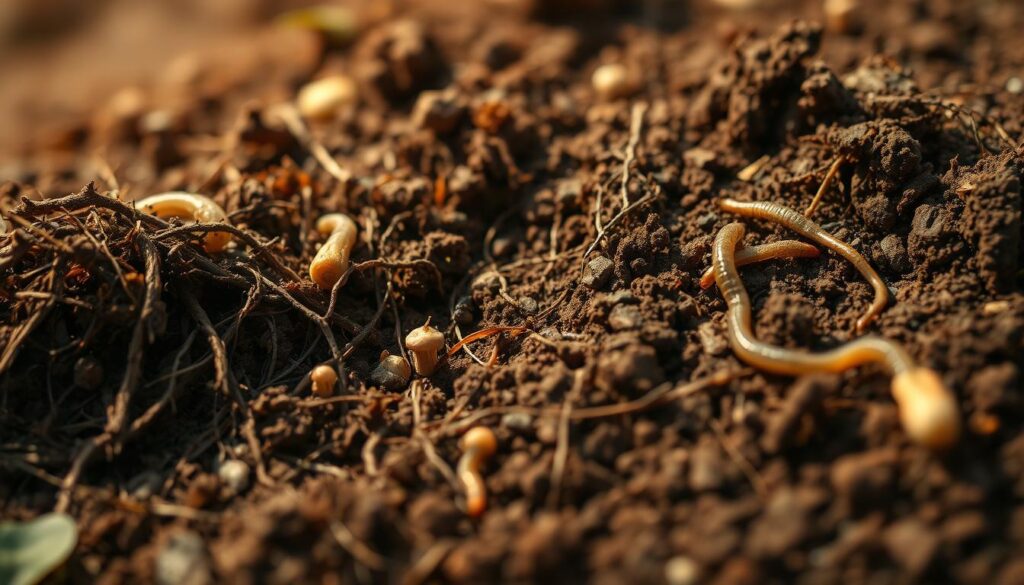
Cover Crops and Green Manures: Building Fertility Naturally
Cover crops and green manures are essential tools for farmers looking to enhance soil fertility naturally. These crops are grown between crop cycles to protect and enrich the soil, rather than for harvest. By incorporating cover crops and green manures into their practices, farmers can improve soil structure, increase nutrient content, and support biodiversity.
Selecting the Right Cover Crops for Your Farm
Choosing the appropriate cover crops depends on several factors, including climate, soil type, and specific goals such as nitrogen fixation or pest control. Legumes like clover and beans are popular for their nitrogen-fixing abilities, while grasses like rye and oats are used for their soil erosion control and biomass production.
Timing and Termination Strategies
The timing of cover crop planting and termination is crucial for maximizing their benefits. Planting should be done at the right time to allow for sufficient growth before the next cash crop. Termination methods vary, including mechanical tillage, mowing, or using herbicides, and should be chosen based on the cover crop species and farming system.
Measuring the Benefits of Cover Cropping
Farmers can measure the benefits of cover cropping through improved soil health indicators, such as increased organic matter, better water infiltration, and reduced erosion. A simple table can help track these improvements:
| Indicator | Before Cover Cropping | After Cover Cropping |
|---|---|---|
| Soil Organic Matter (%) | 2.5 | 3.2 |
| Water Infiltration Rate (in/hr) | 0.5 | 1.0 |
| Erosion (tons/acre/year) | 5 | 2 |
As
“The use of cover crops is a game-changer for soil health. It’s a simple yet effective way to improve fertility, structure, and biodiversity.”
, notes a leading agricultural expert. By adopting cover crops and green manures, farmers can create a more sustainable and productive farming system.
Crop Rotation Systems for Enhanced Soil Fertility
Effective crop rotation is crucial for maintaining soil fertility and promoting sustainable agricultural practices. By rotating crops, farmers can improve soil structure, increase nutrient availability, and reduce the reliance on synthetic fertilizers.
Designing Effective Rotation Sequences
Designing an effective crop rotation sequence involves considering factors such as crop selection, soil type, and climate. A well-planned rotation can help break disease and pest cycles, improve soil organic matter, and enhance nutrient cycling. For instance, rotating between cereals and legumes can optimize soil nitrogen levels.
Rotation Effects on Nutrient Cycling
Crop rotation significantly impacts nutrient cycling by altering the demand for different nutrients. For example, legumes fix atmospheric nitrogen, reducing the need for nitrogen-based fertilizers. In contrast, cereals and other non-legume crops can deplete soil nitrogen if not rotated properly.
Integrating Legumes for Nitrogen Fixation
Integrating legumes into crop rotation systems is an effective strategy for enhancing soil nitrogen. Legumes, through their symbiotic relationship with Rhizobia bacteria, fix atmospheric nitrogen into the soil, making it available for subsequent crops. This natural process reduces the need for synthetic nitrogen fertilizers and promotes sustainable farming practices.
| Crop | Nitrogen Contribution | Rotation Benefit |
|---|---|---|
| Legumes | High | Nitrogen fixation |
| Cereals | Low | Soil structure improvement |
| Root Crops | Moderate | Pest and disease control |
By understanding and leveraging the benefits of crop rotation, farmers can create more resilient and productive farming systems.
Managing Soil pH: Creating the Optimal Growing Environment
Managing soil pH is essential for creating an optimal growing environment for your crops. Soil pH affects the availability of nutrients for plants, microbial activity, and overall soil health. Most crops grow best in a slightly acidic to neutral soil pH (between 6.0 and 7.0).
Testing and Adjusting Soil pH
The first step in managing soil pH is testing. Use a reliable soil testing kit or send samples to a laboratory for analysis. Based on the test results, you can determine if your soil is too acidic or too alkaline. Adjusting soil pH involves either liming to raise the pH or using elemental sulfur or aluminum sulfate to lower it.
Liming Techniques and Considerations
Liming is a common practice to counteract soil acidity. The effectiveness of liming depends on the type of lime used, its fineness, and the timing of application. It’s crucial to choose the right liming material and apply it at the correct rate to avoid over-liming, which can be detrimental to soil health.
| Crop | Optimal pH Range |
|---|---|
| Corn | 6.0-7.0 |
| Wheat | 6.0-7.5 |
| Soybeans | 6.5-7.5 |

Addressing Acidic and Alkaline Soil Challenges
Both highly acidic and highly alkaline soils pose challenges for crop production. Acidic soils may require liming, while alkaline soils might need amendments like elemental sulfur. Understanding the specific needs of your soil and crops is key to managing these conditions effectively.
Biological Soil Management: Harnessing the Power of Microorganisms
Biological soil management is a crucial aspect of modern farming that leverages the power of microorganisms to enhance soil fertility. By promoting beneficial soil biology, farmers can improve soil structure, increase nutrient availability, and boost overall crop productivity.
Promoting Beneficial Soil Biology
Beneficial microorganisms in soil, such as bacteria and fungi, play a vital role in decomposing organic matter, fixing nitrogen, and fighting plant diseases. To promote these beneficial microbes, farmers can adopt practices like:
- Adding organic amendments such as compost or manure
- Reducing tillage to minimize soil disturbance
- Incorporating cover crops into their rotation
Microbial Inoculants and Their Applications
Microbial inoculants are products containing live microorganisms that can be applied to seeds, soil, or plants to enhance soil fertility and plant growth. These inoculants can:
- Improve nitrogen fixation
- Enhance phosphorus uptake
- Increase disease resistance in plants
Measuring Biological Activity in Your Soil
To understand the effectiveness of biological soil management practices, it’s essential to measure biological activity in the soil. This can be done through tests that assess microbial biomass, respiration rates, or enzyme activity. By monitoring these indicators, farmers can adjust their management strategies to optimize soil health.
Troubleshooting Common Soil Fertility Problems
Soil fertility issues can significantly impact crop yields and farm profitability. Farmers must be able to identify and address these problems effectively to maintain optimal soil health.
Diagnosing Nutrient Deficiencies in the Field
Recognizing the signs of nutrient deficiencies is crucial for timely intervention. Common symptoms include yellowing leaves, stunted growth, and poor fruit development. Soil testing is essential to determine the specific nutrient lacking in the soil.
Addressing Soil Compaction Issues
Soil compaction can severely limit root growth and water infiltration. To mitigate this, farmers can adopt conservation tillage practices, use controlled traffic farming, and incorporate organic matter to improve soil structure.
Managing Salinity and Sodicity Problems
Salinity and sodicity can be detrimental to soil health, affecting plant growth and reducing water availability. Leaching salts through adequate irrigation and using gypsum to address sodicity are effective management strategies.
Corrective Actions for Depleted Soils
For soils that are depleted, a comprehensive approach is necessary. This includes:
- Adding organic amendments like compost or manure
- Implementing crop rotation and cover cropping
- Using appropriate fertilizers based on soil test results
Here’s a summary of corrective actions in a tabular format:
| Corrective Action | Benefits |
|---|---|
| Adding Organic Amendments | Improves soil structure, increases nutrient content |
| Crop Rotation and Cover Cropping | Enhances nutrient cycling, reduces erosion |
| Balanced Fertilization | Provides essential nutrients, promotes healthy plant growth |
Conclusion: Building a Sustainable Fertility Program for Your Farm
Building a sustainable fertility program is crucial for the long-term success of any farming operation. By understanding and managing soil fertility effectively, farmers can improve crop yields, reduce environmental impact, and ensure the viability of their land for future generations.
A key component of a sustainable fertility program is maintaining soil health. This involves a holistic approach that incorporates various techniques and strategies discussed throughout this article, including soil testing, balanced nutrient management, and the use of organic amendments.
By adopting these practices, farmers can create a resilient and productive farming system. It’s essential to continuously monitor and adjust your fertility program based on soil test results, crop performance, and changing environmental conditions.
Investing in soil health is a long-term commitment that pays dividends in terms of improved crop quality, increased yields, and reduced input costs. By prioritizing sustainable fertility program practices, farmers can contribute to a more environmentally friendly and productive agricultural sector.
Related Article