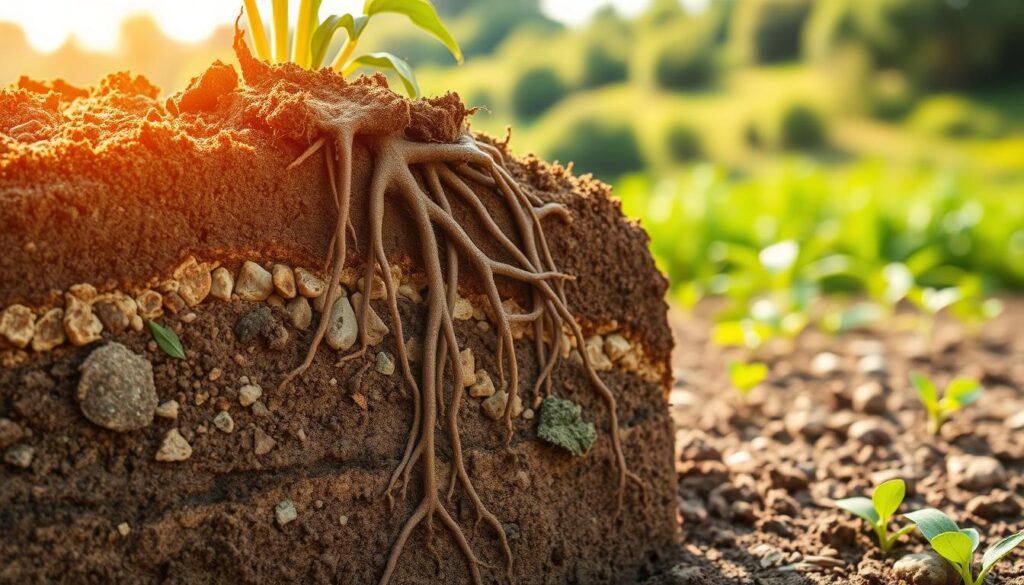
Are you aware of the hidden dangers lurking in your soil? Soil nutrients play a crucial role in maintaining plant health, but their absence can lead to a myriad of problems.
Nutrient Deficiency in Soil: Symptoms, Diagnosis & Solutions
Nourishing your soil is not just about adding fertilizers; it’s about understanding the delicate balance required for optimal plant health. The consequences of neglecting this balance can be severe, leading to stunted growth, reduced yields, and increased susceptibility to diseases.
So, how can you identify if your soil is lacking essential nutrients? In this article, we’ll explore the nutrient deficiency symptoms, how to diagnose them, and most importantly, provide practical solutions to restore your soil’s vitality.
Key Takeaways
- Understanding the importance of soil nutrients for plant health.
- Recognizing the symptoms of nutrient deficiency.
- Methods for diagnosing nutrient deficiency in soil.
- Practical solutions to address nutrient deficiency.
- Tips for maintaining optimal soil health.
The Foundation of Plant Health: Soil Nutrients
Understanding soil nutrients is crucial for maintaining healthy plants and optimizing crop yields. Soil nutrients provide the necessary elements for plant growth and development, influencing various physiological processes.
Essential Nutrients for Plant Growth and Development
Plants require a range of nutrients to carry out their life cycle effectively. These nutrients are categorized into macronutrients and micronutrients based on the quantity required by plants.
Macronutrients vs. Micronutrients: Understanding the Difference
Macronutrients are required in larger quantities and include primary macronutrients (N-P-K) and secondary macronutrients. Micronutrients, though needed in smaller amounts, are equally vital for plant health.
Primary Macronutrients (N-P-K)
The primary macronutrients are Nitrogen (N), Phosphorus (P), and Potassium (K). They are crucial for leaf growth, root development, and overall plant vigor.
Secondary Macronutrients and Micronutrients
Secondary macronutrients include Calcium (Ca), Magnesium (Mg), and Sulfur (S), while micronutrients comprise elements like Iron (Fe), Zinc (Zn), and Manganese (Mn). These nutrients support various plant functions, from cell wall development to enzyme activity.
| Nutrient Type | Examples | Function |
|---|---|---|
| Primary Macronutrients | N, P, K | Promote leaf growth, root development, and overall vigor |
| Secondary Macronutrients | Ca, Mg, S | Support cell wall development and nutrient uptake |
| Micronutrients | Fe, Zn, Mn | Enable enzyme activity and support metabolic processes |
As emphasized by agricultural experts, “A balanced nutrient profile is key to healthy plant growth and maximizing yields.” A well-balanced soil nutrient profile ensures that plants receive the necessary elements for optimal growth and development.
Recognizing Nutrient Deficiency Symptoms in Plants
Identifying nutrient deficiency symptoms in plants is a critical step towards maintaining their health and productivity. Nutrient deficiencies can manifest in various ways, making it essential to understand the different signs that plants exhibit when lacking essential nutrients.
Leaf Discoloration Patterns
One of the most common indicators of nutrient deficiency is leaf discoloration. This can occur in different patterns and colors, depending on the specific nutrient that is lacking.
Yellowing (Chlorosis)
Yellowing of leaves, or chlorosis, is a frequent symptom of nutrient deficiency. It can be caused by a lack of nitrogen, iron, or magnesium. Nitrogen deficiency often results in uniform yellowing of older leaves, while iron deficiency typically causes interveinal chlorosis, where the veins remain green but the areas between them turn yellow.
Purpling and Reddening
Purpling or reddening of leaves and stems can also indicate nutrient deficiencies. This is often associated with phosphorus deficiency, particularly in certain plant species. The purpling is due to the accumulation of sugars, which can occur when phosphorus limits the plant’s ability to use these sugars for growth.
Growth Abnormalities and Structural Issues
Nutrient deficiencies can also lead to growth abnormalities and structural issues in plants. These can include stunted growth, weak stems, and abnormal leaf shapes or sizes. For instance, a lack of potassium can lead to weak stems and poor root development, making plants more susceptible to disease and environmental stresses.
- Stunted growth due to lack of nitrogen or other essential nutrients
- Weak stems resulting from potassium deficiency
- Abnormal leaf shapes or sizes due to micronutrient deficiencies
Fruit and Flower Problems
Nutrient deficiencies can affect not just the leaves and stems but also the fruits and flowers of plants. Deficiencies can lead to poor fruit set, deformed fruits, or a reduction in flowering. For example, boron deficiency can cause fruit deformities and affect the quality of fruits and vegetables.
- Poor fruit set due to boron or calcium deficiency
- Deformed fruits resulting from micronutrient deficiencies
- Reduced flowering due to lack of phosphorus or potassium
Primary Macronutrient Deficiencies
Understanding the role of primary macronutrients in plant health is crucial for identifying and addressing deficiencies. Nitrogen, phosphorus, and potassium are the three primary macronutrients that play a vital role in plant growth and development.
Nitrogen Deficiency: Yellow Leaves and Stunted Growth
Nitrogen is essential for leaf growth and chlorophyll production. A nitrogen deficiency often manifests as yellowing leaves, particularly in older leaves, due to the plant’s inability to produce enough chlorophyll. This condition can lead to stunted growth and reduced yields.
Phosphorus Deficiency: Purple Stems and Poor Flowering
Phosphorus deficiency can cause a range of symptoms, including purple or reddish stems and leaves, due to the accumulation of sugars. It also leads to poor flowering and root development, impacting overall plant health.
Potassium Deficiency: Leaf Scorching and Weak Stems
A potassium deficiency can result in leaf scorching or browning, particularly around the edges and tips of leaves. It also contributes to weak stems and reduced resistance to disease and pests.
Recognizing these symptoms is the first step in addressing primary macronutrient deficiencies. By understanding the roles of nitrogen, phosphorus, and potassium, gardeners can take targeted actions to restore soil health and promote vigorous plant growth.
Secondary Macronutrient Deficiencies
While often overshadowed by primary macronutrients, secondary macronutrients are essential for optimal plant growth. Calcium, magnesium, and sulfur play critical roles in plant development, and their deficiencies can lead to significant health issues.
Calcium Deficiency: Blossom End Rot and Tip Burn
Calcium is crucial for cell wall development and root growth. A deficiency can cause blossom end rot in tomatoes and peppers, as well as tip burn in lettuce and other leafy greens. Maintaining adequate calcium levels is vital for preventing these disorders.
Magnesium Deficiency: Interveinal Chlorosis
Magnesium is a key component of chlorophyll and is essential for photosynthesis. A deficiency often manifests as interveinal chlorosis, where the leaves turn yellow between the veins while the veins remain green. This condition can severely impact plant vigor.
Sulfur Deficiency: Pale Young Leaves
Sulfur is necessary for the synthesis of certain amino acids and enzymes. Deficiency symptoms include pale young leaves and stunted growth. Sulfur deficiencies are less common but can be significant in certain soil conditions.
Understanding and addressing secondary macronutrient deficiencies is crucial for maintaining healthy plants. By recognizing the symptoms and taking corrective measures, gardeners and farmers can prevent yield loss and promote robust growth.
Micronutrient Deficiencies in Garden Soil
While often overlooked, micronutrient deficiencies can have a profound effect on plant development. Micronutrients, though required in smaller quantities compared to macronutrients, are essential for various physiological processes in plants.
Iron Deficiency: Severe Interveinal Chlorosis
Iron deficiency is a common issue, particularly in alkaline soils, leading to severe interveinal chlorosis. This condition is characterized by yellowing leaves with green veins. Iron is crucial for chlorophyll production and electron transport during photosynthesis. To address iron deficiency, gardeners can use iron chelates or adjust soil pH to increase iron availability.
Zinc, Manganese, and Copper Issues
Deficiencies in zinc, manganese, and copper can also significantly impact plant health. Zinc deficiency often results in stunted growth and distorted leaves. Manganese deficiency causes interveinal chlorosis similar to iron deficiency but is more common in high-pH soils. Copper deficiency can lead to dieback in trees and shrubs. Using balanced micronutrient fertilizers can help mitigate these deficiencies.
Boron and Molybdenum Deficiencies
Boron and molybdenum are other critical micronutrients. Boron deficiency affects cell wall formation and root growth, often causing tip dieback and brittle leaves. Molybdenum deficiency can impair nitrogen fixation in legumes. Soil testing is essential to identify these deficiencies, and targeted amendments can then be applied to correct them.
Nutrient Deficiency in Soil: Symptoms, Diagnosis, and Solutions
Effective diagnosis of nutrient deficiencies is key to implementing the right soil amendments. Diagnosing these deficiencies requires a comprehensive approach that involves understanding the symptoms, identifying the underlying causes, and applying the appropriate corrections.
Systematic Approach to Identifying Deficiencies
A systematic approach to diagnosing nutrient deficiencies involves several steps. First, observe the plant’s symptoms, such as leaf discoloration, stunted growth, or poor fruiting. Next, consider factors like soil type, pH, and recent fertilizer applications. Soil testing is also crucial as it provides direct evidence of nutrient levels.
As emphasized by soil experts, “A thorough diagnosis is the foundation of effective soil management.”
“Understanding the complex interactions between soil nutrients, pH, and plant health is essential for correcting deficiencies.” – Dr. Jane Smith, Soil Scientist
Distinguishing Between Multiple Deficiencies
Distinguishing between multiple deficiencies can be challenging due to overlapping symptoms. For instance, nitrogen and iron deficiencies both cause yellowing leaves, but their treatments differ significantly. Creating a symptom chart or table can help in systematically identifying the specific deficiencies.
| Symptom | Possible Deficiency |
|---|---|
| Yellowing Leaves | Nitrogen, Iron |
| Stunted Growth | Nitrogen, Phosphorus |
| Purple Stems | Phosphorus |
Creating a Holistic Treatment Plan
Once the deficiencies are identified, creating a holistic treatment plan involves selecting the appropriate amendments, considering their release rates, and applying them at the right time. For example, using organic compost can provide a slow release of nutrients, while synthetic fertilizers offer quicker results.

A holistic plan also includes long-term strategies like crop rotation and cover cropping to enhance soil health and prevent future deficiencies. By adopting a comprehensive approach, gardeners and farmers can improve soil fertility, promote healthy plant growth, and increase crop yields.
Soil Testing: The Key to Accurate Diagnosis
Accurate diagnosis of soil nutrient deficiencies begins with comprehensive soil testing. This process is crucial for understanding the nutrient content of your soil and making informed decisions about amendments.
DIY Soil Test Kits and Their Limitations
DIY soil test kits are a convenient and cost-effective way to get a basic understanding of your soil’s nutrient levels. However, they have limitations, including limited accuracy and the potential for user error. These kits typically test for NPK (nitrogen, phosphorus, and potassium) levels but may not provide a comprehensive analysis of other essential micronutrients.
Professional Laboratory Analysis
For a more detailed and accurate analysis, professional laboratory testing is recommended. These labs use advanced equipment to test for a wide range of nutrients and can provide detailed recommendations for improvement. A list of key benefits includes:
- Comprehensive nutrient analysis
- Accurate pH level measurement
- Detailed recommendations for soil improvement
Interpreting Soil Test Results
Once you have your soil test results, understanding what they mean is crucial. This involves looking at NPK ratios and trace element measurements.
Understanding NPK Ratios
The NPK ratio indicates the relative levels of nitrogen, phosphorus, and potassium in your soil. A balanced NPK ratio is essential for healthy plant growth. For example, a soil test might reveal a nitrogen deficiency, indicating the need for nitrogen-rich fertilizers.
Trace Element Measurements
In addition to NPK, trace elements such as iron, zinc, and magnesium play critical roles in plant health. Deficiencies in these elements can lead to specific symptoms, such as interveinal chlorosis (yellowing between leaf veins).
By understanding your soil test results, you can develop a targeted plan to address nutrient deficiencies and improve soil health.
Organic Solutions for Nutrient-Deficient Soil
Organic solutions offer a sustainable way to tackle nutrient deficiencies in soil. By adopting organic practices, gardeners and farmers can improve soil health, increase fertility, and promote sustainable agriculture.
Compost and Organic Matter Integration
Compost is a rich source of nutrients for plants. It is created through the decomposition of organic materials such as food waste, leaves, and grass clippings. Integrating compost into the soil enhances its structure, improves water retention, and provides a slow release of nutrients.
To create effective compost, it’s essential to balance “green” materials (like kitchen scraps, high in nitrogen) with “brown” materials (like dried leaves, high in carbon). Regular turning of the compost pile and maintaining adequate moisture are crucial for the decomposition process.
Cover Crops and Green Manures
Cover crops are plants grown between crop cycles to protect and enhance the soil. They can be incorporated into the soil as green manure, adding organic matter and nutrients. Legume cover crops, for example, fix atmospheric nitrogen, reducing the need for synthetic fertilizers.
Choosing the right cover crop depends on the specific needs of the soil and the subsequent crops. For instance, rye and oats are excellent for improving soil structure, while clover and beans are beneficial for nitrogen fixation.
Natural Amendments for Specific Deficiencies
Natural amendments can address specific nutrient deficiencies. These amendments can be derived from plant or animal sources.
Plant-Based Solutions
Plant-based amendments include materials like alfalfa meal, which is high in nitrogen, and kelp meal, rich in micronutrients. These amendments release nutrients slowly, providing a steady supply to plants.
- Alfalfa meal for nitrogen
- Kelp meal for micronutrients
- Cottonseed meal for nitrogen and sulfur
Animal-Based Solutions
Animal-based amendments, such as bone meal and fish emulsion, are rich in phosphorus and nitrogen, respectively. Bone meal is particularly useful for promoting root development, while fish emulsion provides a quick nitrogen boost.
- Bone meal for phosphorus
- Fish emulsion for nitrogen
- Manure tea for a broad spectrum of nutrients
By incorporating these organic solutions, gardeners can create a more balanced and sustainable soil ecosystem, reducing reliance on synthetic fertilizers and promoting healthy plant growth.
Synthetic Fertilizers and Targeted Amendments
Synthetic fertilizers offer a targeted approach to correcting nutrient deficiencies, providing plants with the necessary nutrients for healthy growth. These fertilizers are formulated to address specific nutrient needs, making them an effective tool for farmers and gardeners.
Quick-Release vs. Slow-Release Formulations
Synthetic fertilizers come in two primary formulations: quick-release and slow-release. Quick-release fertilizers provide immediate nutrition to plants, while slow-release formulations offer a sustained nutrient supply over time. The choice between these formulations depends on the specific needs of the plants and the soil conditions.
| Fertilizer Type | Release Mechanism | Benefits |
|---|---|---|
| Quick-Release | Immediate nutrient availability | Rapid correction of deficiencies |
| Slow-Release | Gradual nutrient release | Sustained nutrition, reduced leaching |
Balanced Fertilizer Options
A balanced fertilizer contains an appropriate ratio of nitrogen (N), phosphorus (P), and potassium (K). These macronutrients are essential for plant growth, and a balanced fertilizer ensures that plants receive a broad spectrum of nutrients. Choosing a balanced fertilizer is crucial for maintaining soil fertility and promoting healthy plant development.
“A balanced fertilizer is like a well-rounded diet for plants, providing all the necessary nutrients for optimal growth.”
Foliar Feeding for Emergency Correction
Foliar feeding involves applying fertilizers directly to the leaves of plants. This method is particularly useful for correcting acute nutrient deficiencies. Foliar feeding allows for rapid absorption of nutrients, providing a quick remedy for struggling plants. It’s an effective technique for emergency correction, especially during critical growth stages.

Soil pH: The Master Variable in Nutrient Availability
Soil pH is a master variable that affects the availability of nutrients for plants. It influences the chemical form and availability of nutrients, making some nutrients more or less available to plants.
The Nutrient Availability Chart
The nutrient availability chart is a valuable tool for understanding how soil pH impacts nutrient uptake. It illustrates the optimal pH range for the availability of various nutrients.
| Nutrient | Optimal pH Range |
|---|---|
| Nitrogen | 6.0-7.0 |
| Phosphorus | 6.5-7.5 |
| Potassium | 5.5-7.0 |
Raising Soil pH Naturally
To raise soil pH, you can use natural amendments like limestone or dolomitic limestone. These materials are rich in calcium and magnesium, which help neutralize soil acidity.
Lowering Soil pH for Acid-Loving Plants
For acid-loving plants, soil pH can be lowered using elemental sulfur or peat moss. These amendments help increase soil acidity, making it more suitable for plants that thrive in lower pH conditions.
Adjusting soil pH requires careful consideration and monitoring to ensure optimal nutrient availability for your plants.
Regional Soil Challenges Across the United States
From the acidic soils of the East Coast to the alkaline soils of the West, regional soil challenges require tailored solutions. The diverse geography of the United States gives rise to a wide range of soil conditions, each with its unique set of problems and opportunities.
Eastern Acidic Soils and Clay Challenges
The Eastern United States is characterized by acidic soils, often with high clay content. These conditions can lead to nutrient deficiencies and waterlogging, affecting plant growth. Gardeners in this region often need to amend their soil with lime to raise the pH and improve drainage.
Midwestern Prairie Soils
The Midwest is known for its rich prairie soils, which are typically fertile and well-suited for agriculture. However, intensive farming practices have led to soil erosion and nutrient depletion in some areas. Conservation tillage and crop rotation are strategies used to mitigate these issues.
Western Alkaline and Sandy Soil Issues
In contrast, the Western United States is often characterized by alkaline soils, which can be challenging for plants that prefer acidic conditions. Sandy soils are also common, requiring careful management of irrigation and fertilization to prevent nutrient leaching.
Southern Heat and Nutrient Leaching
The Southern United States faces challenges related to high temperatures and heavy rainfall, leading to nutrient leaching and soil degradation. Using organic mulches and cover crops can help retain soil moisture and reduce erosion.
| Region | Common Soil Issues | Recommended Solutions |
|---|---|---|
| Eastern United States | Acidic soils, clay-heavy soils | Liming, improving drainage |
| Midwestern United States | Soil erosion, nutrient depletion | Conservation tillage, crop rotation |
| Western United States | Alkaline soils, sandy soils | Using acidifying fertilizers, careful irrigation management |
| Southern United States | Nutrient leaching, soil degradation | Organic mulches, cover crops |
Conclusion: Building Resilient, Nutrient-Rich Soil
Building resilient, nutrient-rich soil is crucial for healthy plant growth and sustainable gardening practices. By understanding the symptoms of nutrient deficiencies and using a systematic approach to diagnosis, gardeners can take targeted steps to improve soil health.
Key strategies include integrating organic matter, using cover crops, and applying natural amendments to address specific deficiencies. Managing soil pH is also vital, as it affects nutrient availability. By adopting these practices, gardeners can create a thriving ecosystem that supports plant growth and biodiversity.
Fostering resilient soil requires a holistic approach that considers the complex interactions between soil nutrients, pH, and microbial activity. By working in harmony with the natural environment, gardeners can build nutrient-rich soil that supports healthy plants and promotes ecosystem services.
FAQ
What are the common symptoms of nutrient deficiency in plants?
How do I diagnose a nutrient deficiency in my soil?
What is the difference between macronutrients and micronutrients?
How can I improve the nutrient content of my soil organically?
What is the role of soil pH in nutrient availability?
Can synthetic fertilizers be used to correct nutrient deficiencies?
How often should I test my soil?
Are there regional differences in soil challenges in the United States?
What is foliar feeding, and when is it used?
How can I create a holistic treatment plan for nutrient deficiencies?
FAO – Soil Nutrient Management
https://www.fao.org/soils-portal/soil-management/en
2. USDA – Soil Health and Fertility Guide
https://www.nrcs.usda.gov/soil-health
3. University of Minnesota – Diagnosing Plant Nutrient Deficiencies
https://extension.umn.edu/soil-fertility/plant-nutrient-deficiencies