As the world grapples with the challenges of climate change, sustainable architecture has become a critical component of modern development. The concept of Net Zero Buildings has emerged as a beacon of hope, offering a pathway to reduce our carbon footprint and create a more environmentally friendly built environment.
These innovative structures are green buildings that produce as much energy as they consume, minimizing their impact on the planet. In this article, we will explore the design principles and technologies that make Net Zero Buildings possible, as well as the future trends shaping the industry.
Key Takeaways
- Understanding the importance of Net Zero Buildings in the context of climate change.
- Exploring the design principles that enable sustainable architecture.
- Discovering the technologies driving the green building movement.
- Examining future trends in Net Zero Buildings and their potential impact.
- Learning how to apply these concepts in real-world construction projects.
Understanding Net Zero Buildings
Net zero energy buildings are at the forefront of sustainable architecture, combining innovative design with cutting-edge technology. These structures are designed to produce as much energy as they consume over a year, significantly reducing their carbon footprint and reliance on non-renewable energy sources.
Definition and Core Concepts
At its core, a net zero building is a structure that achieves a balance between energy consumption and production. This is typically achieved through a combination of energy-efficient systems, renewable energy generation, and advanced building design. Energy efficiency is a critical component, involving the use of materials and systems that minimize energy loss and optimize energy use.
“The concept of net zero energy buildings is not just about reducing energy consumption; it’s about creating a sustainable and regenerative built environment,” as emphasized by experts in sustainable architecture.
The Evolution of Sustainable Architecture
Sustainable architecture has evolved significantly over the decades, driven by advances in technology, changing societal values, and the growing need to mitigate climate change. From the early focus on passive design and natural materials to the current integration of renewable energy systems and smart technologies, the evolution towards net zero buildings represents a significant shift in the construction industry.
- Incorporation of green building materials
- Advanced insulation techniques
- Renewable energy systems like solar and wind power
Environmental and Social Impact
Net zero buildings have a profound impact on both the environment and society. By reducing greenhouse gas emissions, they contribute to global efforts to combat climate change. Additionally, these buildings often provide healthier indoor environments, improving occupant health and productivity. The social benefits extend to enhanced community well-being and the promotion of sustainable practices.
The future of sustainable construction is not just about buildings; it’s about creating communities that thrive in harmony with the environment.
Key Design Principles for Net Zero Buildings
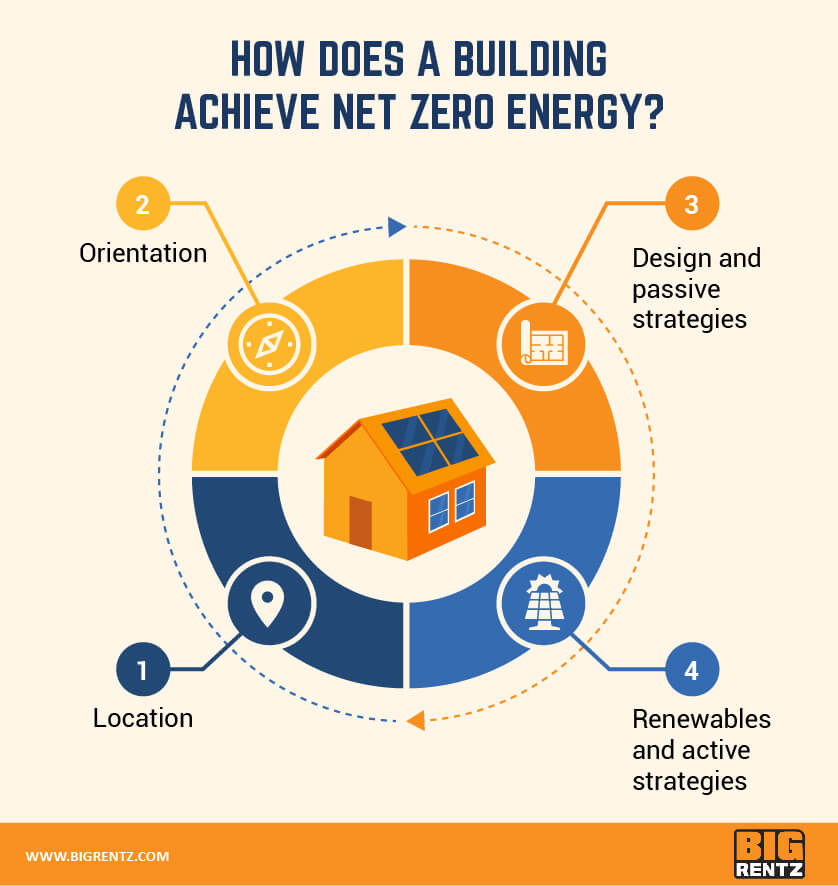
To reach net zero energy, buildings must incorporate a range of design strategies that reduce energy needs. This involves a holistic approach, considering factors from the building’s orientation to its envelope and internal systems.
Passive Design Strategies
Passive design strategies are fundamental to achieving net zero energy. These include maximizing natural light to reduce the need for artificial lighting and minimizing heat gain through careful window placement and shading devices.
Building Envelope Optimization
The building envelope plays a critical role in energy efficiency. Optimizing it involves selecting materials with high thermal performance, ensuring airtight construction, and incorporating insulation to minimize heat loss.
Site Planning and Orientation
Careful site planning and orientation are crucial for net zero buildings. This includes considerations for solar access and natural ventilation.
Solar Access Considerations
Proper orientation can maximize solar gain in winter while minimizing it in summer. This involves analyzing the site’s solar path and designing the building to capitalize on beneficial solar radiation.
Natural Ventilation Opportunities
Designing for natural ventilation can significantly reduce the need for mechanical cooling systems. This involves creating a building layout that facilitates cross-ventilation and using operable windows to control airflow.
By integrating these design principles, architects and builders can create net zero energy buildings that are not only sustainable but also comfortable and cost-effective.
Essential Technologies in Net Zero Buildings
The path to Net Zero Buildings is paved with technological advancements in renewable energy and efficiency. These buildings rely on a combination of innovative systems to minimize their environmental footprint.
Renewable Energy Systems
Renewable energy systems are crucial for achieving Net Zero status. These systems harness energy from natural sources, reducing reliance on fossil fuels.
Solar PV and Thermal Solutions
Solar energy is a cornerstone of renewable energy systems. Photovoltaic (PV) panels convert sunlight into electricity, while solar thermal systems use sunlight to heat water or air for building use.
- PV panels can be integrated into building design, serving as both energy generators and architectural features.
- Solar thermal systems can provide hot water and space heating, reducing the load on traditional HVAC systems.
Wind and Geothermal Integration
In addition to solar energy, wind and geothermal technologies can be integrated into Net Zero Buildings. Wind turbines can generate electricity, especially in areas with consistent wind patterns.
“The use of wind and geothermal energy can significantly reduce a building’s carbon footprint, contributing to a more sustainable future.”
Geothermal systems exploit the stable temperature of the earth to provide heating and cooling, offering a highly efficient alternative to traditional HVAC systems.
High-Efficiency HVAC Solutions
High-efficiency HVAC systems are vital for minimizing energy consumption in Net Zero Buildings. These systems use advanced technologies to provide effective heating and cooling while reducing energy waste.
- Heat recovery systems capture and reuse energy that would otherwise be wasted.
- Advanced filtration systems improve indoor air quality, enhancing occupant health and comfort.
Smart Building Management Systems
Smart buildings utilize advanced management systems to optimize energy use and reduce waste. These systems integrate various building technologies, providing real-time monitoring and control.
By leveraging data analytics and IoT connectivity, smart building management systems can:
- Optimize energy consumption based on occupancy and usage patterns.
- Predict and prevent equipment failures, reducing maintenance costs.
- Enhance occupant comfort through personalized climate control.
The integration of these technologies not only improves energy efficiency but also creates a more sustainable and resilient built environment.
Materials and Construction Methods
Materials and construction methods play a crucial role in the quest for net zero energy buildings. The choice of materials affects not only the energy efficiency of a building but also its overall environmental footprint.
Sustainable Building Materials
The use of sustainable building materials is essential in reducing the environmental impact of construction projects. Materials such as reclaimed wood, low-carbon concrete, and recycled metals are becoming increasingly popular due to their lower embodied energy and reduced waste generation.
Embodied Carbon Considerations
Embodied carbon refers to the greenhouse gas emissions associated with the production and transportation of building materials. Considering embodied carbon is crucial in the design phase to minimize a building’s overall carbon footprint. Strategies include specifying materials with low embodied carbon and optimizing material quantities.
| Material | Embodied Carbon (kg CO2/m³) | Sustainability Features |
|---|---|---|
| Low-Carbon Concrete | 150-200 | Reduced cement content, supplementary cementitious materials |
| Reclaimed Wood | Low | Reused material, reduces landfill waste |
| Recycled Metals | Varies | Recycled content reduces primary material demand |
Prefabrication and Modular Construction
Prefabrication and modular construction techniques are gaining traction for their potential to reduce on-site waste and improve construction efficiency. By manufacturing building components in a controlled environment, these methods can enhance quality while minimizing environmental impacts.
The integration of sustainable materials, consideration of embodied carbon, and adoption of prefabrication techniques are critical steps towards achieving net zero energy buildings. By focusing on these aspects, the construction industry can significantly reduce its environmental footprint.
Energy Production and Management
Achieving Net Zero Buildings requires a comprehensive approach to energy production and management. This involves leveraging on-site energy generation, implementing effective energy storage solutions, and ensuring seamless grid integration.
On-Site Energy Generation
On-site energy generation is a critical component of Net Zero Buildings, typically achieved through the use of renewable energy sources such as solar, wind, and geothermal energy. Solar photovoltaic (PV) systems are particularly popular due to their decreasing costs and increasing efficiency. For instance, a study by the National Renewable Energy Laboratory found that solar PV systems can reduce a building’s energy bills by up to 75%.
“The future of energy is decentralized, and on-site generation is at the forefront of this shift.” –
Energy Storage Solutions
Energy storage solutions are essential for addressing the intermittency of renewable energy sources. Advanced battery technologies, such as lithium-ion batteries, play a crucial role in storing excess energy generated during peak production periods for use during periods of low production or high demand.
- Lithium-ion batteries
- Flow batteries
- Sodium-ion batteries
Grid Integration and Net Metering
Grid integration and net metering policies are vital for the economic viability of on-site energy generation. Net metering allows buildings to offset their energy consumption by feeding excess energy back into the grid, thereby reducing their energy bills.
Demand Response Systems
Demand response systems enable buildings to adjust their energy consumption in response to grid signals, helping to balance supply and demand. This can lead to significant cost savings and improved grid stability.
Microgrid Applications
Microgrids are localized energy systems that can operate in isolation from the main grid, providing enhanced energy resilience and reliability. They are particularly useful in areas prone to power outages or with limited grid connectivity.
| Technology | Benefits | Challenges |
|---|---|---|
| Solar PV | Renewable energy source, reduced energy bills | Intermittency, high upfront costs |
| Energy Storage | Stabilizes energy supply, reduces peak demand | High costs, limited lifespan |
| Microgrids | Enhanced energy resilience, reliability | Complexity, high upfront costs |
Net Zero Buildings: Design, Technology & Future Trends in Practice
Through real-world examples, we can see how Net Zero Buildings are being successfully implemented. These buildings are not just theoretical models but are being constructed and operated around the world, showcasing the potential of sustainable architecture.
Residential Case Studies
Residential Net Zero Buildings are leading the way in sustainable living. For instance, a home in California achieved net zero energy status through a combination of solar panels, energy-efficient appliances, and a well-insulated building envelope. Occupant satisfaction has been high, with residents reporting a significant reduction in their energy bills.
Another example is a net zero energy community in Colorado, where homes were designed with passive solar principles and equipped with renewable energy systems. The community has seen a significant decrease in carbon emissions and an increase in property values.
Commercial and Institutional Success Stories
Commercial and institutional buildings are also achieving net zero energy status. A notable example is a corporate office building in New York, which has implemented a rooftop solar array, energy-efficient HVAC systems, and a smart building management system. The building has reduced its energy consumption by 50% and has become a model for sustainable commercial design.
Institutional buildings, such as schools and universities, are also adopting net zero energy practices. A university in Massachusetts has implemented a comprehensive energy efficiency program, including on-site energy generation and energy storage solutions. The result has been a significant reduction in energy costs and a decrease in carbon emissions.
Lessons from Leading Projects
Leading Net Zero Buildings projects offer valuable lessons in design, technology, and operation. Key performance metrics include energy consumption, water usage, and waste reduction. Occupant satisfaction and wellness are also critical outcomes, with many buildings incorporating features such as natural lighting, air quality monitoring, and green spaces.
Performance Metrics and Outcomes
| Building Type | Energy Consumption Reduction | Occupant Satisfaction |
|---|---|---|
| Residential | 40-60% | High |
| Commercial | 30-50% | High |
| Institutional | 25-40% | High |
Occupant Satisfaction and Wellness
Occupant satisfaction is a critical aspect of Net Zero Buildings. As LEED (Leadership in Energy and Environmental Design) has shown, buildings that incorporate natural lighting, air quality monitoring, and green spaces tend to have higher occupant satisfaction rates. A study by the U.S. Green Building Council found that occupants of green buildings report improved health and productivity.
“The future of sustainable architecture is not just about energy efficiency; it’s about creating buildings that promote occupant health and well-being.”
As we move towards a more sustainable future, the lessons learned from these case studies will be invaluable in shaping the next generation of Net Zero Buildings.
Challenges and Solutions in Net Zero Implementation
Achieving Net Zero Buildings requires overcoming several technical and financial hurdles. Despite the growing demand for sustainable buildings, numerous challenges hinder the widespread adoption of Net Zero energy buildings.
Technical and Design Hurdles
One of the primary challenges is the technical complexity involved in designing and constructing Net Zero Buildings. This includes optimizing building orientation, envelope design, and HVAC systems to minimize energy consumption. Efficient design requires a deep understanding of local climate conditions, building materials, and energy-efficient technologies. For instance, a study by the National Renewable Energy Laboratory highlighted the importance of integrating passive design strategies to reduce the energy load.
“The biggest challenge is not just about reducing energy consumption but also about creating buildings that are comfortable, healthy, and productive for occupants.” –
Financial and Market Barriers
Financial constraints are another significant barrier to Net Zero Building implementation. The higher upfront costs associated with energy-efficient technologies and sustainable materials can deter investors. Innovative financing models, such as green bonds and energy-efficient mortgages, can help mitigate these costs. Additionally, government incentives and tax credits can play a crucial role in offsetting the initial investment.
Strategies for Overcoming Obstacles
To overcome these challenges, stakeholders can adopt several strategies. Collaboration between architects, engineers, contractors, and policymakers is essential to develop and implement effective solutions. Utilizing advanced technologies like Building Information Modeling (BIM) and energy simulation tools can optimize building design and performance. Furthermore, educating clients and consumers about the long-term benefits of Net Zero Buildings can increase market demand.
By understanding and addressing these challenges, the construction industry can accelerate the transition to Net Zero energy buildings, contributing to a more sustainable future.
Emerging Trends and Future Innovations
As we look to the future, the integration of cutting-edge technologies and sustainable practices is set to revolutionize the concept of Net Zero Buildings. The industry is witnessing a significant shift towards more efficient, sustainable, and technologically advanced buildings.
AI and Machine Learning Applications
The application of AI and machine learning in building management is transforming the way buildings operate. These technologies enable predictive maintenance, optimize energy consumption, and improve overall building performance. For instance, AI-powered systems can analyze data from various sensors to predict and prevent potential issues, reducing downtime and improving efficiency.
Next-Generation Building Materials
The development of next-generation building materials is crucial for achieving Net Zero. Innovations in materials science are leading to the creation of materials that are not only sustainable but also offer enhanced performance characteristics. Examples include advanced insulation materials, smart windows, and materials with improved thermal mass.
Net Positive and Regenerative Design
Net positive and regenerative design principles are gaining traction as the industry moves beyond merely reducing negative impacts to creating positive environmental and social benefits. This approach involves designing buildings that restore and regenerate ecosystems, rather than just minimizing harm.
Carbon Sequestration Techniques
One of the key strategies in net positive design is the incorporation of carbon sequestration techniques. This can be achieved through the use of materials and systems that absorb CO2, such as bio-based building materials and urban forestry initiatives.
Biophilic and Living Building Systems
Biophilic design and living building systems are also becoming increasingly popular. These approaches integrate natural elements into the built environment, enhancing biodiversity and improving occupant well-being. Examples include green roofs, living walls, and buildings designed to mimic natural ecosystems.
The future of Net Zero Buildings is bright, with emerging trends and innovations poised to drive significant advancements in sustainability and efficiency. As these technologies and design principles continue to evolve, we can expect to see even more impressive achievements in the field.
Conclusion: The Path Forward for Sustainable Construction
As the world transitions to a more sustainable built environment, Net Zero Buildings play a crucial role in reducing energy consumption and greenhouse gas emissions. The design principles, technologies, and materials discussed in this article provide a foundation for achieving a net zero energy future.
Sustainable construction practices, including the use of renewable energy systems and high-efficiency HVAC solutions, are essential for minimizing environmental impact. Continued innovation and collaboration among architects, engineers, and builders are necessary to overcome the technical and financial challenges associated with Net Zero Buildings.
By committing to sustainable construction and net zero energy future, we can create a more environmentally friendly and resilient built environment. As the industry continues to evolve, it is essential to stay informed about emerging trends and technologies that can help drive progress toward a more sustainable future.