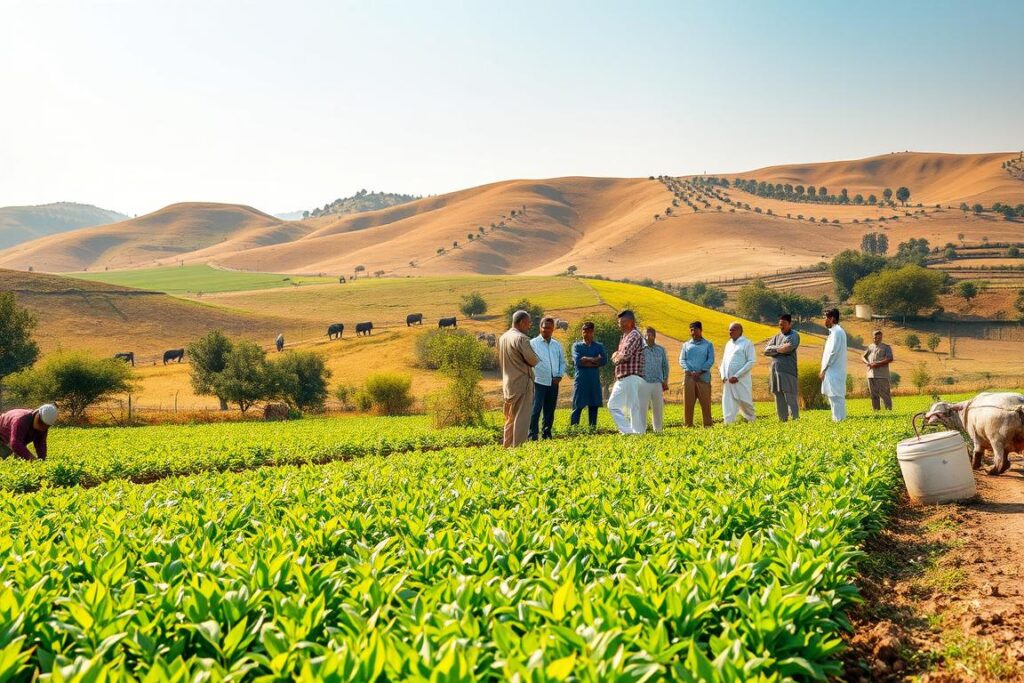
Pakistan’s agricultural sector is the backbone of its economy, employing nearly 40% of the workforce. To boost this vital sector, the government has introduced various farming support programs and subsidies in Pakistan. These initiatives aim to enhance productivity, improve crop yields, and increase farmers’ income.
The government agriculture schemes are designed to provide financial assistance, training, and resources to farmers. By supporting the agricultural community, these programs contribute to the country’s food security and economic stability.
Key Takeaways
- Government initiatives are crucial for Pakistan’s agricultural development.
- Farming support programs provide financial assistance and resources.
- Subsidies in Pakistan help improve crop yields and farmers’ income.
- The government’s efforts aim to enhance food security and economic stability.
- Agricultural sector employs nearly 40% of Pakistan’s workforce.
The Current State of Agriculture in Pakistan
Agriculture is not just a sector; it’s the lifeline of Pakistan’s economy, providing sustenance to millions. The agriculture sector’s performance has a direct impact on the country’s overall economic health.
Economic Importance of Agriculture Sector
The agriculture sector is a significant contributor to Pakistan’s GDP, employing nearly 40% of the workforce and contributing around 20% to the national GDP. It also plays a crucial role in the country’s foreign exchange earnings through the export of agricultural products.
Agricultural exports include cotton, rice, and fruits, which are in high demand globally. The sector’s backward and forward linkages with other industries, such as textiles and food processing, further amplify its economic importance.
Challenges Facing Pakistani Farmers
Despite its importance, the agriculture sector in Pakistan faces numerous challenges. Water scarcity is a significant issue, with the majority of farmers relying on rain-fed irrigation, which is unpredictable and often inadequate.
Other challenges include limited access to credit, high input costs for seeds and fertilizers, and the impacts of climate change, such as increased frequency of extreme weather events.
Need for Government Intervention
Given the challenges faced by the agriculture sector, there is a clear need for government intervention to support farmers and enhance productivity. This can be achieved through policies that improve water management, provide subsidies on inputs, and offer financial support to farmers.
Government initiatives can help mitigate the risks faced by farmers and make agriculture a more viable and profitable profession.
Government Subsidies & Agriculture Schemes in Pakistan: Latest Support Programs
Government subsidies and agriculture schemes in Pakistan have evolved to address the sector’s challenges. The agricultural sector is crucial to Pakistan’s economy, and the government’s support is vital for its growth.
Evolution of Agricultural Support in Pakistan
The government’s support for agriculture has a long history, with various initiatives launched over the years to boost productivity and farmer welfare. Early programs focused on irrigation and infrastructure development, while recent schemes have emphasized technology adoption and financial support.
Key Policy Frameworks
Several key policy frameworks guide the government’s agricultural support programs. These include the National Agriculture Policy and the Pakistan Vision 2025, which outline strategies for improving agricultural productivity and sustainability.
Budget Allocations for 2023-2024
The government’s budget for 2023-2024 includes significant allocations for agricultural support. PKR 150 billion has been allocated for fertilizer subsidies, while PKR 20 billion is earmarked for agricultural research and development. These allocations demonstrate the government’s commitment to supporting the agricultural sector.
The latest agriculture schemes are designed to be more effective and accessible to farmers. With these initiatives, the government aims to increase crop yields, improve farmer incomes, and enhance food security.
Kissan Card Program: Digital Revolution in Farming
The government has launched the Kissan Card program to provide farmers with easier access to financial resources and agricultural inputs. This digital initiative is part of a broader effort to modernize Pakistan’s agricultural sector and improve the livelihoods of farmers.
Features and Benefits of Kissan Card
The Kissan Card program offers several key features and benefits, including:
- Easy Access to Credit: Farmers can access credit facilities without the need for complex paperwork.
- Digital Payments: Transactions are made digitally, reducing the need for cash handling.
- Subsidies and Support: Eligible farmers receive subsidies on agricultural inputs like seeds and fertilizers.
Eligibility and Application Process
To be eligible for the Kissan Card, farmers must meet certain criteria, including land ownership and agricultural activity. The application process involves:
- Registration through designated government portals or agricultural offices.
- Submission of required documents, such as land records and identification proof.
- Verification by relevant authorities.
Success Stories and Impact
The Kissan Card program has already shown positive impacts on farming communities. Many farmers have reported increased productivity and income due to timely access to resources and support. For instance, a small-scale farmer from Punjab reported a 30% increase in crop yield after receiving subsidies through the Kissan Card.
Overall, the Kissan Card program is a significant step towards leveraging digital technology to support Pakistan’s agricultural sector, enhancing the efficiency and profitability of farming practices.
Fertilizer and Seed Subsidy Schemes
To boost the agricultural sector, the government has launched significant initiatives, including fertilizer and seed subsidies. These programs are designed to support farmers by making essential inputs more affordable, thereby enhancing productivity and crop yields.
Current Fertilizer Subsidy Framework
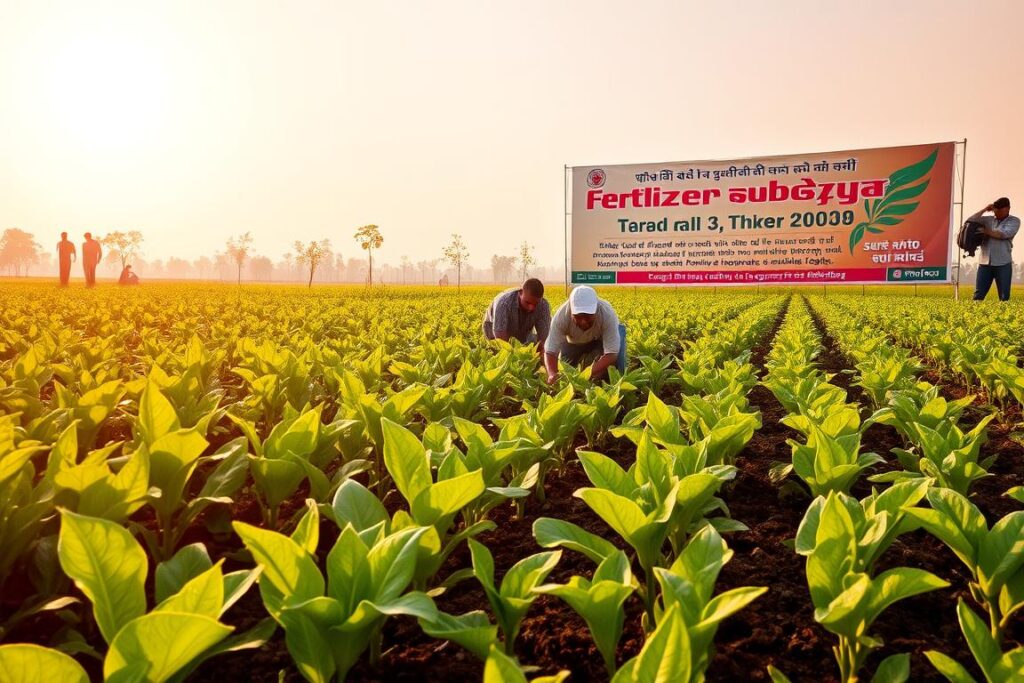
The government has established a comprehensive framework to provide fertilizer subsidies to farmers. This framework includes subsidies on various types of fertilizers, ensuring that farmers can access these essential nutrients at reduced prices. The subsidy is aimed at promoting the use of balanced fertilizers, which is crucial for maintaining soil health and improving crop productivity.
Certified Seed Provision Programs
In addition to fertilizer subsidies, the government has also initiated certified seed provision programs. These programs ensure that farmers have access to high-quality seeds that are disease-resistant and suitable for local climatic conditions. The use of certified seeds can significantly improve crop yields and reduce the risk of crop failure.
Distribution Mechanisms and Access Points
The government has established various distribution mechanisms to ensure that fertilizer and seed subsidies reach farmers efficiently. These include government-approved dealerships, agricultural cooperatives, and online platforms. Farmers can access these subsidies by registering through the designated channels and providing the required documentation.
By making these essential inputs more accessible and affordable, the government aims to enhance agricultural productivity and support the livelihoods of farmers across Pakistan.
Agricultural Loan and Credit Schemes
To boost agricultural productivity, the government offers several credit schemes for farmers. These initiatives are designed to provide financial support to farmers, enabling them to improve their farming practices and increase their yield.
Zero-Interest Loan Programs
The government has introduced zero-interest loan programs to help farmers access capital without the burden of interest rates. This initiative is particularly beneficial for small-scale farmers who struggle to secure loans from traditional financial institutions.
Zarai Taraqiati Bank Limited (ZTBL) Initiatives
Zarai Taraqiati Bank Limited (ZTBL) plays a crucial role in providing agricultural credit to farmers. ZTBL offers various loan products tailored to the needs of farmers, including short-term and long-term loans for agricultural purposes. ZTBL’s initiatives have significantly contributed to the growth of the agricultural sector in Pakistan.
Microfinance Options for Small Farmers
In addition to government-backed loan programs, microfinance options are available for small farmers. These microfinance programs provide small loans to farmers who may not have access to traditional banking services. This support helps small farmers to purchase essential inputs and improve their farming techniques.
| Loan Program | Features | Benefits |
|---|---|---|
| Zero-Interest Loans | No interest rates, flexible repayment | Reduces financial burden on farmers |
| ZTBL Loans | Short-term and long-term loans, tailored to farmer needs | Supports agricultural development, improves farmer income |
| Microfinance Loans | Small loan amounts, accessible to small farmers | Enhances farming capabilities, promotes financial inclusion |
Provincial Agricultural Support Programs
Agricultural support programs vary across Pakistan’s provinces, each tailored to address specific regional needs. These provincial initiatives play a crucial role in enhancing agricultural productivity and supporting local farmers.
Punjab Agricultural Initiatives
Punjab, being the largest agricultural province, has introduced several key initiatives. These include:
- Water Conservation Programs: Encouraging efficient water use through tube well subsidies.
- Crop Diversification Schemes: Promoting the cultivation of high-value crops.
- Farm Mechanization Support: Providing subsidies for tractor purchases and other farm equipment.
Sindh Subsidy Programs
Sindh has its own set of subsidy programs aimed at supporting local farmers. Key programs include:
- Fertilizer Subsidies: Reducing the cost of fertilizers for farmers.
- Seed Provision Programs: Supplying certified seeds at subsidized rates.
- Irrigation Support: Improving irrigation infrastructure in rural areas.
KPK and Balochistan Farming Support Schemes
Khyber Pakhtunkhwa (KPK) and Balochistan have also launched significant farming support schemes:
- KPK’s Farm-to-Market Initiatives: Enhancing market access for local farmers.
- Balochistan’s Livestock Support Programs: Focusing on improving livestock health and productivity.
- Disaster Resilience Programs: Helping farmers recover from natural disasters.

These provincial agricultural support programs are crucial for the overall development of Pakistan’s agricultural sector. By addressing regional needs and challenges, they help in improving productivity and supporting local farming communities.
Livestock and Dairy Development Programs
Government-backed livestock and dairy development programs are transforming the agricultural landscape in Pakistan. These initiatives are crucial for enhancing the productivity and profitability of the livestock and dairy sectors, which are significant contributors to the country’s agricultural economy.
Cattle Breeding and Genetic Improvement Schemes
The government has introduced cattle breeding and genetic improvement schemes to upgrade the quality and productivity of cattle. These programs focus on providing high-quality breeding stock and improving animal health services. For instance, the government has established artificial insemination centers to promote the use of superior breeds.
Key Features of Cattle Breeding Programs:
- Provision of high-quality breeding stock
- Artificial insemination services
- Vaccination and animal health programs
Poultry Farming Subsidies
Poultry farming is another critical area that has received significant support from the government. Subsidies on poultry feed and equipment have helped farmers increase their production capacity. The government has also launched training programs to enhance farming practices and biosecurity measures.
| Scheme | Benefits | Eligibility |
|---|---|---|
| Poultry Feed Subsidy | Reduced cost of feed | Registered poultry farmers |
| Equipment Subsidy | Financial assistance for equipment purchase | Small and medium-scale poultry farmers |
Dairy Processing and Marketing Support
To improve the dairy value chain, the government has initiated programs to support dairy processing and marketing. These initiatives include setting up dairy processing units and providing marketing support to dairy farmers. The aim is to increase the income of dairy farmers by ensuring better prices for their products.
The government’s efforts to enhance the dairy sector are expected to have a positive impact on the livelihoods of dairy farmers and contribute to the overall growth of the agricultural sector.
Water Management and Irrigation Projects
The government of Pakistan has launched several initiatives aimed at improving water management in agriculture. Effective water use is crucial for the sustainability of agricultural practices, especially in regions facing water scarcity. The government’s initiatives are designed to support farmers through various irrigation projects and subsidies.
Efficient Irrigation through Drip Systems
The Drip Irrigation Subsidy Program is a significant step towards water conservation in agriculture. By providing subsidies for drip irrigation systems, the government encourages farmers to adopt water-saving technologies. Drip irrigation reduces water waste and enhances crop yields by delivering water directly to the roots of plants.
- Reduces water consumption by up to 50%
- Increases crop yields by ensuring optimal water delivery
- Supports sustainable farming practices
Canal Rehabilitation for Better Water Distribution
Canal rehabilitation schemes are another critical aspect of Pakistan’s water management strategy. By improving the infrastructure of canals, the government aims to reduce water loss and ensure equitable distribution among farmers. Rehabilitated canals help in maintaining a consistent water supply, which is vital for agricultural productivity.
“Improving canal infrastructure is key to enhancing water availability for farmers,” said a government official.
Rainwater Harvesting for Sustainable Farming
Rainwater harvesting initiatives are being promoted to help farmers store rainwater for use during dry periods. This approach not only conserves water but also reduces dependence on groundwater. Rainwater harvesting systems can be a cost-effective solution for farmers, especially in areas with limited irrigation facilities.
These water management and irrigation projects underscore the government’s commitment to supporting the agricultural sector. By adopting efficient irrigation practices and improving water distribution, Pakistan can enhance its agricultural productivity and ensure food security.
Mechanization and Technology Adoption Programs
Mechanization and technology adoption programs are key components of the government’s agricultural development strategy. These initiatives aim to modernize farming practices, increase efficiency, and boost productivity.
Subsidies for Farm Equipment Purchase
The government offers subsidies to farmers for purchasing modern farm equipment, making it more affordable for them to adopt mechanized farming techniques. This includes tractors, harvesters, and other machinery that can significantly reduce labor costs and improve crop yields.
Solar Tube Well Scheme
The Solar Tube Well Scheme is another significant initiative, providing farmers with solar-powered tube wells. This not only reduces the reliance on diesel-powered pumps but also lowers operational costs and promotes sustainable farming practices.
Smart Farming and Digital Agriculture Initiatives
Smart farming and digital agriculture initiatives are being promoted through various programs, including:
- Precision Farming Technologies: These involve the use of advanced technologies like GPS and IoT devices to optimize crop management.
- Mobile Applications for Farmers: Mobile apps provide farmers with valuable information on weather forecasts, soil health, and best practices.
- Remote Sensing and GIS Applications: Remote sensing and GIS technologies help in monitoring crop health, detecting pests and diseases, and managing water resources more effectively.
These programs are designed to work together to create a more efficient and productive agricultural sector. By adopting modern technologies and mechanized farming practices, Pakistani farmers can improve their livelihoods and contribute to the country’s food security.
How to Access Agricultural Schemes: Step-by-Step Guide
The Pakistani government has introduced various agricultural schemes to support farmers, and accessing these schemes requires a step-by-step approach. Understanding the process can help farmers benefit from the available subsidies and support programs.
Documentation Requirements
To access agricultural schemes, farmers must first gather the necessary documentation. This typically includes proof of identity, land ownership documents, and details of the specific scheme they are applying for. Ensuring that all documents are in order is crucial for a smooth application process.
Application Channels and Procedures
Applications for agricultural schemes can be submitted through various channels, including online portals, local agricultural offices, and designated banks. Farmers should choose the most convenient channel and follow the specified procedures carefully. It’s also advisable to keep a record of the application submission.
Common Challenges and Solutions
Farmers often face challenges such as documentation issues, timeline management, and follow-up procedures. Addressing these challenges proactively can significantly improve the chances of a successful application.
Documentation Issues
One of the primary challenges is ensuring that all required documents are accurate and complete. Farmers should double-check their applications before submission.
Timeline Management
Managing timelines is crucial. Farmers should be aware of the application deadlines and ensure that their submissions are made on time.
Follow-up Procedures
After submitting an application, it’s essential to follow up with the relevant authorities. This can be done through phone calls, emails, or personal visits, depending on the contact information provided by the scheme administrators.
Conclusion: Maximizing Benefits from Government Agricultural Initiatives
Pakistan’s agricultural sector is poised for growth, thanks to the government’s comprehensive initiatives aimed at supporting farmers. By understanding and leveraging these government agricultural initiatives, farmers can significantly enhance their productivity and income.
Maximizing benefits from these programs requires awareness and proactive engagement. Farmers should explore the various schemes, such as the Kissan Card Program, fertilizer and seed subsidies, and agricultural loan options, to determine which ones best suit their needs.
The benefits for farmers are multifaceted, ranging from financial support to technological advancements. By taking advantage of these government agricultural initiatives, farmers can improve their farming practices, increase their yields, and contribute to the country’s food security.
To maximize benefits, farmers should stay informed about the latest developments and application processes for these initiatives. By doing so, they can make the most of the support available and play a crucial role in the growth and development of Pakistan’s agricultural sector.