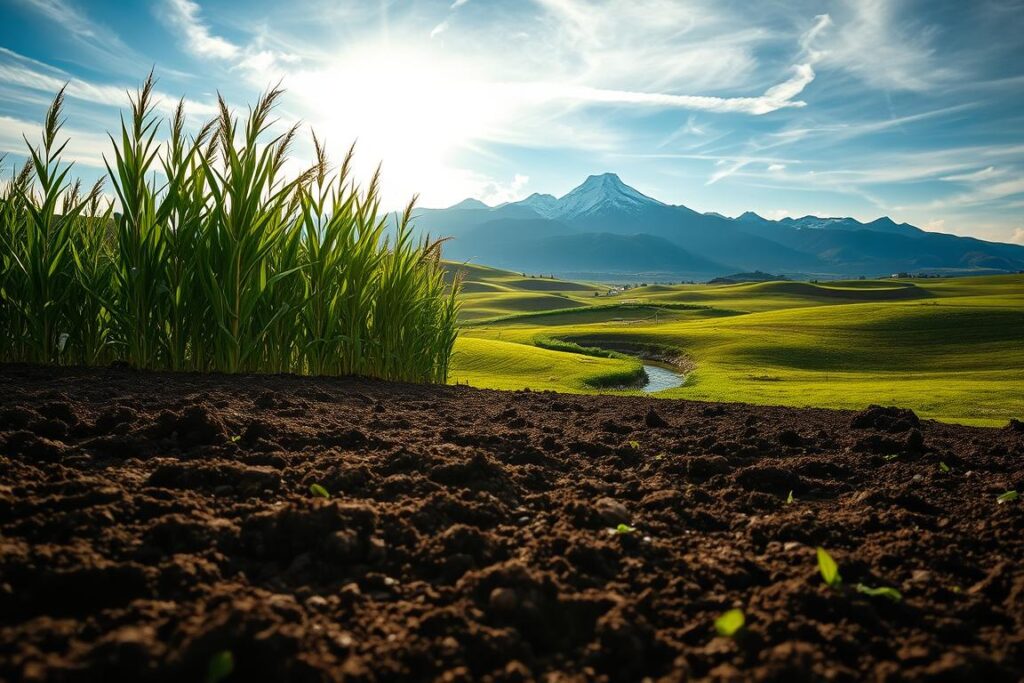
The world is facing big challenges with climate change. One major worry is how it affects soil health, especially in places like Pakistan.
Soil health is key for growing food, and Pakistan’s economy depends a lot on farming. But, rising temperatures, changing rain patterns, and more extreme weather are harming Pakistan’s soil.
The damage from climate change on soil health is complex. It includes less soil organic carbon, more drought, and higher salinity. It’s important to understand these effects to find ways to fix them.
Key Takeaways
- Climate change affects soil health in Pakistan.
- Soil organic carbon is crucial for soil fertility.
- Drought and salinity are major concerns.
- Effective strategies are needed to mitigate these impacts.
- Soil health is vital for Pakistan’s agricultural productivity.
The Current State of Soil Health in Pakistan
Understanding soil health is key for Pakistan’s farms. It affects how much crops grow and how well farms do.
Regional Soil Characteristics Across Provinces
Pakistan’s different lands mean many soil types. From Punjab’s rich soil to Balochistan’s dry lands, the soil varies a lot.
Key Soil Health Indicators and Baseline Data
Soil health is shown by soil organic carbon, nutrients, and microbes. Knowing these basics helps us see how soil is doing.
| Province | Soil Organic Carbon (%) | Nutrient Content |
|---|---|---|
| Punjab | 1.2 | High |
| Sindh | 0.8 | Medium |
| Balochistan | 0.5 | Low |
The table shows soil organic carbon levels differ by province. This info helps plan better for soil health.
Understanding the Impact of Climate Change on Soil Health
Climate change is a big threat to soil health worldwide. It affects how well we can grow food and keep ecosystems stable. Changes in temperature, rain patterns, and more extreme weather events mess with soil’s delicate balance.
Rising Temperatures and Soil Biological Activity
Soil’s living parts are feeling the heat from climate change. Warmer soil speeds up the work of microbes, which can break down soil faster. This might lead to less organic matter and affect how nutrients move through the soil.
Changing Monsoon Patterns and Soil Structure
Monsoon changes, like more intense rains, hurt soil’s structure. Heavy rain can pack down the soil and wash away parts of it. This makes it harder for water to soak in and for air to reach roots.
Extreme Weather Events and Soil Erosion
Severe weather like big storms and droughts makes soil erosion worse. Losing topsoil not only makes the soil less fertile. It also pollutes water by adding sediment.
We need to find ways to manage soil health better because of climate change. It’s important to understand how climate change affects soil. This knowledge helps us make farming more resilient and protect soil for the future.
Declining Soil Organic Carbon: A Critical Concern
Soil organic carbon depletion is a big problem for farming in Pakistan. It harms soil health and affects crop yields and the economy.
Measuring Soil Carbon Depletion in Pakistani Farmlands
To tackle this, we need to measure soil carbon loss accurately. Soil sampling and analysis are used to check soil organic carbon levels. Soil testing gives us the data we need to improve soil health.
Relationship Between Carbon Loss and Crop Yields
Soil organic carbon levels directly impact crop yields. When soil organic carbon goes down, crops grow less well. This is because soil organic carbon helps with soil structure, nutrient cycling, and water retention.
Economic Impact of Reduced Soil Fertility
Soil fertility decline has big economic effects. Lower crop yields mean less money for farmers. This hurts the whole agricultural economy.
Using sustainable soil management can solve this problem. Farmers can boost soil health, grow more crops, and help the environment.
Drought Effects on Pakistani Agricultural Soils
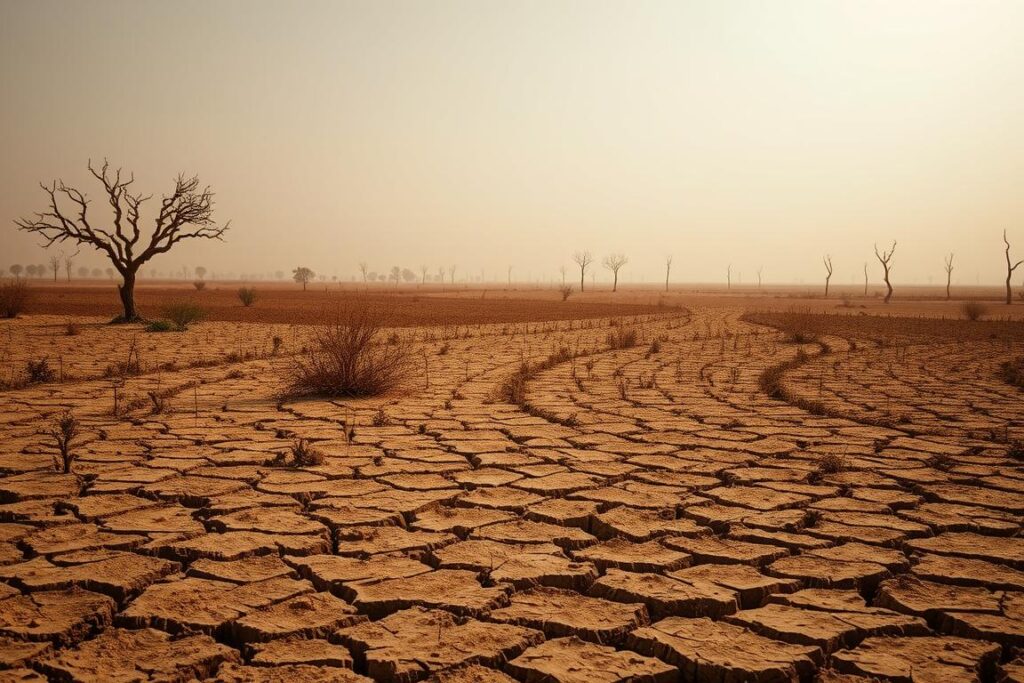
Pakistani agricultural soils face big threats from droughts. Droughts are happening more often and lasting longer. This hurts soil health and makes farming harder.
Increasing Frequency and Severity of Drought Events
The climate is changing, making droughts more common and severe in Pakistan. This change is bad for agricultural soils. It lowers soil moisture, which harms crops and soil structure.
Soil Moisture Dynamics in Arid and Semi-Arid Regions
Soil moisture is key for farming, especially in dry areas. Droughts make soil dry out faster. This leads to soil damage and less fertility.
Drought-Resistant Farming Adaptations
Farmers in dry areas are finding ways to fight drought. They use crops that can handle dry conditions. They also practice conservation farming and use water wisely.
These efforts help farmers keep their soil strong. They can still grow crops even when the weather is tough.
Soil Salinity: Pakistan’s Growing Challenge
Climate change is making soil salinity a big problem for farming in Pakistan. Warmer temperatures and changes in rain patterns are making it worse. This is especially true in areas with bad irrigation.
Irrigation Practices and Salt Accumulation
Bad irrigation leads to salt in the soil, making it less fertile and hurting crops. Efficient water management is key to solving this. Using drip irrigation and mulching can cut down salt buildup.
Coastal Saline Intrusion Due to Sea Level Rise
Sea level rise is causing coastal saline intrusion, making soil saltier in coastal areas. This makes freshwater and farmland dirty, threatening food safety.
Mapping High-Risk Salinity Zones
Finding and mapping areas at high risk of salinity is vital. Remote sensing technologies and GIS mapping help spot these areas. This way, we can take steps to lessen salinity’s impact.
Case Studies: Climate Change and Soil Degradation in Pakistan
Climate change’s impact on soil health in Pakistan is being studied closely. These studies offer insights into the challenges faced by different areas. They help in creating strategies to fight soil degradation.
Punjab Wheat Belt: Organic Carbon Depletion Study
The Punjab wheat belt is a key agricultural area facing organic carbon loss. This is due to intensive farming and climate change. A five-year study found that soil organic carbon levels fell by 0.5% each year.
This decline harms soil fertility and boosts greenhouse gas emissions.
Sindh Delta: Salinity and Coastal Erosion Analysis
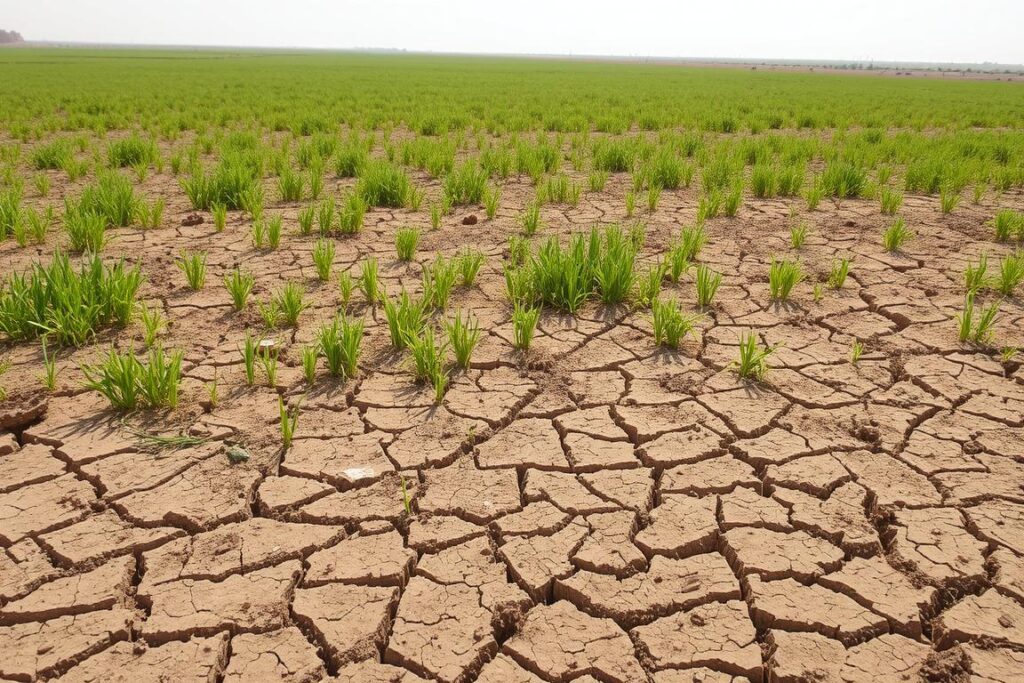
In the Sindh delta, climate change worsens salinity and coastal erosion. This harms soil health. Rising sea levels and changing monsoons cause saltwater to enter freshwater, making soil bad for crops.
Analysis showed that 30% of agricultural land is salty. This leads to big yield losses.
Balochistan Highlands: Drought Impact Assessment
The Balochistan highlands face frequent droughts from climate change. This severely affects soil moisture and fertility. During the last drought, soil moisture dropped by over 40%.
This hurts pasturelands and farm productivity. It’s a big problem for local communities relying on these lands.
Sustainable Soil Management for Climate Resilience
It’s key to use sustainable soil management in Pakistan’s farms to fight climate change. This helps the soil stay healthy and strong.
Conservation Agriculture and No-Till Farming
Conservation agriculture, like no-till farming, keeps the soil intact. This method helps the soil hold water better and prevents erosion. An expert says, “It’s a big step forward for soil health, offering a better way than old farming methods.”
“Using conservation agriculture can greatly lower soil damage and boost crop yields. This helps ensure we have enough food, even with climate change.”
Organic Matter Amendments and Carbon Sequestration
Soil gets better with organic matter like compost or manure. This also helps pull carbon dioxide out of the air, fighting climate change.
Water-Efficient Irrigation Technologies
Systems like drip irrigation save water and prevent soil salt buildup. They’re crucial in dry areas, helping farmers grow more with less water.
Indigenous Knowledge and Modern Soil Science Integration
Mixing old farming ways with new soil science makes soil care better. This mix uses the best of both worlds to make soil healthier and more resilient.
Conclusion: Securing Pakistan’s Soil Health Future
Pakistan’s soil health is facing big challenges from climate change. Rising temperatures and changing weather patterns are harming soil health. This includes soil’s ability to hold water and support life.
Soil organic carbon levels are dropping, and coastal erosion is getting worse. These issues are critical and need urgent attention. We must act now to protect our soil for the future.
Using sustainable soil management can help fight climate change’s effects. Practices like conservation agriculture and organic amendments are key. They help keep soil healthy and productive.
By adopting these methods, Pakistan can improve its soil and food production. This will make the country more resilient to climate change. It’s a step towards a more secure food future.
To protect Pakistan’s soil, everyone must work together. Policymakers, farmers, and others need to join forces. Together, we can safeguard this vital resource and ensure food security for all.
Implementing sustainable soil practices is essential in the face of climate change. It will help make Pakistan’s agriculture sector stronger and more resilient.