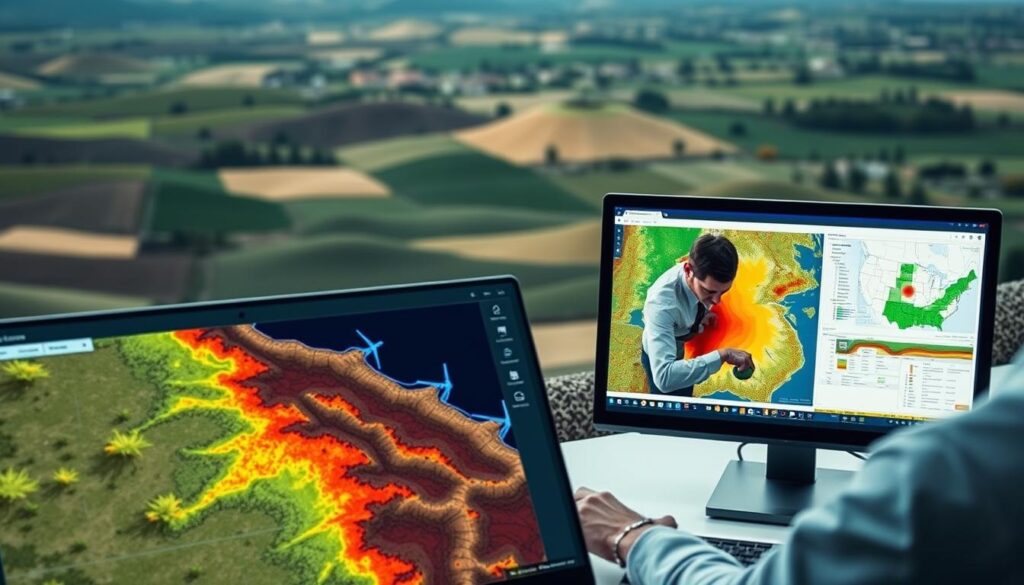
Soil classification is key in farming. Accurate soil classification helps grow better crops and use resources wisely. Thanks to advanced technologies like remote sensing and GIS, classifying soil is now more accurate and quick.
The use of digital soil mapping and remote sensing has changed how we handle soil. These tools help farmers and managers in Pakistan make better choices. This leads to better farming and caring for resources.
Key Takeaways
- Advanced technologies like remote sensing and GIS improve soil classification accuracy.
- Digital soil mapping enhances our understanding of soil resources.
- Better soil classification leads to more efficient agricultural practices.
- Remote sensing and GIS integration supports sustainable resource management.
- Accurate soil classification is crucial for improved crop yields.
Understanding Digital Soil Mapping in Agriculture
In modern farming, digital soil mapping is key to better crops and less harm to the environment. It makes detailed maps of soil types. This helps farmers make better choices.
Definition and Core Concepts
Digital soil mapping uses advanced tech like GIS and remote sensing to map soil. It helps farmers understand soil differences. This way, they can pick the best crops for each area, boosting yields.
GIS applications make digital soil mapping better by combining spatial data. This is important for seeing how soil and environment interact.
Evolution of Soil Mapping Techniques
Soil mapping used to be slow and hard work. But now, digital tools make it faster and more precise. Today, we use remote sensing and GIS for detailed maps.
Soil mapping has gotten much better over time. It gives farmers the info they need for smart choices, like what crops to grow and how much fertilizer to use. Digital soil mapping is now a must-have in farming.
The Science Behind Remote Sensing for Soil Analysis
Remote sensing is a key tool in soil analysis. It gives us insights into soil without needing to take samples directly. This method uses parts of the electromagnetic spectrum to collect data on soil.
Electromagnetic Spectrum in Soil Studies
The electromagnetic spectrum is vital in soil analysis with remote sensing. Different wavelengths interact with soil in unique ways. This interaction helps us understand soil’s moisture, organic matter, and minerals.
For example, visible and near-infrared spectroscopy can show soil’s color, texture, and moisture. These details are crucial for understanding soil properties.
Sensor Types and Their Applications
Many sensors are used in remote sensing, each for different tasks. Multispectral and hyperspectral sensors are used to capture detailed spectral signatures of soils. This helps identify small differences in soil properties.
These sensors can be on satellites or drones. The choice depends on the needed resolution and area to be covered.
Satellite vs. Drone-Based Remote Sensing
Choosing between satellite and drone-based remote sensing depends on several factors. Satellite-based systems are great for large-scale soil mapping. They cover more area but are more expensive.
Drone-based systems offer higher resolution and are better for smaller, detailed studies. Both methods have their strengths and can be used together for a complete soil analysis.
Understanding remote sensing for soil analysis helps make better choices. It ensures the right technology and methods are used for specific needs.
Digital Soil Mapping & Remote Sensing for Soil Classification
Digital soil mapping combines GIS with remote sensing data. This method makes soil maps more accurate and detailed. These maps are key for planning in agriculture and managing the environment.
Integration of GIS with Soil Data
Geographic Information Systems (GIS) play a big role in digital soil mapping. They help mix different data layers, like soil properties and land use. This makes detailed soil maps for better farming and land use.
- GIS helps analyze how different soil features relate to each other.
- It lets us combine data to make full soil maps.
- GIS tools help keep soil data up to date.
Classification Systems and Taxonomies
There are many soil classification systems around the world. Each has its own rules and categories. The right system depends on the soil’s features and the map’s purpose.
- The USDA Soil Taxonomy is a common choice for soil classification.
- Other systems, like the World Reference Base for Soil Resources, offer different ways to classify soils.
Accuracy Assessment in Digital Soil Maps
It’s vital to check the accuracy of digital soil maps. This ensures they’re useful for farming and planning. We do this by comparing the maps with real-world data.
To check accuracy, we use stats and compare with other data. This helps make digital soil maps better and more reliable.
Pakistan’s Agricultural Landscape and Soil Diversity
Pakistan’s farms have a wide variety of soils. Each soil type is shaped by its location. This variety is key to the country’s farming success and future.
Regional Soil Variations Across Provinces
Pakistan’s provinces have different soil types. This is because of the varied weather, land shape, and water flow. Knowing these differences is important for good farming and planning.
Arid and Semi-Arid Regions
The dry areas in Balochistan and parts of Sindh have soils that are dry, salty, and poor in nutrients. Soil conservation techniques are needed here to stop soil loss and boost soil health.
Irrigated Plains and River Basins
On the other hand, the fertile lands in Punjab are used a lot for farming. Proper irrigation management is crucial here to avoid water problems and keep farming productive.
Current Challenges in Soil Management
Pakistan faces big challenges in soil care, like soil erosion, salt buildup, and nutrient loss. To tackle these, a detailed plan is needed. This includes soil conservation practices, better water use, and organic farming.
By managing its soil well, Pakistan can improve farming and ensure a better future for farmers.
Data Collection Methods for Digital Soil Mapping
Getting accurate digital soil maps starts with good data collection. Effective data collection is key to building reliable digital soil maps.
Field Sampling Techniques
Field sampling is vital for digital soil mapping. It uses methods like grid sampling, stratified sampling, and targeted sampling. Grid sampling divides the area into grids and takes samples at the intersections. Stratified sampling splits the area into sections based on land use or soil type.
- Grid sampling for uniform data distribution
- Stratified sampling for targeted data collection
- Targeted sampling for specific soil characteristics
Laboratory Analysis Procedures
Soil samples are analyzed in labs to find out soil properties. X-ray fluorescence (XRF) and visible near-infrared spectroscopy (VNIR) are used. These methods check the soil’s composition and characteristics.
- XRF for elemental analysis
- VNIR for soil property assessment
Data Integration and Quality Control
Data from field sampling and labs is put into GIS systems. Data integration mixes data from different sources. Quality control checks make sure the data is accurate and reliable. Steps like data validation and verification are important for keeping data quality high.
With careful data collection and integration, digital soil mapping offers useful insights for farming and the environment.
Implementing Digital Soil Mapping in Pakistani Agriculture
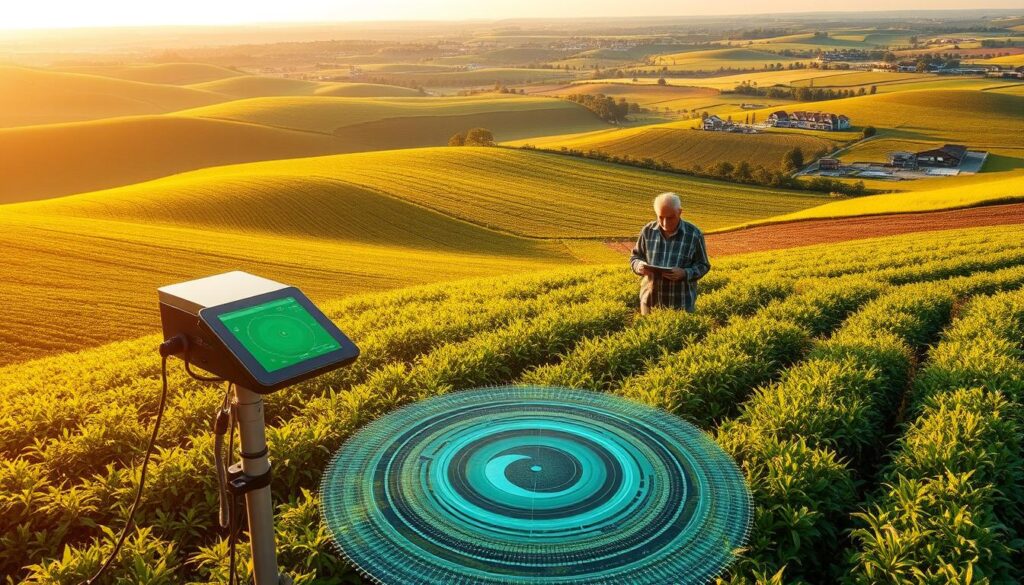
Digital soil mapping can greatly improve crop yields and protect the environment in Pakistani agriculture. It offers detailed soil information, changing farming for the better.
Required Infrastructure and Resources
Pakistan’s farms need the right tools and knowledge for digital soil mapping. This includes:
- Access to GIS technology and remote sensing data
- Trained people in soil science and GIS analysis
- Strong computers for data work
- Teamwork between research, government, and private sectors
Building the right infrastructure is key. It’s not just about the tech but also training people.
Cost-Benefit Analysis for Farmers
It’s important to look at the money side of digital soil mapping for farmers. The good parts are:
- Better crops from smart soil use
- Less money spent on fertilizers and water
- Better choices with real soil data
Starting digital soil mapping costs money for tech and training. But, it can save a lot in the long run and make farmers more money.
Government Initiatives and Support Programs
The government can help a lot by starting support programs. These can include:
- Help for farmers to get GIS tech and data
- Money for research and development
- Training for farm workers
Government help is vital for digital soil mapping in Pakistani farms. With the right support, farmers can use this tech to their advantage.
Advanced GIS Techniques for Precision Agriculture
GIS technology has changed how we farm. It lets farmers and researchers use complex data to make smart choices.
Spatial Analysis and Modeling
Spatial analysis and modeling are key in precision farming. They help us see patterns and connections in farms. By using these tools, farmers can spot soil differences, improve water use, and guess crop yields better.
Spatial modeling takes it further. It lets farmers try out different plans to manage their farms better.
3D Soil Mapping and Visualization
3D soil mapping has changed how we see soil. It shows soil’s structure and properties in detail. 3D visualization tools help farmers understand soil better. They make it easier to spot patterns in soil data.
Temporal Analysis of Soil Properties
Temporal analysis looks at how soil changes over time. It’s important for knowing soil’s health and fertility. By tracking changes, farmers can see how soil is doing and make better choices.
It helps farmers use soil wisely for the long term. This way, farming can be more sustainable and better for the environment.
In short, GIS techniques are making farming better. They help with analyzing data, mapping soil, and tracking changes. These tools make farming more efficient and sustainable, leading to better crops and less harm to the environment.
Case Studies: Successful Digital Soil Mapping Projects in Pakistan
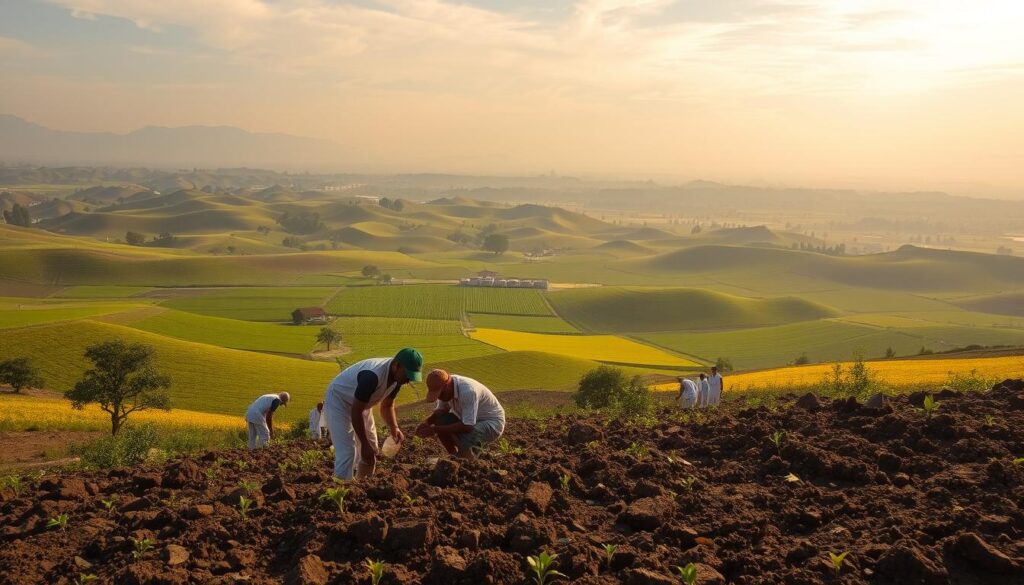
Pakistan has made big strides in digital soil mapping. Many projects have shown how it can boost farming. They’ve helped classify soil better and manage farms more effectively.
Punjab Agricultural Initiatives
The Punjab province leads in digital soil mapping. Two key projects are the Wheat Belt Soil Classification Project and the Cotton Zone Mapping Success.
Wheat Belt Soil Classification Project
This project aimed to classify soils in Punjab’s wheat belt. Digital soil mapping helped get a precise classification. This led to better wheat yields.
Cotton Zone Mapping Success
The Cotton Zone Mapping project focused on Punjab’s cotton areas. It used remote sensing and GIS to map soil types. This resulted in better cotton production and less soil damage.
Sindh Irrigation and Drainage Authority Projects
The Sindh Irrigation and Drainage Authority has worked on digital soil mapping. These projects helped identify soil types and their water-holding capacities. This led to more efficient irrigation.
Balochistan Drought Monitoring System
In Balochistan, a drought monitoring system was set up using digital soil mapping. It gave insights into soil moisture during droughts. This helped manage droughts better.
These projects show the power of digital soil mapping in Pakistan’s farming. By using these technologies, other areas can also see better soil management and higher crop yields.
| Project Name | Location | Outcome |
|---|---|---|
| Wheat Belt Soil Classification | Punjab | Improved wheat yields |
| Cotton Zone Mapping | Punjab | Better cotton production |
| Sindh Irrigation Projects | Sindh | More efficient irrigation |
| Balochistan Drought Monitoring | Balochistan | Improved drought management |
Practical Applications for Pakistani Farmers
Digital soil mapping and remote sensing help Pakistani farmers. They can grow more crops and waste less. Farmers learn more about their soil, making better choices.
Crop Selection Based on Soil Classification
Choosing the right crops is key. Pakistani farmers can pick the best crops for their soil. Some crops do well in clay, others in sandy soils.
By matching crops to soil, farmers can grow more and protect their soil.
- Identify soil texture and structure
- Choose crops suitable for the soil type
- Implement crop rotation to maintain soil health
Optimizing Irrigation Systems
Water is precious, and so is crop health. Remote sensing helps farmers know when to water. This saves water and cuts down on energy costs.
- Use soil moisture sensors to monitor soil conditions
- Adjust irrigation schedules based on soil moisture data
- Implement drip irrigation for efficient water use
Fertilizer Management Strategies
Digital soil mapping also helps with fertilizers. Pakistani farmers can use fertilizers wisely. This saves money and protects the environment.
- Conduct soil tests to determine nutrient levels
- Apply fertilizers based on soil nutrient deficiencies
- Use organic amendments to improve soil fertility
Conclusion
Digital soil mapping, remote sensing, and GIS are changing how we classify soil and farm in Pakistan. These new tools help farmers and leaders make better choices. This leads to more crops and smarter use of resources.
Digital soil mapping makes detailed soil maps, helping us understand and farm the land better. Remote sensing gives us data on soil types. GIS analysis spots areas with certain soil features.
Using these technologies is key to solving food and environmental issues. As farming grows, using digital tools will be essential for sustainable farming in Pakistan.
Pakistan can grow more food, protect the environment, and build a sustainable future. By using digital soil mapping, remote sensing, and GIS, the country can achieve these goals.