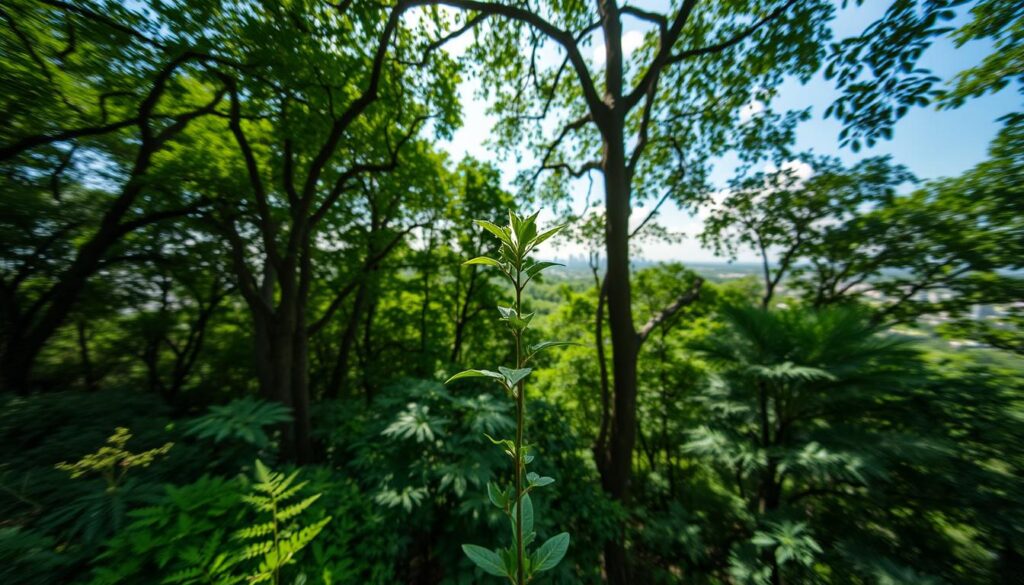
Can planting trees really help fight climate change? Yes, they can. Trees are amazing at pulling in carbon dioxide. This is a big part of what makes our carbon footprint so high.
Trees are more than just pretty to look at. They are key players in the battle against climate change. By taking in carbon emissions, they cut down our carbon footprint. This makes our world cleaner and healthier.
Key Takeaways
- Trees absorb carbon dioxide, reducing the carbon footprint.
- Planting trees is a natural solution to combat climate change.
- Trees help in capturing carbon emissions, making the environment cleaner.
- Reducing carbon footprint through trees contributes to a healthier planet.
- Trees are a powerful tool in the fight against climate change.
The Carbon Crisis: Understanding Our Environmental Impact
As the world faces climate change, knowing our carbon footprint is key. Our carbon footprint is the total greenhouse gases we produce, like carbon dioxide and methane.
What Is a Carbon Footprint?
A carbon footprint shows how our actions harm the environment. It counts emissions from driving, using electricity, and industrial work.
Global Carbon Emission Trends
Worldwide, carbon emissions keep going up. They come from things like factories, cars, and power plants. The concentration of CO2 in our air is very high, causing climate change.
Pakistan’s Unique Climate Challenges
Pakistan has its own climate problems, like warmer temperatures and changing rain patterns. These issues affect farming, water, and health.
Urban Pollution Hotspots
Cities in Pakistan, like Karachi and Lahore, add a lot to carbon emissions. This is because of car exhaust, factories, and energy use. To cut down pollution, we need:
- Better public transport
- More electric cars
- More energy-efficient buildings
Agricultural Emissions
Farming is also a big source of emissions in Pakistan, mainly from fertilizers and animals. Using sustainable farming and cutting waste can lessen these emissions.
It’s important to understand and tackle these issues. This way, we can lower Pakistan’s carbon footprint and fight climate change.
The Role of Trees in Reducing Carbon Emissions
Trees are key in fighting climate change. They do this by absorbing CO2 through a process called carbon sequestration. This natural action helps lower greenhouse gases in the air.
Carbon Sequestration: How Trees Capture CO2
Carbon sequestration happens mainly through photosynthesis. Trees use sunlight to turn CO2 and water into glucose and oxygen. This not only cuts down atmospheric CO2 but also gives trees the energy to grow.
Trees as Natural Carbon Sinks
Trees serve as natural carbon sinks by storing carbon in their biomass, soil, and dead wood. The amount of carbon stored depends on tree species, age, and forest management.
The Carbon Cycle and Forest Ecosystems
Forest ecosystems are vital in the carbon cycle. They help control CO2 levels in the air. Trees absorb CO2 during photosynthesis and release it back during respiration and decomposition, creating a dynamic cycle.
How Much Carbon Can One Tree Absorb?
The carbon absorption of a single tree varies. A mature tree can absorb about 48 pounds of CO2 each year. Here’s a table showing the carbon absorption of different tree species:
| Tree Species | Annual CO2 Absorption (lbs) |
|---|---|
| Oak | 50-60 |
| Pine | 40-50 |
| Maple | 30-40 |
Knowing how trees help reduce carbon emissions shows why we need to protect and plant more trees. By doing so, we can greatly improve the Earth’s ability to absorb carbon.
The Science Behind Trees and Carbon Capture
Trees can absorb a lot of carbon dioxide. It’s important to know how they do it. This involves complex biological processes and tree physiology.
Photosynthesis: Nature’s Carbon Capture Technology
Photosynthesis is how trees grab carbon dioxide from the air. They turn CO2 and water into glucose and oxygen with sunlight’s help. This makes the oxygen we need and builds the tree’s body.
Carbon Storage in Different Tree Parts
Trees keep carbon in their trunks, branches, roots, and leaves. The trunk holds a lot of carbon. But roots are also key, often overlooked but essential for storing carbon.
Factors Affecting Carbon Sequestration Rates
Many things affect how fast trees capture carbon. These include the environment, tree type, and age.
Age and Species Considerations
Young trees grow faster and capture carbon quicker than old ones. But older trees store more carbon because they’re bigger. Different trees absorb carbon at different rates. For example, fast-growing trees like eucalyptus and poplar capture carbon faster than slow-growing ones.
Knowing these details helps us make forests better at capturing carbon. By picking the right trees for the right places and managing their age, we can boost our forests’ carbon capture.
Pakistan’s Native Trees and Their Carbon Capture Potential
Pakistan’s diverse flora offers a natural solution to the global carbon crisis. Its native tree species are not only ecologically valuable but also highly effective in carbon sequestration.
Indigenous Tree Species with High Carbon Sequestration
Some of Pakistan’s native trees are particularly noteworthy for their ability to capture and store carbon dioxide. The Chir Pine (Pinus roxburghii) and the Deodar Cedar (Cedrus deodara) are two such species.
Chir Pine (Pinus roxburghii)
The Chir Pine is widely distributed across the Himalayan and Karakoram mountain ranges. It is known for its fast growth rate and ability to thrive in a variety of conditions. This makes it an excellent carbon sink.
Deodar Cedar (Cedrus deodara)
Deodar Cedar is another highly valued native species, recognized for its timber and ecological significance. It has a substantial capacity for carbon sequestration. This contributes significantly to reducing atmospheric CO2 levels.
Adaptability of Native Trees to Local Climate
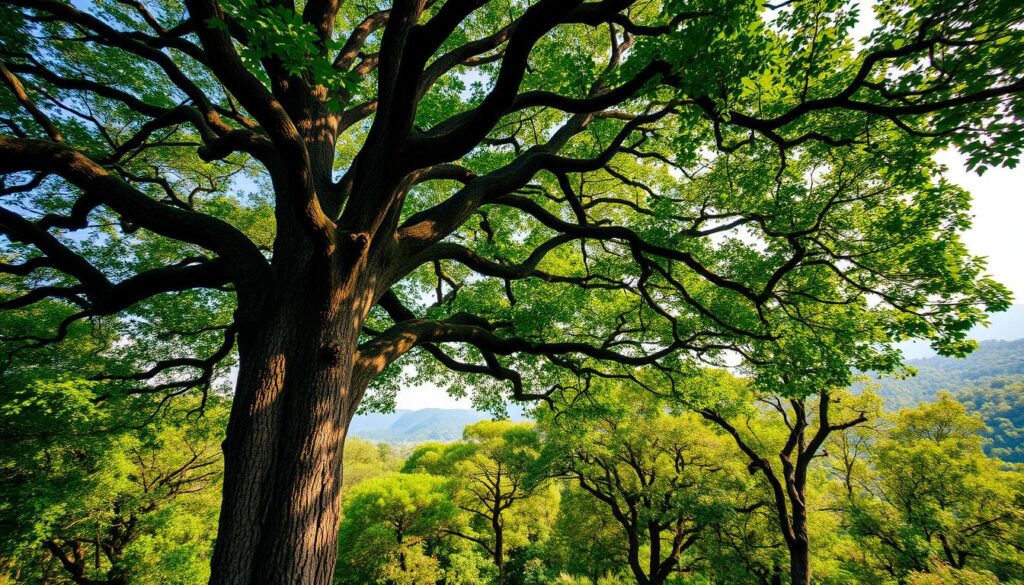
Native trees such as Chir Pine and Deodar Cedar are well-adapted to Pakistan’s climate. They require less maintenance and care compared to non-native species. Their adaptability ensures their survival and effectiveness in carbon capture over long periods.
Case Studies of Successful Local Tree Species
Several case studies have demonstrated the success of native tree species in carbon sequestration. For instance, reforestation efforts in the northern regions of Pakistan have shown significant positive impacts on the local ecosystem and carbon footprint.
These studies highlight the importance of selecting the right tree species for reforestation and afforestation efforts. They emphasize the role of indigenous trees in achieving environmental sustainability.
Urban Forests: Greening Pakistani Cities to Reduce Carbon Footprints
Pakistani cities are growing fast. Urban forests are key in cutting down carbon footprints. They help cool cities, clean the air, and home urban wildlife.
Benefits of Urban Tree Canopy
The urban tree canopy has many perks. It captures carbon, cuts energy use, and boosts biodiversity. Trees shade buildings, lowering city temperatures. This means less need for air conditioning and less energy use.
Strategic Tree Planting in Karachi, Lahore, and Islamabad
Planting trees wisely in cities like Karachi, Lahore, and Islamabad is vital. Trees in crowded areas improve air quality and fight the urban heat island effect.
Challenges and Solutions for Urban Forestry
Urban forestry has big hurdles, like water scarcity and upkeep. Water conservation is key for urban trees, especially in dry areas.
Water Conservation Techniques
Using smart irrigation and drought-resistant trees saves water. Mulching around trees also keeps soil moist. This means trees need water less often.
National Reforestation Initiatives in Pakistan
Pakistan is fighting climate change with big steps in reforestation. These efforts help cut down carbon emissions and make the environment better.
The Billion Tree Tsunami Project
In 2014, Pakistan started the Billion Tree Tsunami Project. It aimed to cover 350,000 hectares with 1 billion trees. This project helped absorb carbon and gave jobs to locals.
“The Billion Tree Tsunami Project showed that big reforestation goals can be reached with good planning and community help.”
Ten Billion Tree Tsunami Programme
The Ten Billion Tree Tsunami Programme is the next big step. It plans to plant 10 billion trees to increase carbon capture and balance nature.
Economic and Environmental Impacts
These projects have made a big difference. They’ve increased carbon capture, improved nature, and helped local jobs. Studies show they’ve absorbed a lot of carbon dioxide, fighting climate change.
“Reforestation in Pakistan proves that saving nature can also help the economy.”
Community-Based Forestry Programs
Community programs are key to Pakistan’s success in reforestation. They involve locals in planning and doing the work. This makes projects last longer and gives locals a reason to care.
Together, national efforts and community programs show a strong way to protect Pakistan’s environment.
Personal Action: Planting Trees to Reduce Your Carbon Footprint
Planting trees is a simple yet powerful way to fight climate change. By understanding how our actions affect the environment, we can lower our carbon footprint. This is done by following the best practices for tree planting.
Calculating Your Tree Planting Impact
It’s important to know how much carbon trees can absorb. For example, a mature tree can take in 48 pounds of CO2 every year. By planting trees, we can offset our carbon emissions and help clean our environment.
| Tree Type | CO2 Absorption per Year | Lifespan |
|---|---|---|
| Mango Tree | 50 kg | 100 years |
| Pine Tree | 30 kg | 150 years |
| Banyan Tree | 70 kg | 200 years |
Best Practices for Tree Planting in Pakistan’s Climate
To get the most out of tree planting, follow practices suited for Pakistan’s weather. Pick native tree species that can handle local conditions well.
“Planting trees is not just about putting a sapling in the ground; it’s about nurturing it to maturity.” –
- Choose drought-resistant native species.
- Plant trees in areas with suitable soil conditions.
- Ensure regular watering, especially during the initial growth phase.
Seasonal Planting Guide
The best time to plant trees in Pakistan is during the monsoon season, from July to September. The rain during this time helps the saplings grow well.
Joining Local Tree Planting Initiatives
Joining local tree planting efforts can make a bigger difference. Many groups in Pakistan plant trees and teach people about their value.
By taking part in these programs, we help a bigger cause. We build a community that cares for the environment.
Beyond Planting: Protecting Existing Forests
Planting trees is important, but so is protecting our existing forests. Mature trees and forests can hold much more carbon than new ones.
The Value of Mature Trees vs. New Plantings
Mature trees have been capturing carbon for decades. A single mature tree can be as good as many saplings for carbon capture. For example, a study showed a mature oak can take in up to 36 kg of CO2 each year.
Combating Deforestation in Pakistan’s Northern Regions
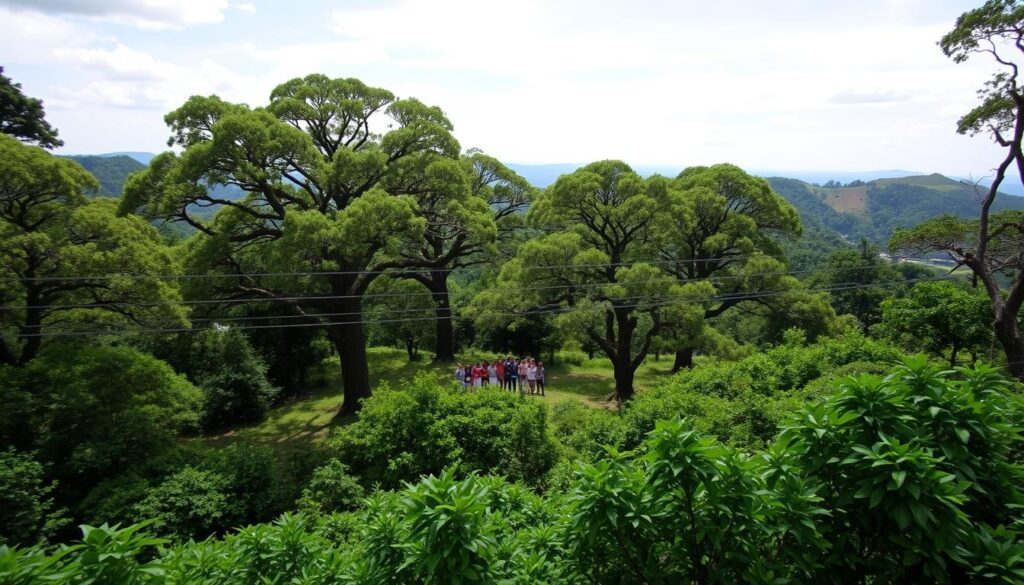
Deforestation is a big problem in Pakistan’s north. Forests are being cut down for farming and cities.
“If we don’t act now to protect our forests, we risk losing the very essence of our ecosystem.”
Community-led efforts are helping fight deforestation.
Sustainable Forest Management Practices
Sustainable forest management keeps forests healthy. It includes careful logging and planting new trees.
Community Involvement in Forest Protection
| Community Role | Impact |
|---|---|
| Monitoring forest health | Early detection of threats |
| Participating in reforestation | Increased forest cover |
| Promoting sustainable practices | Reduced deforestation |
Getting local communities involved helps protect our forests for the long term.
Conclusion: Trees as a Climate Change Solution
Trees are key in the fight against climate change. They help reduce carbon emissions naturally. Trees absorb carbon dioxide through photosynthesis, storing it in their biomass and soil.
Pakistan’s climate and geography are perfect for tree planting. Using native tree species and sustainable forestry practices helps reduce carbon emissions. This is a big step towards a greener future.
The Billion Tree Tsunami Project and the Ten Billion Tree Tsunami Programme are great examples. They not only reduce carbon but also boost biodiversity and air quality. They also support local ecosystems.
Understanding the role of trees in fighting climate change is crucial. We can all help by planting trees, protecting forests, and supporting conservation. Every tree we plant brings us closer to a sustainable future. Trees are essential in solving climate change.
I recently tried v3gamelogin, and the whole experience was slick. Login’s breeze. See for yourself v3gamelogin.