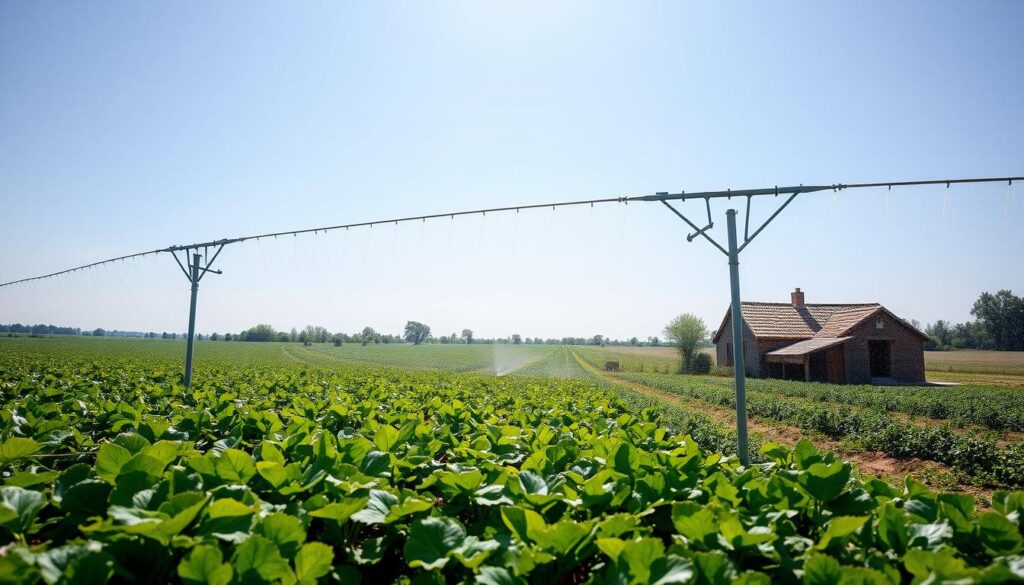
Can sprinkler irrigation really change the game for small farms in Pakistan wanting to increase their crop yields? With the growing need for food, finding better ways to water crops is key.
In Pakistan, where farming is a big deal, crop yields
Using sprinkler irrigation can solve these problems for small farms. It makes sure water is spread evenly and cuts down on waste.
Key Takeaways
- Increased crop yields through efficient water distribution
- Reduced water waste with sprinkler irrigation systems
- Improved agricultural productivity for small farms in Pakistan
- Enhanced crop quality through precise irrigation control
- Better water management for farmers in Pakistan
The Current State of Irrigation in Pakistan
Traditional irrigation methods are still common in Pakistan’s farms. The country’s farms are key to its economy, and water is vital for their success.
Traditional Irrigation Methods and Their Limitations
Farmers in Pakistan often use flood and canal irrigation. These methods work but have big downsides. Water loss due to evaporation and runoff is a big problem, especially in dry areas. Also, water is not spread evenly, which hurts crop quality and yield.
- Inundation irrigation can cause waterlogging and soil salinization.
- Canal irrigation often results in significant water loss during conveyance.
Water Scarcity Challenges Facing Pakistani Farmers
Water scarcity is a big problem for Pakistani farmers. It’s made worse by climate change and more people needing water. Changing precipitation patterns and increased evaporation due to rising temperatures make water harder to find. This affects farmers’ ability to grow crops, hurting their livelihoods.
- Using water-saving technologies can help with the shortage.
- Improving how we manage water is key for farming to last.
Understanding Sprinkler Irrigation Systems
Sprinkler irrigation is a new way to help farmers in Pakistan deal with water scarcity. It uses pipes and sprinklers to spread water like rain.
What is Sprinkler Irrigation?
Sprinkler irrigation uses pipes and sprinklers to spread water. It’s great for small farms. It makes sure water is evenly spread, cutting down on waste and helping crops get the right moisture.
How Sprinkler Systems Work
Sprinkler systems have many parts that work together to water crops well. Knowing how they work helps farmers get the most out of them.
Water Distribution Mechanics
Water in sprinkler systems is pressurized and comes out through sprinklers. These sprinklers spread water evenly, making sure crops get the right amount of moisture.
Key factors influencing water distribution include:
- Pressure within the system
- Spacing of sprinklers
- Type of sprinkler heads used
Pressure and Flow Requirements
For sprinkler systems to work well, they need the right pressure and flow. Pressure decides how far water can go, and flow rate is how much water is used.
A good mix of pressure and flow is key for efficient irrigation.
| Component | Description | Importance |
|---|---|---|
| Pumps | Provide the necessary pressure to distribute water | High |
| Pipes | Transport water from the source to the sprinklers | High |
| Sprinklers | Distribute water over the crops | High |
Irrigation experts say, “The efficiency of sprinkler irrigation systems depends on their design and operation.” Good design meets the farm’s needs, making water use more efficient.
“The right sprinkler system can significantly reduce water waste and improve crop yields.”
Benefits of Sprinkler Irrigation for Small Farmers
Sprinkler irrigation makes a big difference for small farms. It helps with water use, labor, and crop growth. This method is especially good for farmers in Pakistan, where water is scarce and farming is hard work.
Water Conservation Benefits
Sprinkler irrigation sends water straight to the roots of plants. This cuts down on evaporation and runoff. It’s a big help for small farmers who don’t have much water, saving them money too.
Labor Efficiency Improvements
Old ways of watering need a lot of manual work. Sprinkler irrigation makes watering automatic. This means farmers can focus on other important tasks, making their farms more productive.
Crop Quality and Yield Increases
Sprinkler irrigation keeps the soil just right for plants. It gives them the water they need, making crops better and more plentiful. This is especially good for crops that need a lot of water to grow well.
| Benefits | Description | Impact on Small Farmers |
|---|---|---|
| Water Conservation | Reduces water wastage through targeted irrigation | Saves water and reduces operational costs |
| Labor Efficiency | Automates the watering process | Allows labor reallocation to other tasks, improving productivity |
| Crop Yield | Maintains optimal soil moisture for healthy crop growth | Improves crop quality and increases yields |
Types of Sprinkler Systems Suitable for Small Farms in Pakistan
Small farms in Pakistan can greatly benefit from various sprinkler irrigation systems. The right system depends on the farm’s size, crop type, and resources.
Fixed Sprinkler Systems
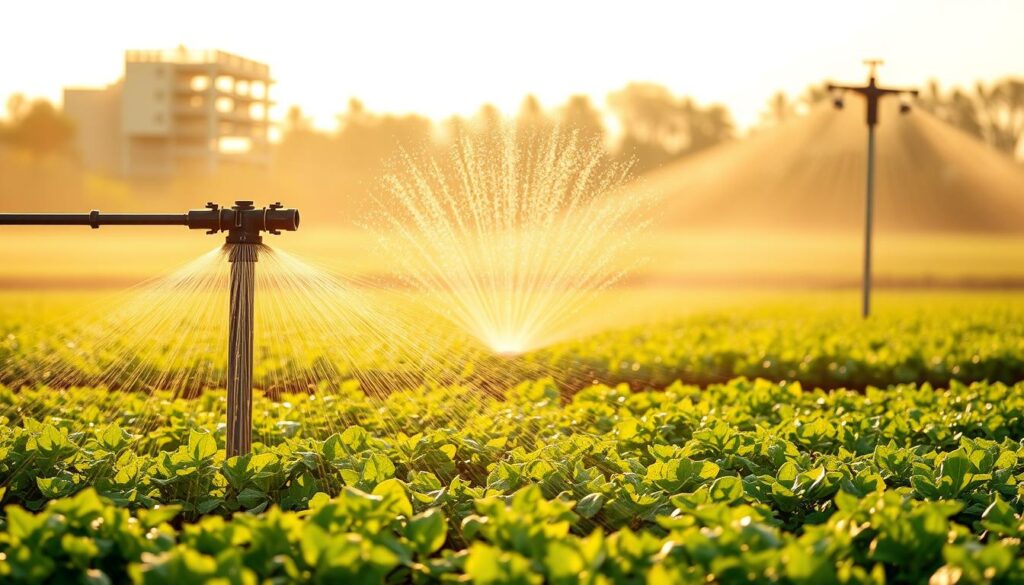
Fixed sprinkler systems are a top pick for small farms. They have sprinklers that stay in one spot, spreading water evenly. This is great for crops that need steady moisture.
Portable Sprinkler Systems
Portable sprinkler systems are flexible for farmers. They can be moved and set up in different spots. This is perfect for farms with changing crops or those that rotate crops.
Center Pivot Systems
Center pivot irrigation systems are efficient and cover big areas with little effort. They have a central pivot and a long arm that rotates, watering the field evenly. This system works well for larger small farms or circular fields.
Micro-Sprinklers for High-Value Crops
Micro-sprinklers are for high-value crops that need precise water. They water plants right at the roots, cutting down on evaporation and runoff. This is ideal for fruits and vegetables in Pakistan.
Knowing the different sprinkler systems helps small farmers in Pakistan choose the best one. This can lead to better crop yields and water use.
Selecting the Right Sprinkler Irrigation for Small Farmers
Finding the right sprinkler irrigation system is crucial for successful farming. Small farmers in Pakistan need to think about several things to get the most from their crops. This includes choosing a system that fits their farm’s unique conditions.
Assessing Your Farm’s Specific Needs
Before picking a sprinkler irrigation system, you must know your farm’s needs. Look at your land’s size, shape, and how it’s laid out. Also, think about the soil type and how much water it can hold.
- Evaluate your farm’s size and layout
- Assess the soil type and its water-holding capacity
- Consider the existing infrastructure and power supply
Considering Your Crop Types and Patterns
Every crop needs different amounts of water. Knowing your crop types and patterns helps pick the right irrigation system. For example, wheat and cotton need more water than vegetables and fruits.
- Identify the water requirements of your crops
- Consider the growth stages of your crops and their watering needs
- Plan for crop rotation and its impact on irrigation
Budget and Resource Considerations
Small farmers have to watch their budget. It’s important to weigh the upfront cost against the long-term benefits of the irrigation system. Think about energy costs and maintenance requirements too.
- Determine your budget for the initial investment
- Consider the operational costs, including energy and maintenance
- Evaluate the potential return on investment
By carefully looking at your farm’s needs, crop types, and budget, you can find the best sprinkler irrigation system. This will help improve your farm’s productivity and efficiency.
Designing Sprinkler Systems for Pakistan’s Climate Zones
Creating a good sprinkler irrigation system needs to know Pakistan’s different climates. The country’s climate changes a lot, from the hot deserts of Sindh to the cold mountains in the north. This makes it hard for farmers to set up sprinkler systems.
Adapting to Seasonal Variations
Pakistan’s seasons change a lot, with very hot summers and cold winters. Sprinkler systems must adjust to these changes. For example, in summer, they water more often to fight off evaporation. In winter, they water less.
Changing how the sprinkler system works with the seasons helps use water well and keeps crops healthy.
Water Source Considerations in Different Regions
The water available and its quality change across Pakistan. In Punjab, where canal water is common, sprinkler systems can use this water. But in places like Balochistan, where water is scarce, systems must be very efficient to save water.
Knowing the local water sources is key to making a sprinkler system that works well and lasts.
Dealing with Power Supply Challenges
Many places in Pakistan struggle with power, which is needed for sprinkler systems. To solve this, using solar energy is a good idea. Solar-powered systems are getting more popular because they’re reliable and green.
Choosing solar power can lower costs and make sprinkler irrigation work better in places without power lines.
| Climate Zone | Key Challenges | Sprinkler System Design Considerations |
|---|---|---|
| Desert (e.g., Sindh) | High temperatures, low rainfall | High-efficiency sprinklers, frequent watering |
| Mountainous (e.g., Northern Areas) | Cold temperatures, variable rainfall | Freeze protection, adjustable watering schedules |
| Irrigated Plains (e.g., Punjab) | Variable water availability | Water-efficient designs, adaptable to different water sources |
Step-by-Step Installation Process
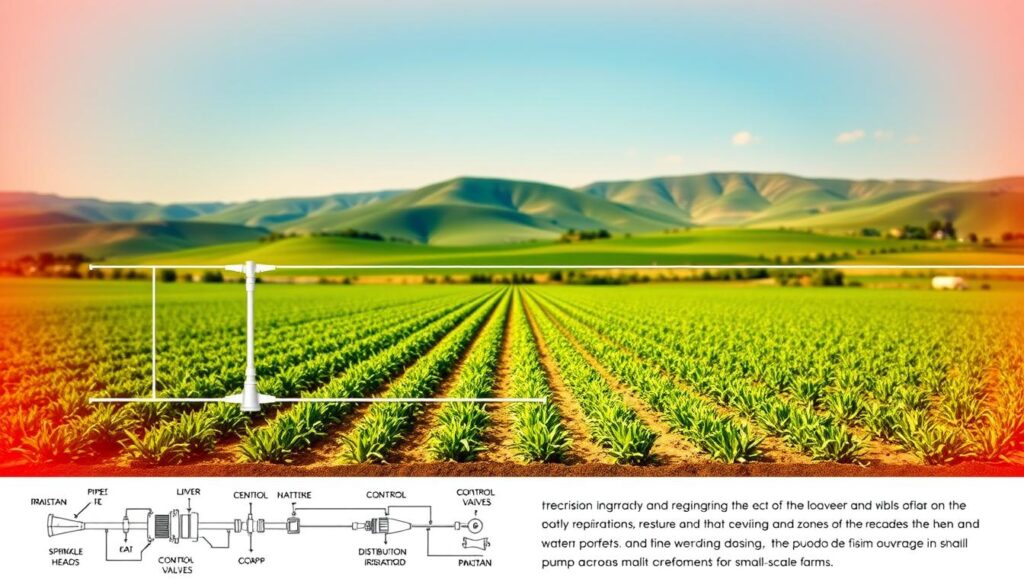
Setting up a sprinkler irrigation system is easy and boosts crop yields for small farmers in Pakistan. It involves several key steps to make sure the system works well.
Site Preparation and Layout Planning
The first step is preparing the site and planning the layout. You need to check the land to find the best spot for the sprinklers. Think about the soil, slope, and how the crops are arranged to spread water evenly. Good planning cuts down on water loss and makes sure every part gets enough water. You should also mark where the main and sub-mains, and laterals will go.
Component Assembly and Connection Guide
After preparing the site, it’s time to put the system together. This means linking the pump, mainline, sub-mains, laterals, and sprinkler heads. It’s important to follow the maker’s guide for putting it together and to make sure all connections are tight and don’t leak. Using the right tools and materials, like primers and adhesives for PVC pipes, is crucial for a lasting system.
Testing, Calibration, and Initial Operation
After putting it together, you need to test, calibrate, and start the system. This means looking for leaks, making sure the sprinklers work right, and adjusting the pressure. Calibration is important for even water distribution. Starting it up helps find any problems before it’s fully ready.
By following these steps, small farmers in Pakistan can set up a sprinkler irrigation system. This system will improve their crop yields and save water.
Maintaining Your Sprinkler Irrigation System
Keeping your sprinkler irrigation system in good shape is key. Regular care makes sure it works well, helping your crops grow and saving water.
Seasonal Maintenance Schedule
Having a seasonal maintenance plan is vital. It helps your sprinkler system run smoothly all year. You’ll need to check and fix things at different times.
Pre-Season Checks
Start by checking your system before you use it again. Look for:
- Leaks in pipes and fittings
- Clogged or damaged sprinkler heads
- Proper functioning of valves and pumps
Make sure everything is clean and free from debris to avoid problems later.
Post-Season Storage
When the season ends, store your system right to keep it safe. This means:
- Draining water to avoid freezing
- Cleaning and oiling moving parts
- Putting away removable parts in a dry, safe spot
Troubleshooting Common Issues in Pakistani Conditions
Farmers in Pakistan might face special problems with their systems. Issues like clogs from sandy soil or hot water are common. You might see:
- Clogged nozzles or filters
- Uneven water distribution
- Pump failures
Regular checks and upkeep can solve these problems. For example, the right filters can stop clogs.
Cost Analysis and ROI for Small Farm Sprinkler Systems
For small farmers in Pakistan, knowing the costs of sprinkler irrigation systems is key. The upfront cost might look high, but the long-term gains and ROI can be big.
Initial Investment Requirements
Setting up a sprinkler system costs money for sprinklers, pipes, pumps, and more. The price varies from PKR 500,000 to PKR 1,500,000. This depends on the farm’s size and system complexity.
| Component | Cost (PKR) |
|---|---|
| Sprinklers | 150,000 |
| Pipes | 200,000 |
| Pumps | 100,000 |
| Other Equipment | 50,000 |
| Total | 500,000 |
Operational Costs in Pakistani Context
Running a sprinkler system in Pakistan costs money for energy, maintenance, and repairs. A study by the Pakistan Agricultural Research Council shows energy costs can be up to 30% of total costs.
“The energy costs for pumping water are a significant component of the operational expenses for sprinkler irrigation systems in Pakistan.”
Expected Return on Investment and Payback Period
The ROI for sprinkler systems is high due to better crop yields and water saving. Farmers can see a payback in 3 to 5 years, based on crop type and system efficiency.
By looking at costs and benefits, small farmers in Pakistan can choose wisely. This could lead to better farming and more profit.
Success Stories: Pakistani Farmers Transforming Yields with Sprinkler Irrigation
In Pakistan, sprinkler irrigation is changing farming. Farmers are seeing big improvements in their yields. This is thanks to efficient irrigation systems that save water and boost crop growth.
Case Study: Small Wheat Farm in Punjab
A small wheat farm in Punjab saw a big jump in yield after getting sprinkler irrigation. The farm’s wheat production went up by 25%. This was thanks to even water distribution and less water waste.
“The sprinkler irrigation system has been a game-changer for us. We’ve seen a noticeable improvement in our crop yields, and the system is easy to manage.” – Farmer, Punjab
Case Study: Vegetable Grower in Sindh
A vegetable grower in Sindh also saw big gains with sprinkler irrigation. They got a 30% increase in vegetable production. The system’s direct water delivery to roots cut down on evaporation and runoff, making crops healthier.
- Improved crop yields due to uniform water distribution
- Water conservation through reduced evaporation and runoff
- Increased efficiency in farming operations
These stories show how sprinkler irrigation can change farming in Pakistan. It makes farming more productive and sustainable.
Conclusion: Taking the Next Steps to Implement Sprinkler Irrigation
Sprinkler irrigation is a game-changer for small farmers in Pakistan. It boosts crop yields and saves water. By learning about its benefits, types, and setup, farmers can upgrade their farming.
Starting a sprinkler system needs careful planning. You must assess your farm, choose the right system, and keep it running well. Pakistani farmers have seen big improvements, showing sprinkler irrigation’s value.
Ready to move forward? First, check your farm’s needs and resources. Talk to experts and look at new technologies. The right sprinkler system can make your farm more productive and help Pakistan’s agriculture grow sustainably.