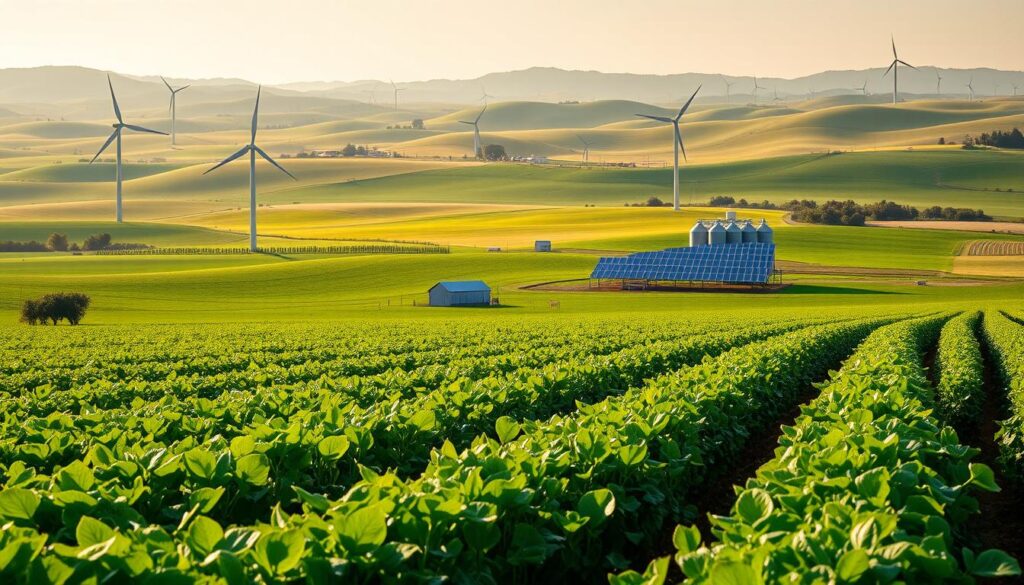
Can we grow more food without harming the planet? The world is moving towards a greener future. Renewable energy in farming is key to this shift.
Farming is a big source of greenhouse gases, mainly because it uses fossil fuels. But, by using sustainable agriculture and renewable energy, farmers can lessen their impact on the environment.
Energy from the sun, wind, and plants is cleaner than fossil fuels. It helps make farming more eco-friendly.
Key Takeaways
- The agricultural sector is a significant contributor to greenhouse gas emissions.
- Adopting renewable energy in farming reduces environmental footprint.
- Sustainable agriculture practices are crucial for meeting future food demands.
- Renewable energy sources offer cleaner alternatives to fossil fuels.
- Sustainable farming practices can ensure food security and sustainable development.
The Importance of Renewable Energy in Agriculture
The agricultural sector is on the verge of a big change with renewable energy. As we face climate change, environmental damage, and energy issues, renewable energy in farming is key.
Current Energy Challenges in Farming
Farming needs a lot of energy, mainly from fossil fuels for machines, irrigation, and processing. Fuel costs are high, and prices can change a lot, making things tough for farmers. Also, the harm from traditional energy, like greenhouse gases and pollution, makes farming less sustainable.
Key energy challenges in farming include:
- High operational costs due to fuel prices
- Dependence on non-renewable energy sources
- Environmental degradation and pollution
Environmental Impact of Traditional Energy Sources
Traditional energy in farming harms the environment a lot. It causes air and water pollution, damages soil, and harms biodiversity. It also makes climate change worse, affecting farming’s future.
The environmental impact can be lessened by switching to renewable energy.
| Traditional Energy Sources | Environmental Impact | Renewable Energy Alternatives |
|---|---|---|
| Fossil Fuels | Greenhouse gas emissions, air pollution | Solar Energy |
| Diesel | Water pollution, soil degradation | Wind Energy, Biomass |
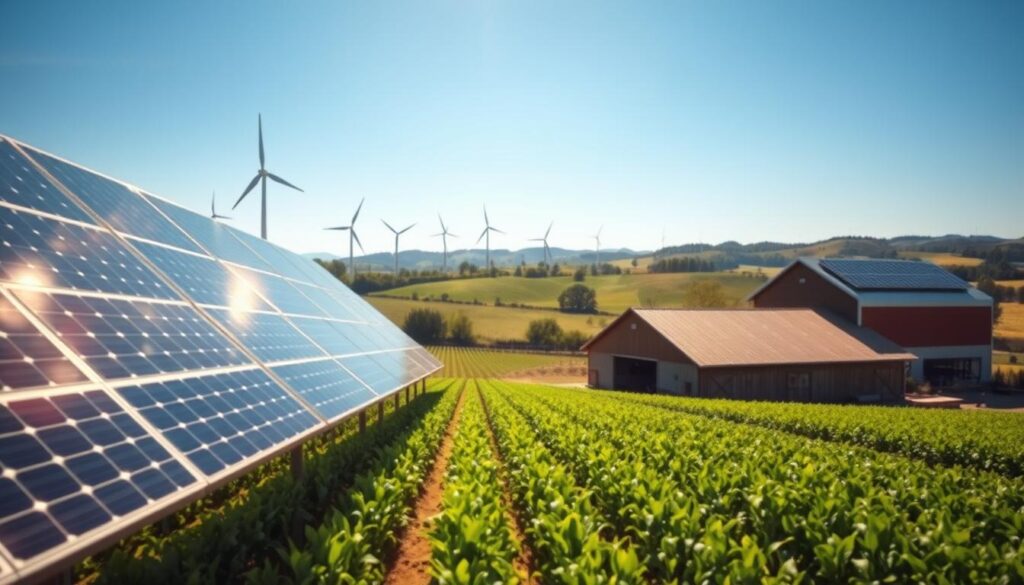
By using renewable energy like wind and biomass, farmers can cut their carbon footprint. This is important for farming that’s good for the planet and for the future.
Types of Renewable Energy Used on Farms
Farms around the world are turning to renewable energy to power their work and cut down on pollution. This move towards green energy is driven by the need to save money and protect the environment. It’s a big step towards making farming more sustainable.
Solar Energy Systems for Agriculture
Solar energy is gaining traction on farms because it’s flexible and sunlight is plentiful in many farming areas. Solar panels can run irrigation systems, farm tools, and even whole farms. With solar’s cost-effectiveness and government support, it’s a smart choice for farmers wanting to use less fossil fuel.
Wind Energy Solutions
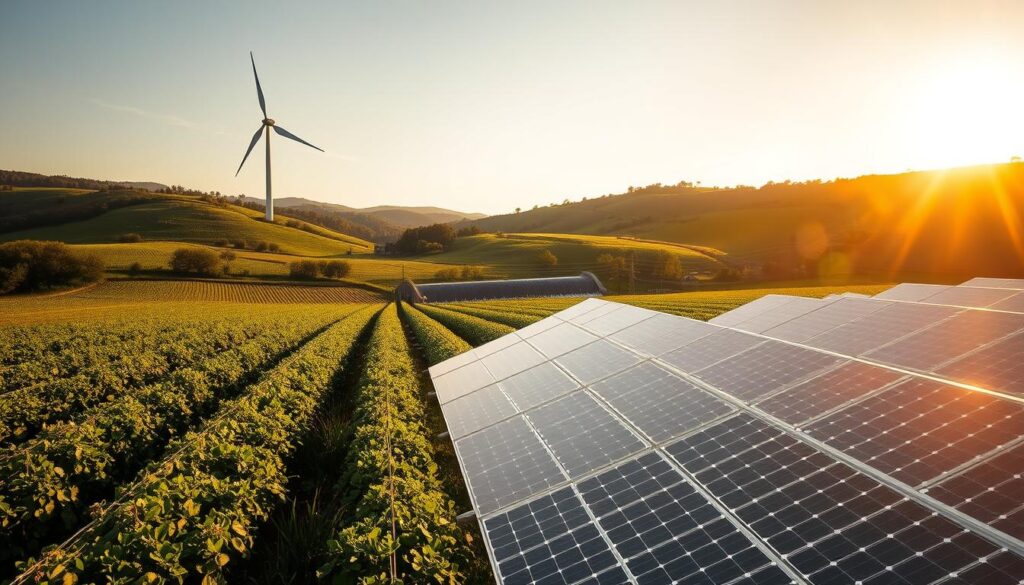
Wind energy is a good fit for farms in windy spots. Wind turbines can make electricity for the farm, and any extra can be sold. This not only brings in extra money but also helps with renewable energy needs.
Biomass and Biogas Production
Biomass and biogas let farmers turn organic waste into energy. By making biogas from farm waste, they can get electricity, heat, and fuel for farm vehicles. It’s a way to use waste and make energy, reducing the farm’s carbon footprint.
Small-Scale Hydropower Options
Farms near rivers or streams can use small-scale hydropower. These systems use water flow to make electricity. It’s great for irrigation and other farm needs.
The variety of renewable energy options for farmers is changing farming. By using solar, wind, biomass, and hydropower, farms can use less traditional energy. This saves money and helps the planet, making farming more sustainable for the future.
Applications of Renewable Energy in Agriculture
Renewable energy has many uses in farming. It helps with irrigation, heating greenhouses, and powering farm tools. This change is making farming more sustainable.
Irrigation and Water Pumping Systems
Farmers are turning to solar power for irrigation. Solar panels create electricity for water pumps. This cuts down on diesel and grid electricity use.
Benefits: It saves money, boosts crop yields, and manages water better.
Greenhouse Heating and Cooling
Greenhouses use renewable energy for heating and cooling. Solar thermal systems warm greenhouses. Biomass or biogas power both heat and electricity.
“Renewable energy in greenhouses cuts costs and reduces harm to the environment.”
Crop Drying and Processing
Drying crops needs a lot of energy. Renewable energy can power dryers, lowering carbon emissions.
- Solar dryers use sunlight to dry crops.
- Biomass energy is good for drying and processing.
Cold Storage and Refrigeration
Cold storage powered by renewables keeps food fresh. This cuts down on waste and boosts food safety.
| Benefits | Description |
|---|---|
| Reduced Energy Costs | Lower costs with renewable energy |
| Improved Food Security | Keeps perishable food fresh |
Farm Machinery and Electrification
Renewable energy is making farm tools electric. Electric tractors and other machinery are becoming common. They offer a cleaner option.
Advantages: They emit less, save money, and work better.
Sustainable Farming Through Renewable Energy in Agriculture
Renewable energy is changing farming for the better. It’s good for the planet and helps farmers make more money.
Economic Benefits and Return on Investment
Using renewable energy can save farmers a lot of money. It cuts down on energy costs. This means farmers can make more and spend less.
- Reduced energy costs
- Increased productivity
- Potential for additional income through selling excess energy
Environmental Advantages
Renewable energy is also great for the environment. It lowers greenhouse gas emissions and helps fight climate change. Farmers can make their farms greener and cleaner.
Key environmental benefits include:
- Reduced greenhouse gas emissions
- Lower carbon footprint
- Promotion of sustainable farming practices
Challenges and Barriers to Adoption
But, there are still obstacles to using renewable energy in farming. Money and technology can be big hurdles for farmers.
Technical Limitations
Renewable energy sources can be unpredictable. Farmers need better technology and infrastructure to use them.
Financial Constraints
Starting up with renewable energy costs a lot. Farmers often struggle to find the money to begin.
Government Policies and Incentives
Many governments are helping farmers use renewable energy. They offer money and support to make it easier.
“Governments have a crucial role to play in promoting the use of renewable energy in agriculture through supportive policies and incentives.” – Renewable Energy Expert
Case Studies: Global and Pakistan Examples
There are many success stories from all over, including Pakistan. These stories show how renewable energy can change farming.
Successful Solar-Powered Farms
More and more farms are using solar power. This helps farmers save money and grow more food.
Biogas projects in rural areas are also making a difference. They help manage waste and provide energy.
Conclusion: The Future of Renewable-Powered Farming
The world is moving towards a greener future, and renewable energy in farming is key. Governments are helping by offering support and incentives. This means farmers can cut down on harm to the environment and make more money.
Farming’s future is bright with solar, wind, and other green energy. This will make farming better for our planet. We’ll see more farming done in a way that’s good for the earth, ensuring food for all in the years to come.
Government support is vital for farming to go green. By backing farmers who use renewable energy, governments help make farming better for our planet. This is a big step towards a greener future.
The outlook for farming powered by renewable energy is bright. It’s changing the way we farm, making it better for our planet. We must keep moving forward, using green energy to ensure a sustainable future for farming.