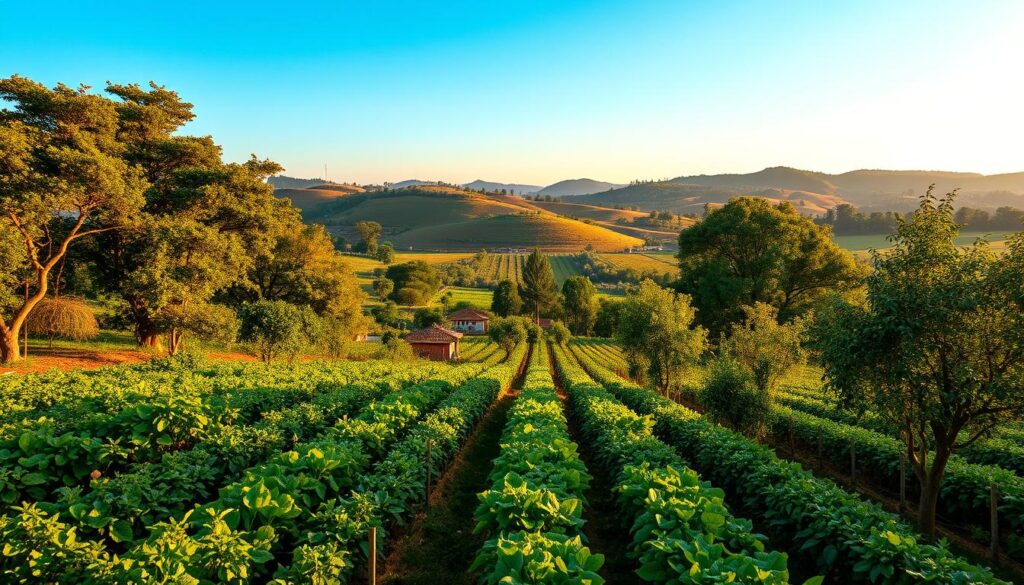
Can adding trees to farms help fight climate change? This is the core of agroforestry, a method getting more attention for its climate benefits.
Agroforestry means growing trees with crops and animals. It boosts biodiversity and farm output. This method also helps fight climate change by storing carbon, cutting down on emissions, and improving soil.
In Pakistan and worldwide, agroforestry is seen as key to tackling climate change. By using agroforestry, communities can help create a greener, more resilient future.
Key Takeaways
- Agroforestry mixes trees with farms to boost output and nature.
- This method is key for fighting climate change by storing carbon and lowering emissions.
- Agroforestry helps nature, soil, and farming become more sustainable.
- It’s being used globally and in Pakistan to tackle climate change.
- Communities can make a difference by adopting agroforestry.
Understanding Agroforestry Systems and Practices
Agroforestry combines forestry and agriculture to create diverse farming systems. It boosts ecosystem services and supports sustainable agriculture. Trees are intentionally added to agricultural landscapes, alongside crops and livestock.
Definition and Core Principles of Agroforestry
Agroforestry integrates trees into farming to mimic nature. It focuses on biodiversity conservation, soil health improvement, and efficient water use. These principles help farmers build more resilient and productive farms.
Common Agroforestry Systems Around the World
Agroforestry systems vary worldwide, based on local climate, culture, and economy. Some common types are:
- Silvopasture: Trees in pastures for grazing.
- Agroforestry orchards: Fruit or nut trees with other crops.
- Forest farming: Crops grown under forest canopies.
Environmental Benefits of Integrated Tree-Crop Systems
Integrated tree-crop systems have many environmental benefits. They enhance biodiversity, improve soil health, and boost ecosystem services. Trees stabilize soils, reducing erosion and improving water quality. They also help sequester carbon, aiding in climate change mitigation.
The Role of Agroforestry in Climate Mitigation in World and Pakistan
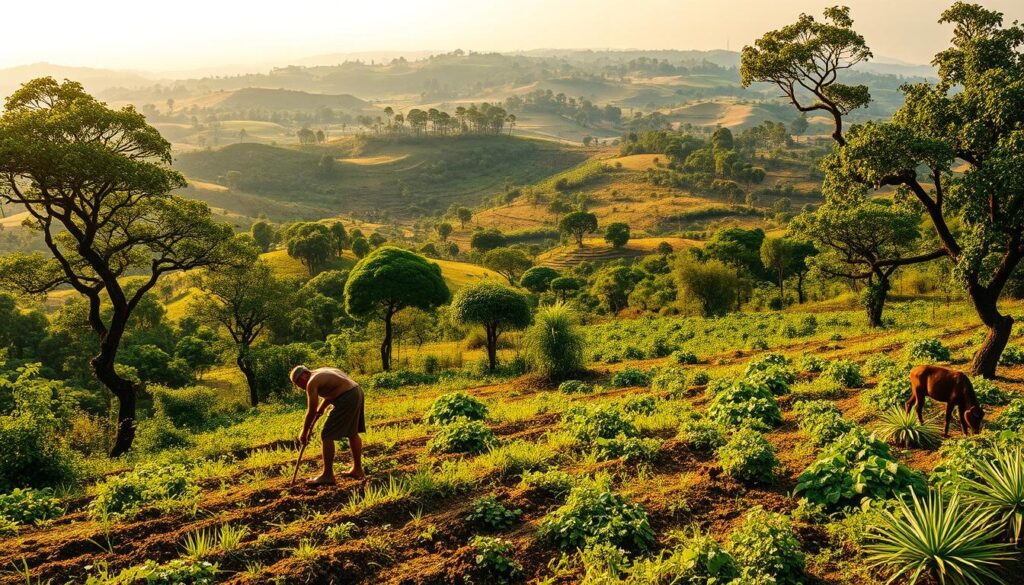
Agroforestry, or growing trees in farms, is key to fighting climate change globally, including in Pakistan. It makes farms better for nature and cuts down on carbon emissions from farming.
Carbon Sequestration Mechanisms and Potential
Agroforestry is great at pulling carbon out of the air. It does this by adding trees to fields and pastures. Trees take in CO2 and store it in their bodies and in the soil.
Research shows agroforestry can hold a lot of carbon. This can help balance out the greenhouse gases we release.
Biodiversity Conservation and Ecosystem Services
Agroforestry helps keep nature rich by creating diverse habitats. It supports many plants and animals. It also helps pollinators and makes soil better.
These benefits make farms stronger against climate change. They can handle more weather extremes and stay productive.
Microclimate Regulation and Resilience Building
Agroforestry helps control the weather in farms. Trees block sun, slow down winds, and change how water moves. This makes the weather in farms more stable.
This stability protects crops from bad weather. It makes farming more productive and helps the environment.
| Agroforestry Practice | Carbon Sequestration Potential | Biodiversity Impact |
|---|---|---|
| Silvopasture | High | Moderate |
| Agroforestry with Fruit Trees | Moderate | High |
| Boundary Planting | Low to Moderate | High |
In summary, agroforestry is a powerful tool against climate change. It helps with carbon, biodiversity, and weather control. By using agroforestry, Pakistan and the world can build stronger, greener farms.
Current Status of Agroforestry in Pakistan
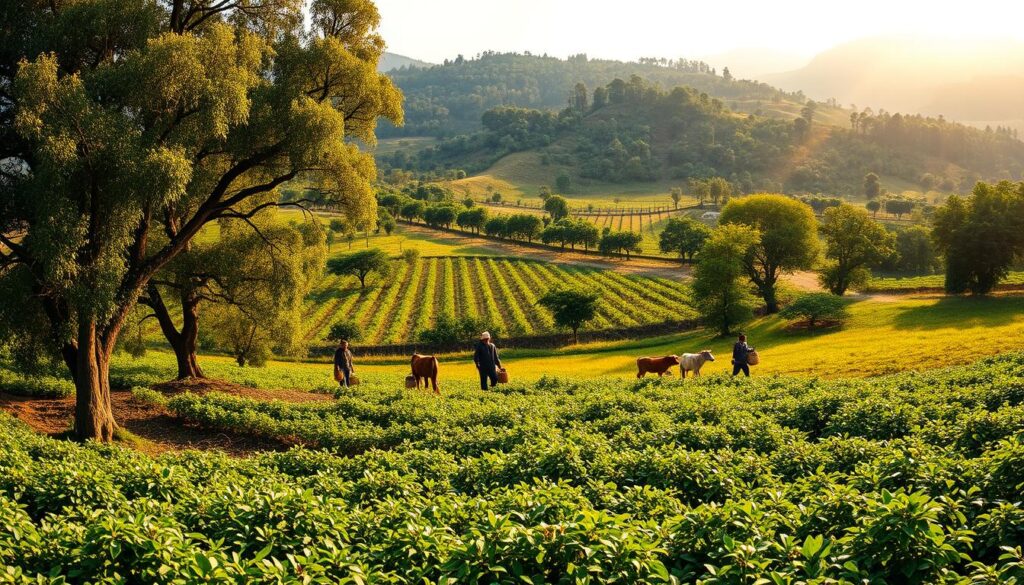
In Pakistan, agroforestry is becoming key. It mixes trees with farming. This boosts biodiversity, supports sustainable farming, and fights climate change.
Traditional and Modern Agroforestry Practices
Pakistan’s agroforestry history is rich. It includes farmer-managed natural regeneration of trees. Now, modern methods are being used too. These mix valuable trees with crops, boosting both nature and profits.
Regional Distribution and Adoption Rates
Agroforestry varies by region in Pakistan. Punjab and Sindh lead in new methods. The north sticks to old ways, fitting the terrain better.
| Region | Traditional Practices | Modern Practices |
|---|---|---|
| Punjab | Low | High |
| Sindh | Moderate | High |
| Northern Areas | High | Low |
Notable Success Stories and Case Studies
Many stories show agroforestry’s power in Pakistan. For example, the Changa Manga forest in Punjab has grown its biodiversity and carbon capture. In Sindh, farmers earn more from forest products.
These stories prove agroforestry’s worth. It makes the environment better and helps people’s lives in Pakistan.
Socio-Economic Benefits of Agroforestry for Pakistani Farmers
Pakistani farmers are seeing better economic and social results by adding trees to their farms. Agroforestry mixes farming and forestry, solving many rural problems.
Income Diversification and Economic Resilience
Agroforestry helps farmers make money in different ways. They can grow fruits, nuts, timber, and plants for medicine. This makes their income more stable.
- Increased variety of products for sale
- Improved economic stability through diversified income streams
- Enhanced ability to withstand market fluctuations
Food Security and Nutritional Benefits
Agroforestry boosts food security by adding more food types. Trees bring fruits, nuts, and greens, making diets more varied. This is great for rural areas where food choices are often limited.
Nutritional benefits include:
- Increased availability of fruits and vegetables
- Improved dietary diversity
- Enhanced food security for farming households
Rural Livelihood Improvement and Poverty Reduction
Agroforestry helps farmers earn more and have better food. This improves their lives and helps fight poverty. It lets them spend on education, healthcare, and more.
“Agroforestry has the potential to significantly improve the livelihoods of rural communities by providing a range of economic, social, and environmental benefits.”
Using agroforestry is a big step towards sustainable farming. It boosts farmers’ social and economic status in Pakistan.
Challenges and Policy Support for Agroforestry in Pakistan
Agroforestry in Pakistan faces several challenges. These obstacles must be overcome to fully use its benefits in fighting climate change and supporting sustainable agriculture.
Technical Knowledge Gaps and Extension Services
Farmers in Pakistan lack the technical knowledge needed for agroforestry. Many don’t know how to integrate trees into their farming. To help, there’s a need for strong extension services that offer training and support. Key areas include:
- Training programs for farmers on agroforestry practices
- Demonstration plots to showcase successful agroforestry models
- Access to technical experts for guidance
Financial Constraints and Market Access Issues
Financial issues are a big problem. Farmers often can’t afford to plant and care for trees. Also, market access issues make it hard to sell agroforestry products. To solve these, policies that offer financial help and better market access are needed. Some ideas are:
- Providing subsidies or grants for agroforestry initiatives
- Developing market infrastructure for agroforestry products
- Promoting value chain development for sustainable products
Current Policy Framework and Future Needs
Pakistan has started to support agroforestry with policies. But, a more detailed framework is needed. The current policies aim to promote sustainable land use and climate resilience. Future policies should focus on:
- Integrating agroforestry into national climate change plans
- Enhancing coordination among different government departments
- Increasing investment in research and development
By tackling these challenges and strengthening policy support, Pakistan can fully benefit from agroforestry. This will help with sustainable agriculture and fighting climate change.
Conclusion: Future Opportunities and Way Forward
Agroforestry is key for fighting climate change worldwide, including in Pakistan. It mixes trees with farming to capture more carbon, boost biodiversity, and improve ecosystems. This helps make farming more sustainable.
In Pakistan, adopting agroforestry can help fight climate change and better rural lives. To make the most of it, we need to keep supporting agroforestry. This includes solving knowledge and money problems.
There are many chances for agroforestry in Pakistan to grow. We need to expand successful projects, get more policy support, and work together. This will help Pakistan fight climate change and make farming more green and strong.