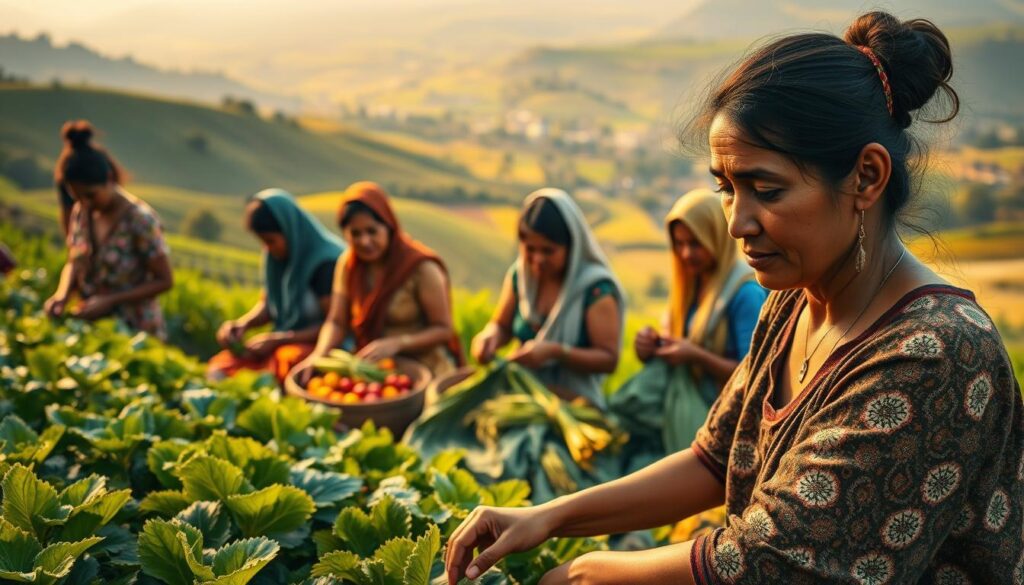
Can we truly achieve global food security without harnessing the full potential of women in agriculture? The answer lies in understanding the critical contributions women make to farming and agricultural productivity worldwide, particularly in countries like Pakistan.
Women play a vital role in global agriculture, contributing significantly to the labor force and agricultural productivity. In Pakistan, their role is equally crucial, with a substantial number of women involved in farming activities.
Key Takeaways
- Women’s contributions to global agriculture are significant.
- In Pakistan, women play a crucial role in farming and agricultural productivity.
- The involvement of women in agriculture is key to achieving food security.
- Empowering women in agriculture can lead to increased productivity.
- Understanding the global and local perspectives is essential for policy-making.
Current State of Women in Agriculture Globally
Women’s involvement in agriculture varies widely across different regions and cultures, impacting global food security. The extent and nature of their participation are influenced by factors such as local customs, economic conditions, and access to resources.
Statistical Overview of Female Agricultural Labor Force
According to the Food and Agriculture Organization (FAO), women constitute about 43% of the agricultural labor force globally. Their roles range from farm work to managing household nutrition.
Regional Distribution and Contribution Percentages
| Region | Percentage of Female Agricultural Labor Force | Contribution to Food Production |
|---|---|---|
| Sub-Saharan Africa | 50% | High |
| South Asia | 40% | Significant |
| Latin America | 35% | Moderate |
Key Contributions of Women to Global Food Security
Women play a crucial role in ensuring food security through their work in agriculture, contributing to both household nutrition and income generation. Their involvement in farming and food production helps maintain dietary diversity and supports local food systems.
Impact on Household Nutrition and Income
Women’s agricultural activities directly impact household nutrition by providing fresh produce and improving income through the sale of farm products. This, in turn, enhances the overall well-being of their families.
Regional Variations in Women’s Agricultural Roles
The roles women play in agriculture differ significantly between developed and developing countries. In developing countries, women are often more involved in subsistence farming, while in developed countries, they may have more access to technology and resources.
Developed vs. Developing Countries Comparison
In developing countries, women face more challenges due to limited access to resources and technology. In contrast, women in developed countries often have better access to training, finance, and modern agricultural practices.
Women’s Agricultural Participation in Pakistan: Present Scenario
Women play a pivotal role in Pakistan’s agricultural workforce, influencing both rural development and food production. Their contributions are vital to the country’s food security and rural economy.
Demographics and Distribution of Female Agricultural Workers
Female agricultural workers in Pakistan are predominantly found in rural areas, where agriculture is the mainstay of the local economy. According to recent statistics, women constitute a significant portion of the agricultural labor force, particularly in provinces like Punjab and Sindh.
Provincial Variations and Rural-Urban Divide
The distribution of female agricultural workers varies across provinces, with some regions showing a higher concentration of women in agriculture. For instance, Punjab has a larger female agricultural workforce compared to other provinces. The rural-urban divide also influences women’s participation, with rural areas having a higher percentage of women engaged in agricultural activities.
Traditional vs. Modern Roles in Pakistani Agriculture
Traditionally, women in Pakistan have been involved in subsistence farming, contributing to household food needs. However, there is a gradual shift towards modern, commercial farming practices, with women taking on more active roles in decision-making and farm management.
Transition from Subsistence to Commercial Farming
The transition to commercial farming has opened new opportunities for women, enabling them to participate in value-added activities and improve their income. This shift is supported by initiatives that provide training and resources to women farmers, enhancing their capabilities and confidence.
Cultural and Social Factors Influencing Participation
Cultural and social norms significantly influence women’s participation in agriculture. Family structures and decision-making dynamics play a crucial role in determining women’s involvement in farming activities. In some regions, cultural barriers limit women’s access to resources and markets, affecting their productivity and income.
Family Structures and Decision-Making Dynamics
Family structures, particularly in rural areas, often dictate women’s roles in agriculture. Decision-making dynamics within households also impact women’s ability to participate in farming and manage agricultural resources effectively.
“Empowering women in agriculture is not just a matter of gender equality; it’s a crucial step towards achieving food security and rural development.”
Challenges Faced by Women in Agriculture Worldwide
Despite their crucial role, women in agriculture confront significant barriers globally. These challenges not only affect their productivity but also impact their overall contribution to food security and rural development.
Land Ownership and Access to Resources
One of the primary challenges women face is related to land ownership and access to resources. In many parts of the world, women have limited rights to own land, making it difficult for them to access credit and other resources.
Legal Barriers and Inheritance Issues
Legal barriers and inheritance issues further complicate land ownership for women. In some countries, laws discriminate against women owning property, while in others, cultural practices prevent them from inheriting land.
“Women’s land rights are crucial for achieving gender equality and improving food security.” – This quote emphasizes the importance of addressing the issue of land ownership for women in agriculture.
Financial Inclusion and Credit Accessibility
Financial inclusion is another significant challenge. Women often lack access to credit facilities, which are essential for investing in their farms and improving productivity.
Microfinance Initiatives and Their Impact
Microfinance initiatives have been instrumental in providing women with access to financial services. These programs have helped women invest in their farms, improve their livelihoods, and contribute more significantly to their households and communities.
Technical Knowledge and Training Gaps
Technical knowledge and training gaps also hinder women’s ability to contribute effectively to agriculture. Women often have limited access to training and extension services, which are crucial for adopting new technologies and practices.
Extension Services and Their Gender Sensitivity
The gender sensitivity of extension services is vital. Services that are tailored to women’s needs can significantly enhance their productivity and efficiency. Training programs that focus on women’s specific challenges can help bridge the knowledge gap.
In conclusion, addressing the challenges faced by women in agriculture requires a multifaceted approach that includes improving land ownership rights, enhancing financial inclusion, and providing access to technical knowledge and training.
Pakistan-Specific Barriers for Women in Agricultural Sector
Pakistani women in agriculture encounter numerous obstacles that limit their potential and participation. These barriers are multifaceted, ranging from legal and institutional constraints to educational and technological limitations.
Legal and Institutional Constraints
Women in Pakistan face significant legal and institutional barriers in agriculture, particularly in terms of property rights and land tenure systems.
Property Rights and Land Tenure Systems
The laws governing land ownership in Pakistan often discriminate against women, making it difficult for them to own or inherit land. This not only affects their economic stability but also limits their access to credit and other resources.
“Women’s land rights are crucial for their empowerment and for achieving food security.”
Educational and Technological Limitations
Educational and technological gaps further exacerbate the challenges faced by women in agriculture.
Literacy Rates and Digital Divide in Rural Areas
Literacy rates among rural women in Pakistan are low, which hampers their ability to adopt new technologies and practices. The digital divide is also pronounced, with limited access to digital tools and information.
- Limited access to agricultural education and training
- Insufficient digital literacy
- Lack of access to mobile and internet services
Market Access and Value Chain Participation
Women farmers in Pakistan also face challenges in accessing markets and participating in value chains.
Transportation Challenges and Middlemen Dynamics
Inadequate transportation infrastructure and the dominance of middlemen limit the ability of women to sell their produce at fair prices.
| Challenge | Impact |
|---|---|
| Limited market access | Lower income for women farmers |
| Dominance of middlemen | Exploitation of women farmers |
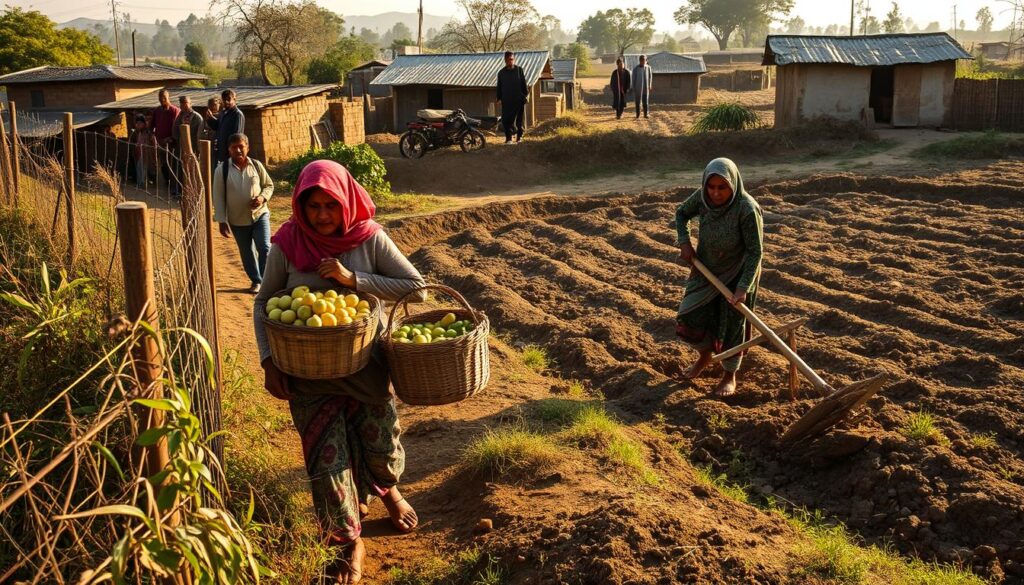
Addressing these barriers is crucial for enhancing the role of women in Pakistan’s agricultural sector and achieving broader economic and social development goals.
Role of Women in Agriculture World Level vs Pakistan2025: Comparative Analysis
A comparative analysis of the role of women in agriculture globally and in Pakistan reveals significant insights into their economic contributions, decision-making authority, and technology adoption.
Economic Contribution Metrics
Globally, women’s economic contributions to agriculture are substantial, with women making up about 43% of the agricultural labor force in developing countries. In Pakistan, women also play a crucial role in agriculture, but their contributions are often underreported.
GDP Impact and Labor Productivity Comparisons
A comparison of the GDP impact and labor productivity between global and Pakistani contexts highlights significant differences. Globally, women’s participation in agriculture contributes to about 30-40% of GDP in some countries. In Pakistan, while the exact figure is difficult to quantify due to underreporting, women’s agricultural work is estimated to contribute around 20-30% to the agricultural GDP.
| Indicator | Global Average | Pakistan |
|---|---|---|
| Women’s Share of Agricultural Labor Force | 43% | 35% |
| Contribution to Agricultural GDP | 30-40% | 20-30% |
Decision-Making Authority Comparison
Decision-making authority is another critical aspect where global and Pakistani women in agriculture differ significantly. Globally, women are increasingly taking on leadership roles in farming communities.
Policy Influence and Household Control Differences
At the global level, women’s influence on agricultural policy is growing, with many countries implementing policies to support women’s participation in agriculture. In Pakistan, while there are initiatives to enhance women’s decision-making power, cultural and social barriers remain significant.
Technology Adoption and Innovation Trends
The adoption of technology in agriculture is transforming the sector globally, with women increasingly using digital tools to improve productivity.
Digital Agriculture Uptake and Gender Gaps
Globally, there is a growing trend towards digital agriculture, with women adopting mobile apps and other digital tools to access information and markets. In Pakistan, while there is a growing interest in digital agriculture, gender gaps in access to technology remain a challenge.
The comparative analysis highlights the need for Pakistan to learn from global experiences in enhancing women’s roles in agriculture, particularly in terms of economic contributions, decision-making authority, and technology adoption.
Digital Revolution and Women Farmers: Global vs. Pakistan Perspective
The digital revolution is transforming the agricultural landscape, offering new opportunities for women farmers worldwide. As we move towards 2025, the impact of digital technologies on women’s participation in agriculture is becoming increasingly evident.
AgTech Innovations Empowering Women Globally
AgTech innovations are revolutionizing the way women participate in agriculture globally. Mobile applications and smart farming solutions are enhancing productivity and efficiency.
Mobile Applications and Smart Farming Solutions
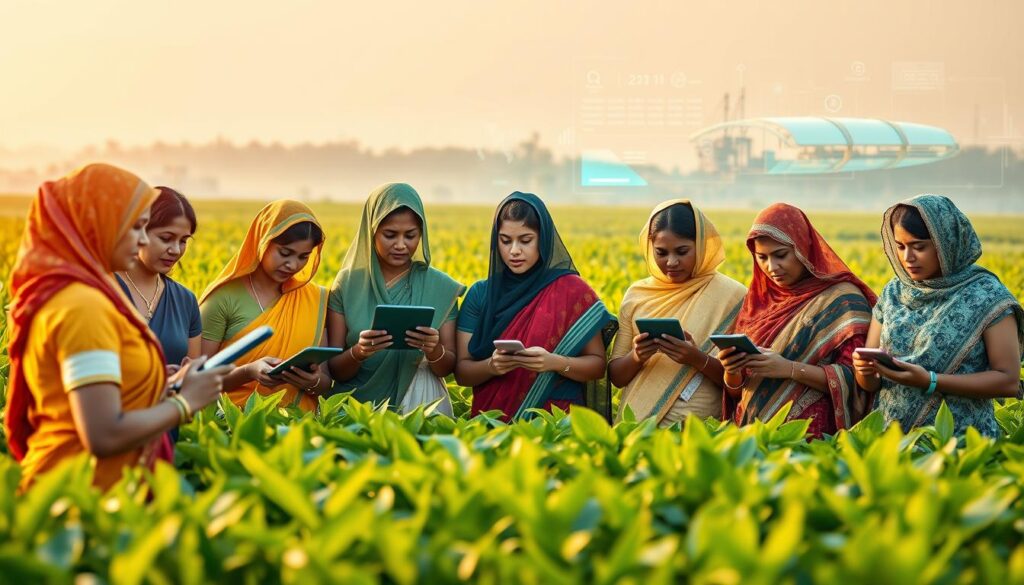
Mobile apps provide women farmers with access to critical information on weather forecasts, soil health, and pest management. Smart farming solutions, such as precision irrigation systems, are also being adopted, enabling women to optimize resource use and improve crop yields.
Pakistan’s Digital Agriculture Initiatives for Women
In Pakistan, digital agriculture initiatives are being implemented to empower women farmers. These initiatives include government and private sector programs aimed at enhancing women’s access to technology and digital resources.
Government and Private Sector Programs
The government of Pakistan, along with private sector organizations, is launching programs to promote digital literacy among women farmers. These programs provide training on the use of digital tools and platforms, enabling women to access markets, credit, and other essential services.
Bridging the Digital Gender Divide by 2025
Bridging the digital gender divide is crucial for ensuring that women farmers benefit from the digital revolution. Efforts are being made to address the gap through training programs and infrastructure development.
Training Programs and Infrastructure Development
Training programs are being designed to build women’s capacity in using digital technologies. Additionally, investments in rural infrastructure, such as internet connectivity and mobile networks, are being made to support the adoption of digital tools in agriculture.
Success Stories: Women-Led Agricultural Initiatives
Through women-led initiatives, agriculture is being reshaped, highlighting the critical role women play in this sector globally and in Pakistan. These initiatives not only empower women but also contribute significantly to the agricultural economy.
Global Best Practices and Case Studies
Globally, women are making significant strides in agriculture through innovative practices and cooperative models. One notable example is the women’s cooperatives in Africa, which have successfully implemented sustainable farming practices, improving crop yields and food security.
Women’s Cooperatives and Sustainable Farming Models
Women’s cooperatives are pivotal in promoting sustainable agriculture. For instance, in Rwanda, women’s cooperatives have adopted organic farming methods, resulting in increased production and improved livelihoods for their members.
| Country | Type of Initiative | Impact |
|---|---|---|
| Rwanda | Women’s Cooperatives | Increased production by 30% |
| India | Sustainable Farming | Improved livelihoods for 500 families |
Pakistani Women Breaking Barriers in Agriculture
In Pakistan, women are also making significant contributions to agriculture through various initiatives. One inspiring example is the entrepreneurial success stories from rural Pakistan, where women have started their own agricultural businesses, creating employment opportunities and stimulating local economies.
Entrepreneurial Success Stories from Rural Pakistan
Women entrepreneurs in rural Pakistan are leveraging agricultural technology to enhance their farming practices. For example, a woman-led farm in Punjab has successfully integrated drip irrigation systems, significantly reducing water consumption and increasing crop yields.
These success stories underscore the potential of women-led initiatives in transforming the agricultural landscape, both globally and in Pakistan. By supporting and scaling these initiatives, we can foster a more inclusive and sustainable agricultural sector.
Future Outlook: Policy Recommendations for2025 and Beyond
With the agricultural landscape evolving rapidly, policy recommendations for 2025 and beyond must prioritize the inclusion and empowerment of women farmers. As we move forward, it’s essential to develop strategies that address the unique challenges faced by women in agriculture, both globally and in Pakistan.
International Policy Frameworks and SDGs
International policy frameworks play a crucial role in shaping the future of women in agriculture. The Sustainable Development Goals (SDGs), particularly SDG 5 (Gender Equality) and SDG 2 (Zero Hunger), provide a foundation for promoting gender equality in agriculture.
Alignment with Gender Equality Goals
Aligning national policies with international gender equality goals is vital. This involves incorporating SDG targets into national development plans and agricultural policies, ensuring that women’s empowerment is a central focus.
Pakistan-Specific Policy Interventions
In Pakistan, policy interventions need to be tailored to address the specific challenges faced by women farmers. This includes improving access to land, credit, and technology.
Institutional Reforms and Legislative Changes
Institutional reforms and legislative changes are necessary to create an enabling environment for women in agriculture. This may involve revising laws related to land ownership and inheritance to ensure gender equality.
Public-Private Partnership Opportunities
Public-private partnerships (PPPs) offer significant opportunities for advancing women’s roles in agriculture. PPPs can facilitate access to finance, technology, and markets for women farmers.
Sustainable Financing Models for Women Farmers
Developing sustainable financing models is critical for supporting women farmers. This can include microfinance initiatives, agricultural insurance products, and other financial instruments tailored to the needs of women in agriculture.
Conclusion
The role of women in agriculture is a critical component of global food security, and their contributions are invaluable. As we have seen, the global outlook on women in agriculture differs significantly from the Pakistani perspective. While women worldwide play a vital part in agricultural production, their participation in Pakistan is shaped by unique cultural, social, and economic factors.
To support women farmers effectively, it is essential to address the challenges they face, including limited access to resources, land ownership, and financial inclusion. The digital revolution offers opportunities for empowering women through AgTech innovations and digital agriculture initiatives. By bridging the digital gender divide, we can unlock the potential of women in agriculture and promote a more equitable and productive sector.
In conclusion, the empowerment of women in agriculture is crucial for achieving a more sustainable and food-secure future, both globally and in Pakistan. By understanding the global vs Pakistan outlook on women in agriculture, we can develop targeted policies and interventions that support their participation and contributions.