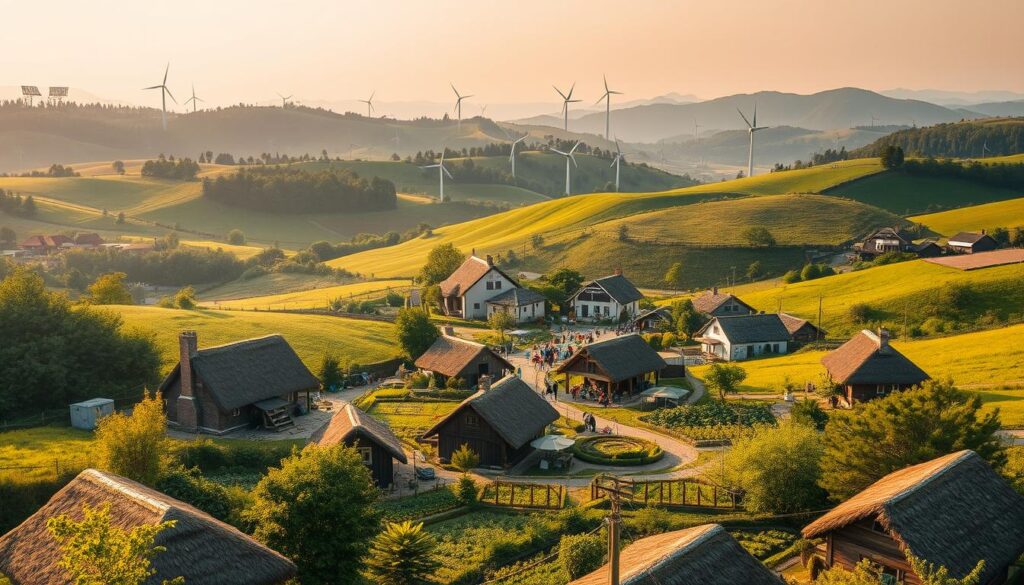
As the world grapples with escalating environmental threats, rural communities are increasingly recognizing the need to adopt sustainable practices. The concept of carbon neutrality is gaining traction as a viable solution to mitigate climate change.
In Pakistan, where rural villages are abundant, adopting renewable energy sources can significantly reduce the carbon footprint. But the question remains: can sustainable villages be the key to a climate-resilient future?
By exploring the benefits and key components of carbon neutrality, we can understand why it’s crucial for rural communities to adopt sustainable practices.
Key Takeaways
- Carbon neutrality is crucial for mitigating climate change.
- Sustainable villages can significantly reduce carbon footprint.
- Adopting renewable energy sources is key to sustainability.
- Rural communities can benefit from sustainable practices.
- Climate resilience is enhanced through sustainable development.
The Climate Emergency: Why Rural Communities Must Act Now
As the climate emergency intensifies, rural communities worldwide are facing unprecedented environmental challenges. The situation is particularly dire in South Asia, where the effects of climate change are being felt with increasing severity.
Escalating Environmental Threats in South Asia
South Asia is witnessing a surge in environmental threats, with climate change posing a significant challenge to rural communities. Rising temperatures, changing precipitation patterns, and increased frequency of extreme weather events are some of the key factors contributing to this crisis. For instance, the region has seen a notable increase in heatwaves, droughts, and floods, which have devastating impacts on agriculture, water resources, and human health.
How Climate Change Affects Pakistani Villages
Pakistani villages are particularly vulnerable to the impacts of climate change. The country’s rural areas are experiencing more frequent and severe weather events, such as floods and droughts, which threaten livelihoods and infrastructure. Climate change also affects agricultural productivity, water availability, and human health, exacerbating poverty and inequality. To mitigate these effects, it is imperative for these communities to adopt carbon-neutral practices and transition to renewable energy sources.
By embracing climate-smart agricultural practices and reducing their carbon footprint, rural villages in Pakistan can contribute to a more sustainable future. This not only helps in mitigating the effects of climate change but also enhances energy security, promotes eco-tourism, and fosters economic revitalization.
Carbon Neutral Villages: Concept & Benefits2025
As the world grapples with climate change, the concept of carbon neutral villages is gaining traction as a viable solution for sustainable development. The idea is to create rural communities that produce as much renewable energy as they consume, resulting in a net-zero carbon footprint.
Defining Carbon Neutrality in Rural Contexts
Carbon neutrality in rural contexts involves a comprehensive approach to reducing greenhouse gas emissions. This includes transitioning to renewable energy sources, implementing energy-efficient practices, and adopting climate-resilient agricultural methods.
The Evolution from Traditional to Carbon-Neutral Villages
The transformation from traditional to carbon-neutral villages requires significant changes in energy production, consumption, and waste management. It involves adopting innovative renewable energy solutions and implementing sustainable practices that minimize environmental impact.
2025 Vision: What Success Looks Like
By 2025, successful carbon neutral villages will have achieved significant reductions in greenhouse gas emissions. They will serve as models for sustainable development, showcasing the benefits of renewable energy and climate-resilient practices. These villages will not only contribute to a cleaner environment but also enhance the quality of life for their residents.
Why Pakistan Needs Carbon Neutral Villages
Rural Pakistan is particularly vulnerable to the impacts of climate change, necessitating urgent action. The region’s exposure to extreme weather events and environmental degradation underscores the need for sustainable solutions.
Climate Vulnerability in Rural Pakistan
Rural communities in Pakistan face significant climate-related challenges, including rising temperatures and unpredictable rainfall patterns. These changes affect agricultural productivity, water availability, and overall livelihoods. Adopting carbon neutral practices can help mitigate these impacts.
Economic Revitalization Opportunities
Transitioning to carbon neutral villages can stimulate local economies through the creation of green jobs and industries. Renewable energy projects, eco-tourism, and sustainable agriculture can generate new income streams, enhancing economic resilience.
Energy Security and Independence
By harnessing renewable energy sources, rural villages can reduce their dependence on fossil fuels, enhancing energy security and independence. This shift can also lower energy costs and mitigate the impacts of price volatility.
Embracing carbon neutrality is crucial for Pakistan’s rural communities, offering a pathway to a more sustainable, resilient future.
Core Elements of a Successful Carbon Neutral Village
A successful carbon neutral village is built on several core elements that work together to reduce its carbon footprint. These elements are crucial in ensuring that the village achieves its sustainability goals while improving the quality of life for its residents.
Renewable Energy Infrastructure
One of the primary components of a carbon neutral village is its renewable energy infrastructure. This includes various sources of clean energy that reduce dependence on fossil fuels.
Solar Solutions for Pakistani Climate
Pakistan’s climate is ideal for solar energy generation. By harnessing solar power, villages can significantly reduce their reliance on non-renewable energy sources. Solar solutions can be implemented for both electricity generation and water heating, making it a versatile and effective option.
Micro-hydro Opportunities in Northern Regions
The northern regions of Pakistan offer vast potential for micro-hydro energy generation. This form of renewable energy can provide a reliable and consistent source of power, especially in areas with suitable water resources. Micro-hydro projects can be particularly beneficial for remote villages, providing them with energy independence.
Climate-Smart Agricultural Practices
Climate-smart agriculture is another vital element of a carbon neutral village. This approach involves using farming practices that not only reduce greenhouse gas emissions but also enhance the resilience of agricultural systems to climate change. Techniques such as crop rotation, organic farming, and conservation agriculture can significantly improve soil health and reduce the carbon footprint of farming activities.
Zero-Waste Management Systems
Implementing zero-waste management systems is essential for minimizing the environmental impact of village activities. This involves reducing waste generation, recycling, and composting organic waste. By adopting zero-waste practices, villages can significantly decrease their landfill waste and lower emissions associated with waste disposal.
Water Conservation and Management
Effective water conservation and management are critical for the sustainability of carbon neutral villages. This includes implementing efficient irrigation systems, promoting water-saving practices, and protecting water sources from pollution. By conserving water, villages can reduce their energy consumption associated with water treatment and supply, further contributing to their carbon neutrality goals.
Economic Transformation Through Carbon Neutrality
Transitioning to carbon neutrality can be a game-changer for rural Pakistani villages, driving economic growth and development. By adopting sustainable practices and renewable energy sources, these communities can unlock new economic opportunities and improve their resilience to climate change.
New Green Jobs and Industries
The shift towards carbon neutrality is expected to create new green jobs and industries in rural Pakistan. As villages adopt renewable energy sources and sustainable practices, the demand for skilled workers in these areas will increase, providing employment opportunities and stimulating local economies.
- Renewable energy technicians
- Sustainable agriculture specialists
- Eco-tourism operators
- Green building constructors
Energy Cost Reduction and Savings
By transitioning to renewable energy sources, villages can significantly reduce their energy costs and achieve substantial savings. These savings can be reinvested in local economies, further driving economic growth and development.
Eco-Tourism Potential in Pakistani Villages
Pakistani villages have immense potential for eco-tourism, which can be leveraged to promote sustainable development. By showcasing their natural beauty and cultural heritage, these villages can attract tourists and create new economic opportunities.
Carbon Credit Opportunities
Carbon credit opportunities can provide additional financial benefits for villages that achieve carbon neutrality. By selling carbon credits on the international market, villages can generate revenue and further invest in sustainable development projects.
The economic benefits of carbon neutrality are clear. By transitioning to a carbon-neutral economy, Pakistani villages can unlock new economic opportunities, improve their resilience to climate change, and create a more sustainable future.
Environmental Restoration and Protection Benefits
Carbon neutral villages offer a multitude of environmental benefits, transforming rural landscapes and communities. By adopting sustainable practices and renewable energy sources, these villages not only reduce their environmental impact but also enhance their natural surroundings.
The transition to carbon neutrality involves several key environmental benefits. One of the primary advantages is the reduction of village carbon footprints. By minimizing greenhouse gas emissions through the use of renewable energy and efficient waste management systems, carbon neutral villages significantly decrease their contribution to global warming.
Reducing Village Carbon Footprints
Reducing carbon footprints is achieved through a combination of renewable energy infrastructure and climate-smart agricultural practices. Villages can switch to solar or wind power, reducing their reliance on fossil fuels and lowering emissions. Additionally, implementing energy-efficient technologies and practices further contributes to a decrease in carbon emissions.
Preserving Local Biodiversity
Preserving local biodiversity is another crucial aspect of carbon neutral villages. By protecting natural habitats and implementing conservation measures, these villages maintain the rich variety of flora and fauna that are essential for healthy ecosystems. This not only supports wildlife but also enhances the overall resilience of the environment.
Building Climate Resilience Against Extreme Weather
Building climate resilience is vital for villages to withstand the impacts of climate change, such as extreme weather events. Through sustainable land management and water conservation practices, carbon neutral villages can better adapt to changing climate conditions. This resilience is crucial for ensuring the long-term sustainability of rural communities.
In conclusion, the environmental restoration and protection benefits of carbon neutral villages are multifaceted, encompassing carbon footprint reduction, biodiversity conservation, and climate resilience. By embracing these practices, villages can create a more sustainable and resilient future.
Social and Community Advantages
By transitioning to carbon neutrality, villages can enjoy improved health outcomes, community empowerment, and preservation of cultural heritage. This holistic approach to sustainability benefits both the environment and the community.
Improved Health Outcomes
Carbon neutral villages often adopt practices that lead to cleaner air and water, directly improving the health of residents. For instance, the use of renewable energy sources like solar and wind power reduces reliance on fossil fuels, decreasing air pollution. Cleaner environments lead to lower rates of respiratory diseases and other health issues.
Community Ownership and Empowerment
Community involvement is crucial in the transition to carbon neutrality. By engaging local residents in decision-making processes, villages can foster a sense of ownership and empowerment. This collective approach not only enhances community cohesion but also ensures that the solutions are tailored to the specific needs of the community.
Educational and Skill Development Opportunities
The shift towards carbon neutrality creates numerous opportunities for education and skill development. Training programs in renewable energy, sustainable agriculture, and waste management equip residents with new skills, enhancing their employability and contributing to the local economy.
Preserving Cultural Heritage Through Sustainable Practices
Sustainable practices in carbon neutral villages often align with preserving cultural heritage. By adopting traditional methods that are inherently sustainable, communities can maintain their cultural identity while contributing to environmental conservation. This blend of modern sustainability and traditional practices enriches the community’s cultural landscape.
In conclusion, the social and community advantages of carbon neutral villages are multifaceted, ranging from improved health outcomes to the preservation of cultural heritage. These benefits underscore the importance of adopting sustainable practices in rural communities.
Overcoming Implementation Barriers
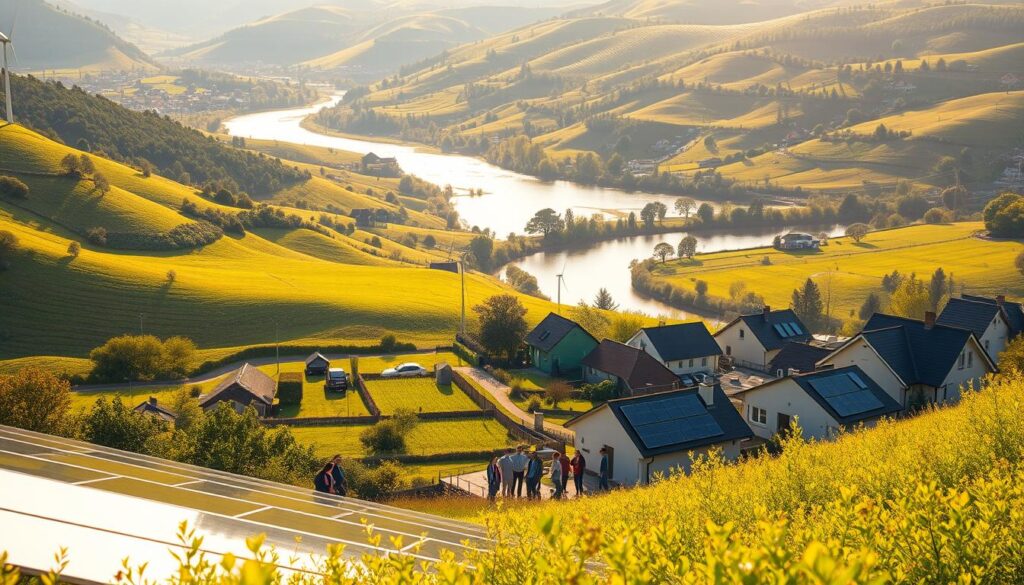
Achieving carbon neutrality in rural Pakistan requires surmounting several implementation barriers. The path to a sustainable future is fraught with challenges, but with the right strategies, Pakistani villages can overcome these hurdles and thrive.
Financing Solutions for Pakistani Villages
Securing financing is a significant challenge for carbon neutral initiatives in rural Pakistan. However, various financing solutions can help bridge this gap.
Government Subsidies and Programs
The Pakistani government offers various subsidies and programs to support renewable energy and sustainable development projects. For instance, the government has launched initiatives to promote solar energy in rural areas, providing financial incentives to households and businesses that adopt clean energy solutions.
International Climate Funding Access
International climate funds, such as the Green Climate Fund (GCF), provide financial support to developing countries like Pakistan to help them achieve their climate goals. Accessing these funds can be a game-changer for rural villages looking to implement carbon neutral projects.
Building Technical Capacity
Building technical capacity is crucial for the successful implementation of carbon neutral projects. This involves training local communities and stakeholders on the latest sustainable technologies and practices.
Technical capacity building can be achieved through workshops, training programs, and knowledge-sharing platforms. For example, organizations can provide training on installing and maintaining solar panels, improving energy efficiency, and implementing sustainable agricultural practices.
Navigating Policy and Regulatory Frameworks
Understanding and navigating the policy and regulatory landscape is essential for the success of carbon neutral initiatives. This includes complying with national and local regulations, obtaining necessary permits, and leveraging policy incentives.
Effective policy navigation requires collaboration with government agencies, regulatory bodies, and other stakeholders. By working together, villages can ensure that their carbon neutral projects are compliant with existing regulations and are positioned to benefit from policy support.
Success Stories and Lessons Learned
The journey towards carbon neutrality has already begun in various parts of the world, with lessons that Pakistan can learn from. Countries like India and China have made significant strides in implementing carbon neutral village models and rural sustainability initiatives.
India’s Carbon Neutral Village Models
India has been at the forefront of creating carbon neutral villages, with several models showcasing the potential for replication in Pakistan. For instance, the Indian government has launched initiatives to promote renewable energy and sustainable agriculture in rural areas.
China’s Rural Sustainability Initiatives
China has also made significant investments in rural sustainability, with a focus on eco-friendly infrastructure and green technologies. China’s experience in scaling up renewable energy and promoting eco-tourism can provide valuable insights for Pakistan.
Promising Pilot Projects in Pakistan
While Pakistan is still in the early stages of adopting carbon neutral village models, there are promising pilot projects underway. These projects demonstrate the potential for reducing carbon emissions and promoting sustainable development in rural areas.
The Carbon Neutral Villages Internship Program: Building Future Leaders
To support the development of carbon neutral villages, initiatives like the Carbon Neutral Villages Internship Program are crucial. This program aims to build a cadre of future leaders equipped with the knowledge and skills to drive sustainable development in their communities.
| Country | Initiative | Key Features |
|---|---|---|
| India | Carbon Neutral Village Models | Renewable energy, sustainable agriculture |
| China | Rural Sustainability Initiatives | Eco-friendly infrastructure, green technologies |
| Pakistan | Pilot Projects | Reducing carbon emissions, sustainable development |
Conclusion: Scaling Carbon Neutral Villages for a Climate-Resilient Pakistan
Carbon neutral villages offer a promising solution for sustainable rural development in Pakistan. By adopting renewable energy sources, climate-smart agricultural practices, and zero-waste management systems, rural communities can reduce their carbon footprint and improve their resilience to climate change.
To achieve a climate-resilient Pakistan, it is crucial to scale up the carbon neutral village model. This requires collaboration among communities, universities, and policymakers to promote the adoption of sustainable practices and create a supportive environment for carbon neutral villages to thrive.
By working together to implement the core elements of successful carbon neutral villages, Pakistan can unlock economic transformation, environmental restoration, and social benefits. The success stories and lessons learned from pilot projects and international models can inform and inspire the scaling up of carbon neutral villages across the country.
As Pakistan moves forward, scaling carbon neutral villages will be vital to achieving a climate-resilient future. It is essential to continue building on the progress made so far and to foster a culture of sustainability and environmental stewardship in rural communities.