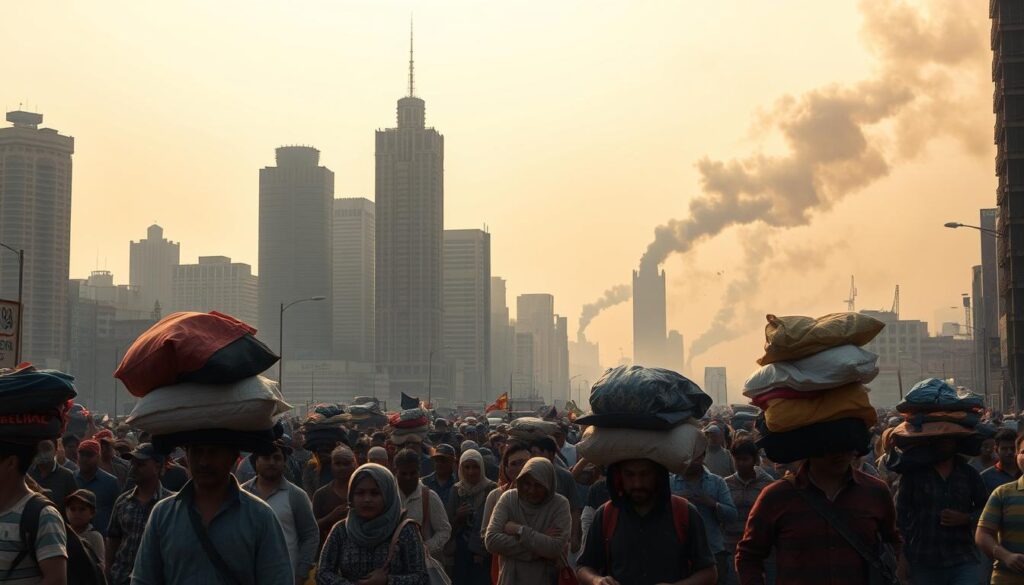
The 2022 floods in Pakistan displaced millions, marking a stark reality: climate-induced migration is reshaping the country’s urban landscape.
This disaster highlighted the growing crisis of environmental refugees in Pakistan, as extreme weather events force people to leave their homes in search of safety and livelihoods.
The impact on urban areas is significant, with cities facing increased pressure from the influx of displaced persons, straining local resources and infrastructure.
Key Takeaways
- Climate change is driving internal displacement in Pakistan.
- The 2022 floods had a devastating impact on the country’s population.
- Urban areas are facing significant challenges due to climate-induced migration.
- The issue of environmental refugees is becoming increasingly pressing.
- Pakistan’s cities are being reshaped by the influx of displaced persons.
The Growing Crisis of Climate Displacement in Pakistan
Climate-related disasters are increasingly displacing populations within Pakistan. The country has witnessed a surge in extreme weather events, including floods, droughts, and heatwaves, which have devastating effects on its population.
Recent Climate Disasters and Their Impact
The frequency and severity of climate-related disasters in Pakistan have been on the rise. Recent years have seen catastrophic events that have left deep scars on the country’s landscape and population.
Floods, Droughts, and Extreme Weather Events
The 2022 floods, for instance, affected over 33 million people, with 8-9 million sliding into poverty. Such events not only destroy infrastructure but also disrupt livelihoods, forcing people to migrate in search of better opportunities.
Scale of Internal Migration in Numbers
The scale of internal migration due to climate displacement is staggering. Climate modeling estimates that by 2050, Pakistan will have nearly 2 million climate migrants within its borders. This migration is not just a humanitarian issue but also a significant challenge for the country’s urban planning and resource allocation.
The Intersection of Climate Change and Internal Displacement in Pakistan
The intersection of climate change and internal displacement in Pakistan is a complex issue that involves various geographical and socioeconomic factors. As the country grapples with the challenges of climate-induced migration, understanding these factors is crucial for developing effective adaptation strategies.
further more visit http://On Pakistan’s vulnerability: World Bank: Climate Risk Country Profile – Pakistan
Defining Climate-Induced Migration Patterns
Climate-induced migration refers to the movement of people within a country due to environmental factors such as rising temperatures, changing precipitation patterns, and increased frequency of natural disasters. In Pakistan, this phenomenon is particularly significant due to the country’s geographical location and socioeconomic conditions.
Pakistan’s Unique Environmental Vulnerabilities
Pakistan is ranked as the 8th most vulnerable country to climate change globally. Its unique geography, including glaciers and river systems, makes it prone to climate-related disasters.
Geographical Factors
The country’s terrain, including the Himalayan and Karakoram mountain ranges, contributes to its vulnerability to climate change. Rising temperatures are causing glaciers to melt at an alarming rate, leading to increased flooding and altering water availability.
Socioeconomic Considerations
Pakistan’s socioeconomic conditions, including poverty and lack of infrastructure, exacerbate the impacts of climate change. Vulnerable populations are often displaced due to climate-related disasters, straining urban resources.
| Climate-Related Disaster | Impact on Internal Displacement |
|---|---|
| Flooding | Increased displacement due to inundation of homes and agricultural land |
| Drought | Migration to urban areas in search of livelihood opportunities |
| Glacier melting | Increased risk of flooding and changes in water availability |
The 2022 Floods: A Watershed Moment for Urban Migration
The 2022 floods in Pakistan marked a significant turning point in the country’s climate displacement trends. The unprecedented devastation caused by these floods led to a massive displacement of populations, with many individuals forced to migrate from rural areas to urban centers in search of shelter and livelihood.
Unprecedented Devastation Across Provinces
The 2022 floods had a far-reaching impact across various provinces, with Sindh and Punjab being among the worst affected. The floods resulted in widespread destruction of infrastructure, homes, and agricultural land, leaving millions displaced and in need of urgent assistance.
From Rural to Urban: Tracking Displacement Flows
The displacement caused by the 2022 floods was characterized by a significant flow of people from rural areas to urban centers. This migration was driven by the loss of livelihoods and the search for better opportunities in cities.
Case Studies from Sindh and Punjab
Case studies from Sindh and Punjab provide valuable insights into the patterns of displacement and the challenges faced by migrants. For instance, many families who lost their homes and livelihoods in rural Sindh migrated to cities like Karachi, where they faced difficulties in accessing basic services like housing and healthcare.
In Punjab, cities like Lahore saw an influx of migrants from rural areas, putting a strain on urban infrastructure and services. These case studies highlight the need for targeted interventions to support climate migrants and host communities.
Transformation of Major Urban Centers
Climate-induced migration is driving rapid urbanization in Pakistan, with cities like Karachi, Lahore, and secondary cities experiencing unprecedented growth. This transformation is largely driven by the influx of climate refugees fleeing natural disasters and environmental degradation.
Karachi: The Primary Destination for Climate Migrants
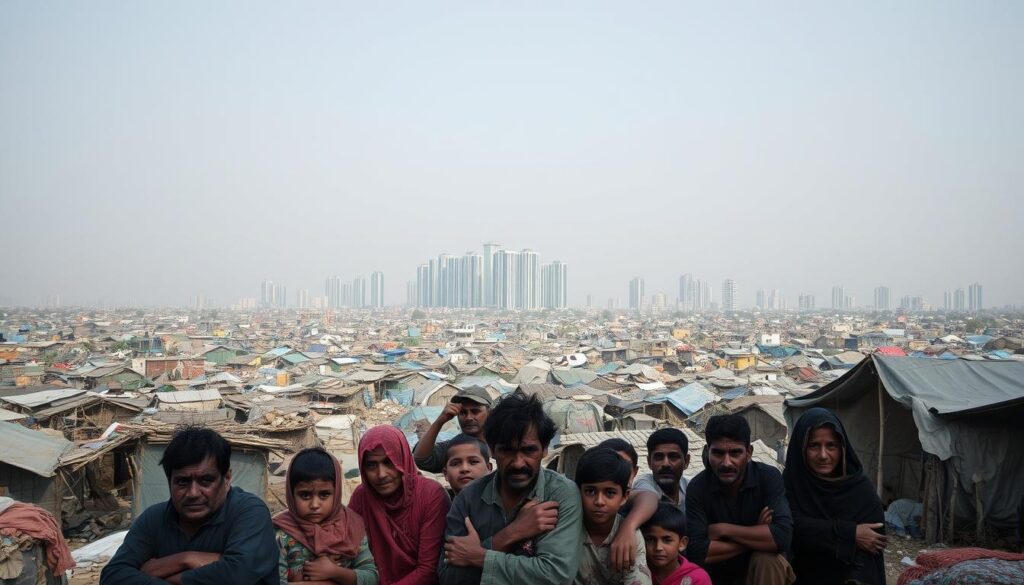
Karachi has received over 50,000 climate migrants, with many settling in informal settlements. The city’s infrastructure is being stretched to its limits, with significant implications for housing, employment, and social services.
Growth of Katchi Abadis (Informal Settlements)
The influx of climate migrants has led to the expansion of katchi abadis, or informal settlements, in Karachi. These settlements often lack basic amenities, posing significant challenges for residents and city authorities.
Lahore’s Changing Demographics and Infrastructure
Lahore is also experiencing significant demographic changes due to climate-induced migration. The city’s infrastructure is being tested, with increased pressure on housing, transportation, and public services.
Secondary Cities: Multan, Faisalabad, and Hyderabad
Secondary cities like Multan, Faisalabad, and Hyderabad are not immune to the effects of climate migration. These cities are experiencing rapid growth, with new challenges arising for urban planning, infrastructure development, and social integration.
The transformation of these urban centers highlights the need for effective climate adaptation strategies to manage the influx of displaced populations and ensure sustainable urban development.
Socioeconomic Challenges Facing Climate Migrants
Climate migrants in Pakistan face numerous socioeconomic challenges that affect their integration into urban areas. The rapid influx of displaced individuals has put a strain on the existing infrastructure and resources in cities like Karachi and Lahore.
Housing Crises and Informal Settlement Expansion
The housing crisis is a significant challenge, with many climate migrants being forced to live in informal settlements on the outskirts of cities. These settlements often lack basic amenities such as clean water, sanitation, and electricity.
Key statistics on informal settlements:
| City | Number of Informal Settlements | Approximate Population |
|---|---|---|
| Karachi | 538 | 2.5 million |
| Lahore | 245 | 1.2 million |
Employment Struggles and Economic Integration
Climate migrants also face significant challenges in finding employment in their new locations. Many are forced into low-wage, informal labor, which can lead to economic instability.
Social Tensions and Cultural Adaptation
Social tensions between climate migrants and host communities are common, often arising from cultural and socioeconomic differences.
Host Community Relations
The relationship between climate migrants and host communities is complex. While there are instances of solidarity and support, there are also reports of tension and conflict.
Addressing these socioeconomic challenges is crucial for the successful integration of climate migrants into Pakistan’s urban areas. It requires a multifaceted approach that includes housing solutions, employment opportunities, and social support.
Government Response and Urban Policy Frameworks
Pakistan’s government has taken significant steps to address the challenges posed by climate migration. The response includes a range of policies and programs aimed at mitigating the impact of climate change on internal displacement.
National Climate Change and Disaster Management Policies
The government has developed national policies to address climate change and disaster management. These policies focus on:
- Enhancing resilience to climate-related disasters
- Improving disaster risk reduction and management
- Promoting climate adaptation measures
These initiatives are crucial for reducing the vulnerability of communities to climate change.
Urban Planning Initiatives for Migrant Integration
Urban planning initiatives have been launched to facilitate the integration of climate migrants into urban areas. Key strategies include:
- Developing affordable housing options
- Improving urban infrastructure to support growing populations
- Enhancing public services to meet the needs of migrants
Implementation Challenges and Institutional Gaps
Despite these efforts, several challenges hinder the effective implementation of these policies. These include:
- Institutional gaps and lack of coordination among government agencies
- Limited financial resources and infrastructure
- Need for enhanced capacity building for local governments
Addressing these challenges is essential for the successful integration of climate migrants and the overall resilience of urban areas.
Building Resilient Cities: Adaptation Strategies
Pakistan’s cities are on the frontline of climate change, necessitating innovative adaptation strategies to ensure their resilience. As the country grapples with the challenges of internal displacement due to climate disasters, building resilient cities is crucial for absorbing the influx of climate migrants.
Community-Based Resilience Programs
Community-based resilience programs are vital for enhancing the adaptive capacity of urban communities. These programs focus on empowering local communities through training and resources, enabling them to prepare for and respond to climate-related disasters. Community-led initiatives have been shown to improve disaster preparedness and reduce the impact of climate-induced shocks.
Climate-Responsive Infrastructure Development
Developing climate-responsive infrastructure is critical for resilient urban planning. This includes:
- Upgrading existing infrastructure to withstand climate-related stresses
- Incorporating climate resilience into urban planning
Water Management Systems
Effective water management systems are essential for managing the risks associated with flooding and water scarcity. Climate-resilient water infrastructure can help mitigate these risks and ensure sustainable water supply.
Sustainable Housing Projects
Sustainable housing projects are crucial for providing safe and secure shelter to climate migrants. These projects incorporate climate-resilient design and materials, reducing the vulnerability of housing to climate-related hazards.
International Support and Climate Finance
International support and climate finance play a significant role in enabling Pakistan to build resilient cities. Access to climate finance can facilitate the implementation of adaptation projects, enhancing the country’s resilience to climate change.
Conclusion: Navigating Pakistan’s Climate-Altered Urban Future
Pakistan’s cities are undergoing a significant transformation due to the intersection of climate change and internal displacement. The 2022 floods marked a watershed moment, triggering unprecedented displacement and urban migration. As climate-induced migration continues to shape the country’s urban landscape, it is essential to understand the complex dynamics at play.
The influx of climate migrants is redefining the demographics and infrastructure of major urban centers like Karachi and Lahore. To address the socioeconomic challenges facing these migrants, the government must implement effective urban planning initiatives and climate-resilient infrastructure development.
Community-based resilience programs and international support through climate finance can also play a crucial role in mitigating the impacts of climate displacement. As Pakistan navigates its climate-altered urban future, continued research and action are necessary to address the challenges posed by climate change and internal displacement.
I enjoyed reading this article. Thanks for sharing your insights.