Can the world ignore the growing crisis in the fields that feed it? The Critical Assessment of the Global Agricultural Labor Shortage: Economic Forces and Innovative Solutions facing a big challenge: a severe labour shortage. This shortage threatens food production and security.
Agricultural communities worldwide are dealing with an aging workforce. There’s a lack of younger workers to replace them. This issue is not just about numbers; it’s about the economic drivers changing the agricultural landscape.
The economic implications are far-reaching. They affect not just local economies but global food systems. Understanding the drivers behind this labour shortage is key to finding solutions.
Key Takeaways
- The global agricultural sector faces a significant labor crisis.
- Aging workforce and lack of younger workers exacerbate the issue.
- Economic drivers play a crucial role in the labor shortage.
- Food production and security are under threat.
- Solutions require a multifaceted approach.
The Current State of Labor Shortage in Agriculture
The agricultural sector is facing a severe labor shortage. This is a big threat to global food security and farm profits. Understanding this issue fully is key.
Global Statistics and Trends
The world is seeing a big drop in the number of people working in agriculture. This is causing problems for food production and the health of rural areas. Many countries are struggling to find enough workers during busy seasons.
Key Affected Crops and Sectors
Fruit and vegetable farming are hit hard by the labor shortage. These are important for food and help the economy a lot.
Seasonal Variations in Labor Demand
The need for farm workers changes a lot with the seasons. It’s busiest when planting and harvesting. This makes it hard for farmers to find enough workers, especially in areas with few people.
Regional Variations in Agricultural Labor Availability
The availability of farm workers varies a lot by region. This is because of things like the local economy, population, and immigration rules.
Developed vs. Developing Nations
Rich countries face different farm worker problems than poor ones. For example, rich countries might use more migrant workers. Poor countries might have more poverty and less farm tools.
United States Agricultural Labor Landscape
In the U.S., farms rely a lot on migrant workers. The H-2A visa program helps farmers hire these workers to fill labor gaps.
Historical Context of Agricultural Workforce Challenges
Understanding the past is key to solving today’s farm work problems. The farm industry has dealt with many workforce issues over the years. These challenges have shaped the industry into what we see today.
Evolution of Agricultural Employment Patterns
The way people work on farms has changed a lot. Mechanization has been a big part of this change.
From Labor-Intensive to Mechanized Farming
Farming has moved from needing lots of manual labor to using machines. This change came from new technology and the need to work faster.
Changes in Rural Demographics
The number of people living in rural areas has changed a lot. More people are moving to cities, making it harder to find farm workers.
Shift from Family Farming to Commercial Agriculture
Farms are now mostly big commercial operations, not family-owned. This change is due to money reasons.
Economic Pressures on Small Farms
Small farms struggle with money issues. They face tough competition and must follow many rules.
Consolidation in the Agricultural Industry
Because of these money problems, farms are getting bigger. Big farms buy out small ones, leading to bigger operations.
Economic Drivers Behind the Agricultural Labor Crisis
Understanding the economic reasons behind the agricultural labor crisis is key to solving it. The agricultural sector is facing a big labor shortage. This is due to several economic factors that make it hard for workers to find jobs in farming.
Wage Disparities Between Agricultural and Other Sectors
One main reason is the pay gap between farming and other jobs. Farming jobs usually pay less than other jobs, making them less appealing to workers.
Competitive Disadvantages in Farm Labor Markets
Farm labor markets have big challenges. The work is hard and often short-term. This makes it hard for farms to compete with jobs that are more stable and easier.
Cost of Living vs. Agricultural Wages
The cost of living in rural areas is high, but farm wages are low. This makes it hard for farm workers to afford basic needs, discouraging them from farming careers.
Seasonal Nature of Agricultural Employment
Another big issue is the seasonal nature of farm jobs. Many jobs are only available at certain times, leading to unstable income for farm workers.
Income Instability for Farm Workers
Farm workers face income instability due to seasonal changes in demand. This makes it hard for them to keep a steady income all year.
Off-Season Employment Challenges
During off-seasons, finding other jobs is hard for farm workers. This can lead to financial struggles and reliance on social support.
Working Conditions and Job Security Issues
Working conditions and job security are also big concerns. Farm work is physically demanding and risky, which scares off potential workers.
Physical Demands and Health Risks
The hard work and health risks in farming make it less appealing. Workers face dangers like pesticide exposure and accidents.
Limited Benefits and Career Advancement
Also, farm jobs often have few benefits and no clear career paths. This makes them less attractive to workers looking for stable jobs.
| Economic Driver | Impact on Agricultural Labor |
|---|---|
| Wage Disparities | Reduced attractiveness to potential workers |
| Seasonal Employment | Income instability for farm workers |
| Poor Working Conditions | Increased health risks and reduced job security |
Demographic Factors Contributing to Farm Worker Shortage
The global agricultural labor market faces challenges due to demographic changes. These changes reduce the workforce available. It’s key to understand these factors to tackle the labor shortage and keep farming sustainable.
Rural-to-Urban Migration Patterns
People moving from rural to urban areas is a big reason for the farm worker shortage. This migration depletes the agricultural workforce, causing labor shortages.
Economic Pull Factors to Urban Areas
Urban areas offer better jobs and higher wages, drawing people away from rural areas. A report shows urban wages are much higher than rural ones, making cities more appealing.
Declining Rural Infrastructure and Services
Rural areas’ decline in infrastructure and services, like healthcare and education, also pushes people to cities. “Rural areas lack the amenities and services found in urban centers,” making them less appealing.
Aging Agricultural Workforce
The aging of the agricultural workforce is a major issue. As older workers retire, they take their experience and knowledge with them, leading to a shortage of skilled labor.
Generational Shifts in Career Preferences
Younger people often prefer non-agricultural careers. This shift away from farming contributes to the aging workforce and labor shortages.
Knowledge Transfer Challenges
The retirement of experienced workers poses big challenges for passing on knowledge.
“The loss of experienced farmers and agricultural workers can lead to a significant knowledge gap, impacting the productivity and efficiency of agricultural operations.”
It’s crucial to document and transfer knowledge to younger workers to address this issue.
Impact of Immigration Policies on Agricultural Labor Supply
Global agricultural labor shortages are linked to immigration policies. The sector’s workforce is mostly immigrant labor. This makes it sensitive to changes in immigration laws.
Guest Worker Programs and Their Limitations
Guest worker programs are key in many countries’ agricultural labor plans. They let farmers hire foreign workers for short-term or seasonal jobs.
H-2A Visa Program in the United States
The H-2A visa program is crucial for many American farmers. It lets employers bring in nonimmigrant foreign workers for temporary or seasonal work.
Administrative Burdens and Costs
But, the H-2A program is criticized for its complexity and costs. Farmers face a tough application process. It’s time-consuming and expensive.
Border Control Measures and Labor Availability
Border control and immigration policies affect labor availability. Stricter controls can cut the flow of immigrant labor. This worsens labor shortages.
Effects of Immigration Enforcement on Farm Labor
Immigration enforcement can harm farm operations. Detaining or deporting undocumented workers can cause labor shortages. This is especially true during peak harvest seasons.
Undocumented Workers in the Agricultural Sector
Undocumented workers are vital in the agricultural workforce. Many farmers depend on them to fill labor gaps. Despite the legal risks, they are employed.
The relationship between immigration policies and agricultural labor is complex. Policymakers face a challenge. They must balance labor needs with border control and enforcement.
Technological Solutions to Address Labor Shortage in Agriculture
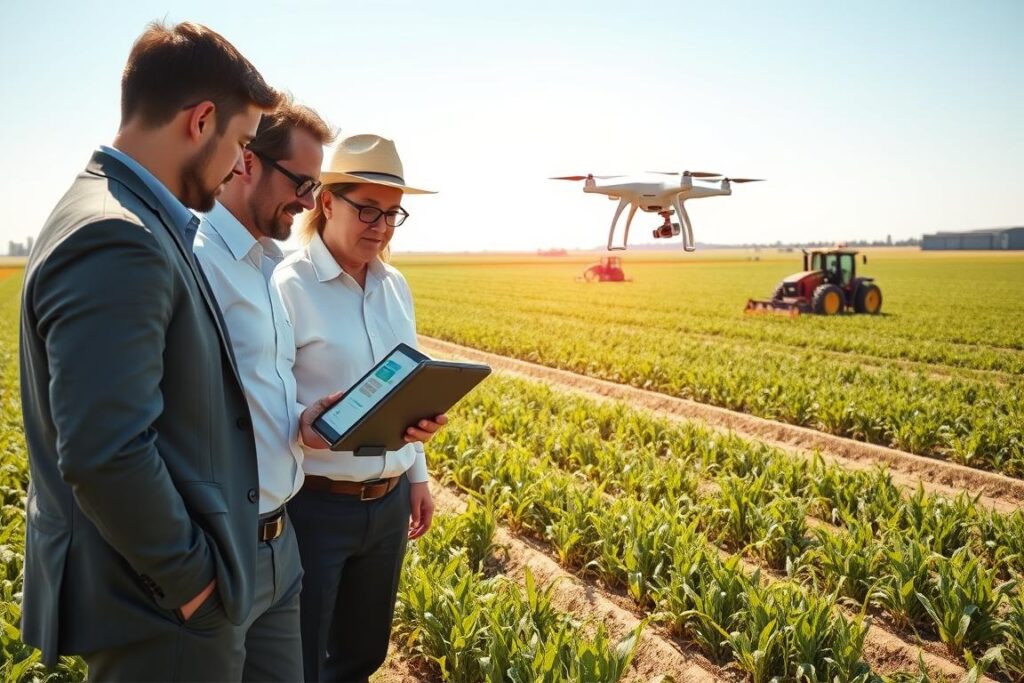
Innovative technologies are being used to tackle the labor shortage in agriculture. As the global agricultural workforce shrinks, farmers and businesses are turning to new solutions. They aim to keep productivity and efficiency high.
Automation and Robotics in Farming
Automation and robotics are changing farming. Robots are now doing jobs that humans used to do. This includes tasks from planting to harvesting.
Harvesting Robots and Their Capabilities
Harvesting robots are a big step forward in agriculture. They have advanced sensors and AI to pick crops and work all day. For example, Harvest CROO can pick strawberries, showing how robots can help with tough crops.
Cost-Benefit Analysis of Automation
Getting started with automation costs a lot, but it’s worth it in the long run. It makes farming more efficient, cuts down on labor costs, and boosts crop yields. A study found that farms with robots saved a lot on labor, making up for the initial cost in a few seasons.
Precision Agriculture Technologies
Precision agriculture uses advanced tech to improve crop yields and cut waste. It relies on data to make better farming decisions.
Labor-Saving Digital Tools
Digital tools like farm management software and apps are making farming easier. They help farmers keep an eye on crops, track weather, and manage resources better.
Data-Driven Farming Approaches
Data-driven farming uses analytics to make smart decisions about farming. By analyzing data, farmers can improve yields and need less labor.
Barriers to Technology Adoption
There are challenges to adopting new tech in agriculture. These include money issues, lack of skills, and doubts about new tech’s reliability.
Financial Constraints for Small Farms
Small farms often can’t afford new tech because of money problems. The cost of automation and precision farming is too high for many.
Technical Skills and Training Requirements
Farmers need the right skills to use new tech. Training and support are key to helping farmers use these tools to solve labor shortages.
“The future of farming is not just about the technology itself, but about how we use it to create a more sustainable and productive agricultural system.” – John Deere spokesperson
Policy and Economic Solutions for Agricultural Labor Challenges
To solve the agricultural labor crisis, we need policy changes and economic incentives. We must tackle this issue with a broad approach. This includes looking at all factors that affect the shortage.
Wage and Benefit Improvements
Improving wages and benefits is key to attracting workers. By offering competitive pay, farmers can make their jobs more appealing.
Subsidized Housing and Transportation
Subsidized housing and transportation make jobs in agriculture more attractive. This is especially true in rural areas where living costs are high.
Healthcare and Retirement Benefits
Healthcare and retirement benefits can make jobs more secure. They attract workers looking for long-term careers in agriculture.
Immigration Reform Proposals
Immigration reform is crucial for solving the labor shortage. Making work visas easier to get and offering legal status can stabilize the workforce.
Streamlined Work Visa Programs
Streamlining work visa programs helps farmers hire quickly. This is especially helpful during busy harvest times.
Pathways to Legal Status for Agricultural Workers
Legal status for undocumented workers improves job security. It encourages them to stay in agriculture, creating a more stable workforce.
Educational and Training Programs
Investing in education and training is vital. It helps build a skilled agricultural workforce. This includes school programs and vocational training.
Agricultural Career Development in Schools
Introducing agricultural programs in schools encourages young people to consider farming careers. It helps create a new generation of farmers and workers.
Vocational Training for Modern Farming
Vocational training in modern farming techniques prepares workers for today’s farms. It gives them the skills needed for efficient work.
| Solution | Description | Benefit |
|---|---|---|
| Wage Improvements | Competitive wages for agricultural workers | Attracts more workers to the sector |
| Immigration Reform | Streamlined work visa programs | Ensures stable labor supply |
| Educational Programs | Agricultural career development in schools | Builds a new generation of farmers |
Case Studies: Successful Approaches to Agricultural Workforce Development
The world is facing a big problem with not enough workers in agriculture. Countries are trying new ways to solve this issue. Looking at successful examples can show us what works best.
Innovative Labor Management in Different Countries
Countries are using different strategies to manage their farm workers. For example, some in Europe are working together in farming cooperatives. Meanwhile, Australia has a program for seasonal workers from Pacific Islands.
European Cooperative Farming Models
In Europe, farming cooperatives are a hit. They help small farmers by sharing resources and costs. This keeps the workforce steady in rural areas.
Australian Seasonal Worker Programme
Australia’s Seasonal Worker Programme brings workers from Pacific Islands. It helps fill gaps during busy farming times. It also gives jobs and money to those countries.
Public-Private Partnerships in Agricultural Employment
Public-private partnerships are key in solving farm worker issues. They bring together government, businesses, and community groups. This helps support jobs in farming.
Corporate Investment in Rural Communities
Some big companies are helping rural areas. They offer training, better work places, and good pay. This makes farming more attractive to workers.
Government Incentives for Agricultural Employers
Governments are giving incentives to farm employers. They offer tax breaks, help with equipment, and support for training. This encourages employers to invest in their workers.
Conclusion: Building a Sustainable Agricultural Labor Force for the Future
The global agricultural labor shortage is a complex issue. It’s driven by economic and demographic factors. Understanding these is key to finding solutions.
The shift from family farming to commercial agriculture has increased labor demand. But, the supply is limited due to rural-to-urban migration and an aging workforce.
To tackle the labor shortage, we need a multi-faceted approach. This includes better wages, technology use, and innovative labor practices. Investing in education and training is also crucial.
This way, we can ensure food security and boost rural economies. It’s a team effort between policymakers, farmers, and industry stakeholders. Together, we can overcome today’s agricultural labor challenges.