
Table of Contents
Can a developing country like Pakistan achieve Pakistan Economy 2026 Recovery which stable economic growth despite global challenges?
The International Monetary Fund (IMF) has helped Pakistan face its financial challenges. With IMF reforms, the country is ready to tackle its fiscal hurdles.
The future looks bright for 2025-26, with a focus on sustainable growth and inflation control. This article will explore Pakistan’s economic plan and how IMF reforms will shape its future.
Key Takeaways
- The IMF’s role in stabilizing Pakistan’s economy.
- Expected inflation trends in 2025-26.
- Growth outlook and challenges.
- Impact of IMF reforms on the economy.
- Pakistan’s path to sustainable economic growth.
Overview of Pakistan’s Economic Challenges
The Pakistani economy faces many challenges. These come from its history and global trends. Knowing these challenges helps us find ways to improve the economy.
Historical Context of Economic Struggles
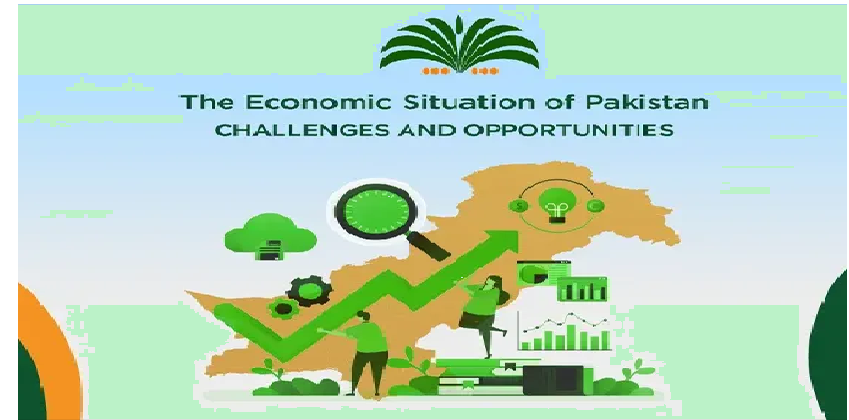
Pakistan’s economy has seen ups and downs. Key historical factors include fiscal mismanagement, political instability, and not investing enough in people. The country has struggled to use foreign aid well, which has hurt long-term planning.
- Inconsistent economic policies have scared off foreign investors.
- High corruption has made the economy unstable.
- Poor infrastructure has limited growth.
A former State Bank of Pakistan governor said, “The lack of a consistent economic policy framework has been a big problem for Pakistan’s growth.” This history helps us understand today’s economic issues.
Impact of Current Global Trends
Global trends are affecting Pakistan’s economy. Changes in global commodity prices, trade tensions, and the move to renewable energy are key factors. For instance, higher global oil prices increase Pakistan’s import costs and inflation.
“The global economic landscape is getting more complex, and countries like Pakistan are very sensitive to these changes,” said a World Bank report.
These trends impact different sectors:
| Sector | Impact |
|---|---|
| Energy | Higher import costs because of global oil price changes |
| Trade | Trade tensions hurt export chances |
| Industry | Move to renewable energy affects traditional industries |
Understanding these challenges is the first step to creating good economic policies. These policies can help Pakistan recover economically.
The Role of the IMF in Economic Recovery
The IMF plays a vital role in stabilizing Pakistan’s economy. It has introduced several key reforms. The IMF has been a crucial partner, offering financial help and policy advice.
Key Reforms Implemented by the IMF
The IMF has brought in several reforms to stabilize Pakistan’s economy. These include fiscal consolidation measures to cut the budget deficit. It has also introduced monetary policy reforms to fight inflation.
Moreover, the IMF has pushed for structural reforms. These aim to make the business environment better and boost economic competitiveness.
- Increasing tax revenues to reduce the fiscal deficit
- Improving energy sector efficiency to reduce losses
- Enhancing financial sector stability through regulatory reforms
Expected Outcomes of these Reforms
The IMF’s reforms are expected to positively impact Pakistan’s economy. Economic stabilization is a main goal. The aim is to create a stable macroeconomic environment.
The reforms also aim to promote economic growth. This will be achieved by improving the business environment and attracting foreign investment.
The expected outcomes include:
- Reduced inflation through effective monetary policy
- Increased economic growth through improved business environment
- Enhanced financial sector stability
Overall, the IMF’s reforms are key to Pakistan’s economic recovery. Their successful implementation will have a lasting positive effect on the country’s economy.
Current Inflation Trends in Pakistan
The inflation trends in Pakistan are shaped by many economic factors. These factors come from inside and outside the country. It’s important for everyone to understand these trends.
Factors Contributing to Inflation
Several things are causing inflation in Pakistan. These include:
- Supply Chain Disruptions: Global supply chain problems have made imported goods more expensive. This adds to inflation.
- Monetary Policy: The State Bank of Pakistan’s policies, like interest rates, help control inflation.
- Energy Prices: Changes in global energy prices affect Pakistan’s inflation. This is because the country relies on imported energy.
- Fiscal Policies: Government spending and taxes also impact inflation. They affect how much people spend overall.
Recent data shows Pakistan’s inflation rate is rising. The Consumer Price Index (CPI) has seen a big jump in the last year.
Comparisons with Regional Inflation Rates
Pakistan’s inflation is also influenced by what’s happening in the region. Looking at neighboring countries gives us useful insights:
| Country | Inflation Rate (%) |
|---|---|
| Pakistan | 12.5 |
| India | 6.8 |
| Bangladesh | 7.2 |
| Sri Lanka | 10.1 |
The table shows Pakistan’s inflation rate is higher than some of its neighbors. This highlights the need for specific economic policies to manage inflation.
“Managing inflation is crucial for economic stability. It requires a balanced approach to monetary and fiscal policies.” – Dr. Shamshad Akhtar, Former Governor, State Bank of Pakistan
Looking at Pakistan’s inflation trends shows how complex managing the economy can be. By understanding the causes of inflation and comparing regional trends, we can make better decisions.
Growth Outlook for Pakistan’s Economy
Pakistan’s economy is on the rise, with a bright future ahead. This is thanks to important economic changes and a good global economic setting.
Projections for GDP Growth in 2025–26
The International Monetary Fund (IMF) sees Pakistan’s GDP growing steadily. They predict a 4.5% increase in 2025-26. This growth will come from more investment in infrastructure and higher consumer spending.
Key Sectors Driving Economic Growth
Several sectors will lead Pakistan’s economic growth. These include:
- Agriculture: Better irrigation and crop management will boost this sector.
- Information Technology: The IT sector will grow fast, thanks to more demand for digital services.
- Manufacturing: More investment in manufacturing, especially in textiles, will help the economy grow.
| Sector | 2024-25 Growth Rate | 2025-26 Growth Rate |
|---|---|---|
| Agriculture | 3.8% | 4.2% |
| Information Technology | 5.5% | 6.0% |
| Manufacturing | 4.0% | 4.8% |
In conclusion, Pakistan’s economy looks good for 2025-26. Sectors like agriculture, IT, and manufacturing will drive this growth. With ongoing reforms and investment, Pakistan is set for steady GDP growth.
Foreign Investment Opportunities in Pakistan
With IMF reforms, Pakistan’s economy is getting stronger. This makes it a great place for foreign investment. The country’s location, natural resources, and growing market are big reasons why investors are interested.
Current Investment Climate
The investment climate in Pakistan is getting better. The government has started many projects to help businesses. IMF reforms have helped stabilize the economy, making investors more confident.
The government has made it easier to start a business and offered incentives to foreign investors. This has helped the positive trend continue.
Foreign direct investment (FDI) in Pakistan has gone up a lot. This shows the country is becoming more attractive to investors. The government’s work on infrastructure and business climate has helped draw in foreign investors.
Sectors with High Potential for Growth
Many sectors in Pakistan are growing fast and attracting foreign investment. The energy sector is one, with chances in renewable energy and power. The agricultural sector is also promising, thanks to Pakistan’s fertile land and irrigation.
The information technology (IT) sector is booming, thanks to more outsourcing and software development. Foreign investors are noticing this trend and investing in IT infrastructure.
- The energy sector offers opportunities in renewable energy and power generation.
- The agricultural sector is attractive due to fertile land and extensive irrigation.
- The IT sector is growing rapidly, with increased outsourcing and software development.
These sectors are not just growing; they’re also helping Pakistan’s economy. As the country keeps improving its economy and attracting investors, these sectors look even brighter.
The Impact of Political Stability on Economic Recovery
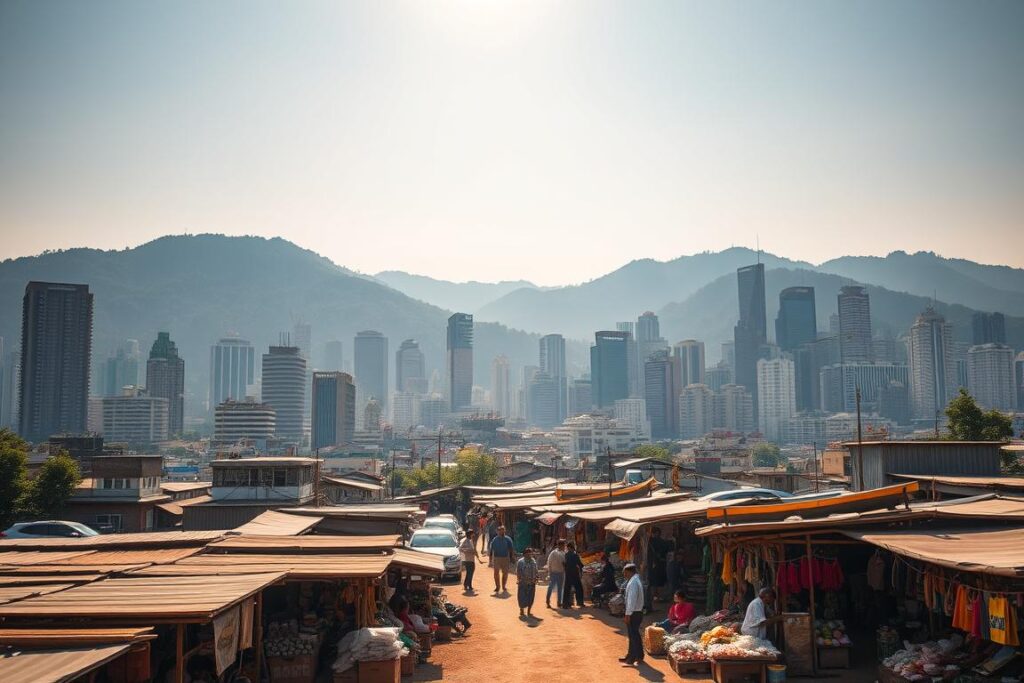
Pakistan’s path to economic recovery in 2026 depends on political stability. A stable political scene boosts investor confidence. This is key for economic growth.
Political Reforms and Governance
Good governance and political reforms are vital for stability. Key areas for reform in Pakistan include:
- Enhancing transparency in government dealings
- Strengthening anti-corruption measures
- Improving the efficiency of the judicial system
Influence of Political Climate on Foreign Investment
The political scene in Pakistan greatly affects foreign investment. Stability attracts investors, while unrest scares them off. The table below shows how stability impacts foreign investment.
| Political Stability Indicator | Foreign Investment Trend |
|---|---|
| Stable Government | Increase in FDI |
| Political Unrest | Decrease in FDI |
| Election Years | Fluctuation in FDI |
In conclusion, political stability is crucial for Pakistan’s economic recovery in 2026. By improving governance and keeping the political scene stable, Pakistan can draw more foreign investment. This leads to sustainable economic growth.
Consumer Confidence in Pakistan
Pakistan faces economic challenges, and consumer confidence is key. It can help or hinder progress. Consumer confidence affects spending and economic growth.
Trends in Consumer Spending
Consumer spending in Pakistan has seen ups and downs. Inflation, jobs, and economic stability play big roles. Urban areas have seen more spending, thanks to higher incomes and a growing middle class.
Key factors influencing consumer spending include:
- Inflation Rates: High inflation can cut down what people can buy, leading to less spending.
- Employment Opportunities: Good jobs and rising incomes boost spending and confidence.
- Economic Stability: A stable economy makes people more confident, leading to more spending and investment.
Implications for Economic Growth
Consumer confidence and spending trends are crucial for Pakistan’s economy. More spending means more demand for goods and services. This boosts production and helps GDP grow. But, less spending can slow down economic recovery.
“Consumer confidence is a critical component of economic growth. As consumers feel more confident about their financial future, they are more likely to spend, thereby driving economic activity.”
So, keeping an eye on consumer confidence is vital. It helps policymakers and businesses understand the economy better. This way, they can make plans to stabilize and grow the economy.
Trade Relations and Pakistan Economy 2026 Recover
IMF reforms are changing Pakistan’s trade relations, impacting its economic recovery. The country’s trade policies and agreements are key to its future.
Current Trade Agreements
Pakistan is working on trade agreements with many countries to boost exports and imports. Key agreements include the Pakistan-EU Preferential Trade Agreement and the China-Pakistan Free Trade Agreement. These agreements aim to improve Pakistan’s trade balance and aid in its economic recovery.
Exploring trade agreements with regional countries under SAFTA is also underway. This is to increase trade opportunities.
Trade Challenges Ahead
Pakistan still faces many challenges despite progress in trade agreements. These include competition from neighbors, trade barriers, and infrastructure issues.
- Competition from neighboring countries: Pakistan competes with other regional economies for export markets.
- Tariff and non-tariff barriers: Existing trade barriers can hinder the free flow of goods and services.
- Infrastructure limitations: Inadequate infrastructure can increase trade costs and reduce competitiveness.
Overcoming these challenges is essential for Pakistan to make the most of its trade agreements and achieve economic recovery.
The Importance of Infrastructure Development
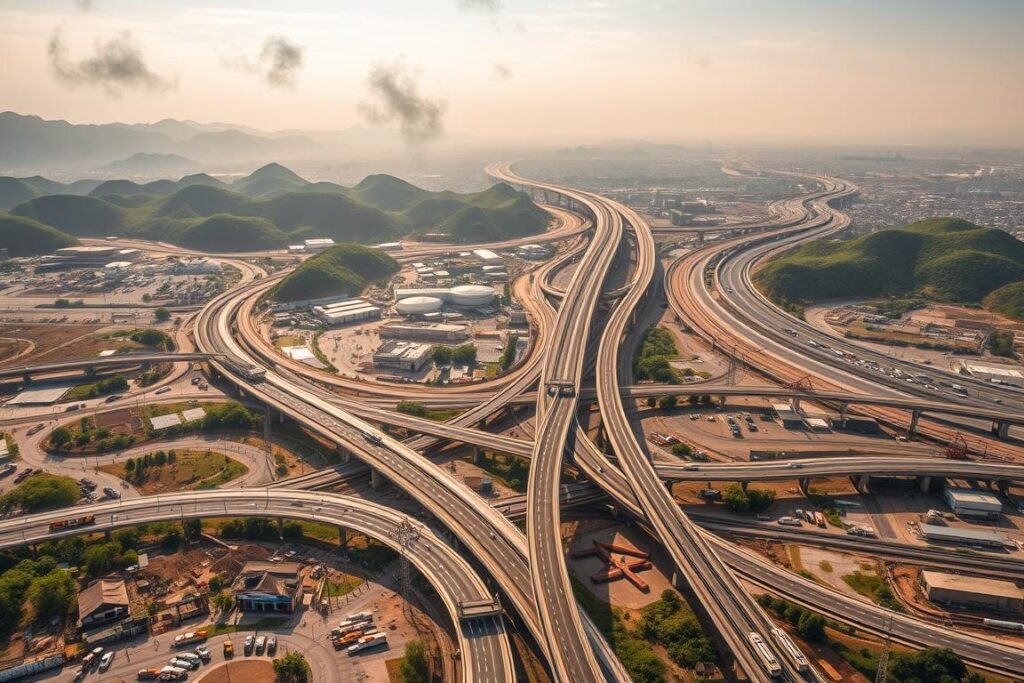
Pakistan is focusing on infrastructure to boost its economy. This effort is key to stabilizing the economy and improving GDP. Investing in infrastructure has a big impact.
Major Infrastructure Projects Underway
Pakistan is working on big projects to boost its economy. These include:
- China-Pakistan Economic Corridor (CPEC): A major project for roads, railways, and energy.
- Expansion of Port Facilities: Upgrades at Gwadar and Karachi to boost trade.
- Transportation Networks: Improvements to highways and new public transport.
Their Role in Economic Growth
These projects are essential for Pakistan’s economic growth. They create jobs, boost economic activity, and improve the business environment. This is thanks to better connectivity and market access.
The impact of infrastructure on economic growth is clear:
- Increased Efficiency: Better infrastructure cuts down on costs and time, making businesses more efficient.
- Attraction of Investment: Improved infrastructure draws in both local and foreign investment.
- Enhanced Competitiveness: Modern and reliable infrastructure makes Pakistan more competitive globally.
In summary, the ongoing infrastructure projects are crucial for a stable and growing economy in Pakistan.
The Role of Technology in Pakistan Economy 2026
Technology plays a huge role in Pakistan’s economic recovery. Digital transformation is leading the way. It’s a key driver of growth and development as the country faces economic challenges.
Digital Transformation Initiatives
Pakistan is moving towards digitalization fast. Many initiatives are aimed at improving the business scene. Some key efforts include:
- Digital Payment Systems: Digital payments are becoming more common. They make transactions easier and cut down on cash use.
- E-commerce Platforms: E-commerce is growing. It gives businesses new ways to sell and reach more customers.
- IT and ITES: The IT sector is expanding. It offers services like software development and customer support.
These efforts boost efficiency and create new chances for businesses to grow and compete globally.
Impact of Technology on Businesses
Technology has a big impact on businesses in Pakistan. It drives growth, boosts productivity, and makes them more competitive. The benefits are clear:
- Increased Efficiency: Technology helps businesses run smoother, save money, and work better.
- New Business Models: Digital changes allow for new business ideas, like online stores and digital services.
- Access to New Markets: Technology opens doors to new markets, both at home and abroad. This expands customer bases.
As Pakistan keeps embracing technology, its economic recovery will likely speed up. This will be thanks to innovation, better productivity, and more competitiveness worldwide.
Social Programs Supporting Pakistan Economy 2026
Social programs are key in helping Pakistan’s economy get back on track. They make sure the most at-risk people are taken care of while the economy changes.
for more information you can visit this website https://www.facebook.com/officialbisp/videos/happening-now/1098294648923302/
Role of Social Safety Nets
Social safety nets are at the heart of Pakistan’s plan to recover. The Benazir Income Support Program (BISP) gives money to poor families. This helps them deal with rising costs and other economic issues.
- Financial Assistance: Direct financial support to families in need.
- Food Security: Initiatives aimed at ensuring access to basic food items.
- Healthcare Support: Programs providing medical assistance and health services.
These safety nets help now and also help the economy in the long run. They keep people spending, which is good for the economy.
Impact of Education and Health Investments
Investing in education and health is vital for Pakistan economy 2026 recovery. Better education and healthcare improve people’s skills and health. This boosts productivity and helps the economy grow.
- Education Initiatives: Programs aimed at improving educational infrastructure and access.
- Health Investments: Initiatives focused on enhancing healthcare facilities and services.
Studies show these investments pay off big time. They lead to a more skilled workforce and lower healthcare costs.
The IMF reforms in Pakistan are backed by these social efforts. Together, they form a strong plan for economic recovery. By focusing on both the economy and people’s welfare, Pakistan is set for a better economic future.
Conclusion: Looking Ahead to 2026
Pakistan economy 2026 is cautiously optimistic about its economic recovery . The International Monetary Fund (IMF) reforms are expected to positively impact the GDP outlook.
Economic Challenges and Opportunities
The country faces challenges like inflation and fiscal deficits. But, it’s tackling these with monetary and fiscal policies. The IMF’s support is key, offering a framework for stability and growth.
Path to a Resilient Economic Future
Pakistan economy 2026 is set to grow, thanks to a better GDP outlook. The government is working to improve the business climate and invest in infrastructure. These efforts, along with foreign investment, promise a resilient economic future by 2026.
for more article you can visit this website agriculture111.com