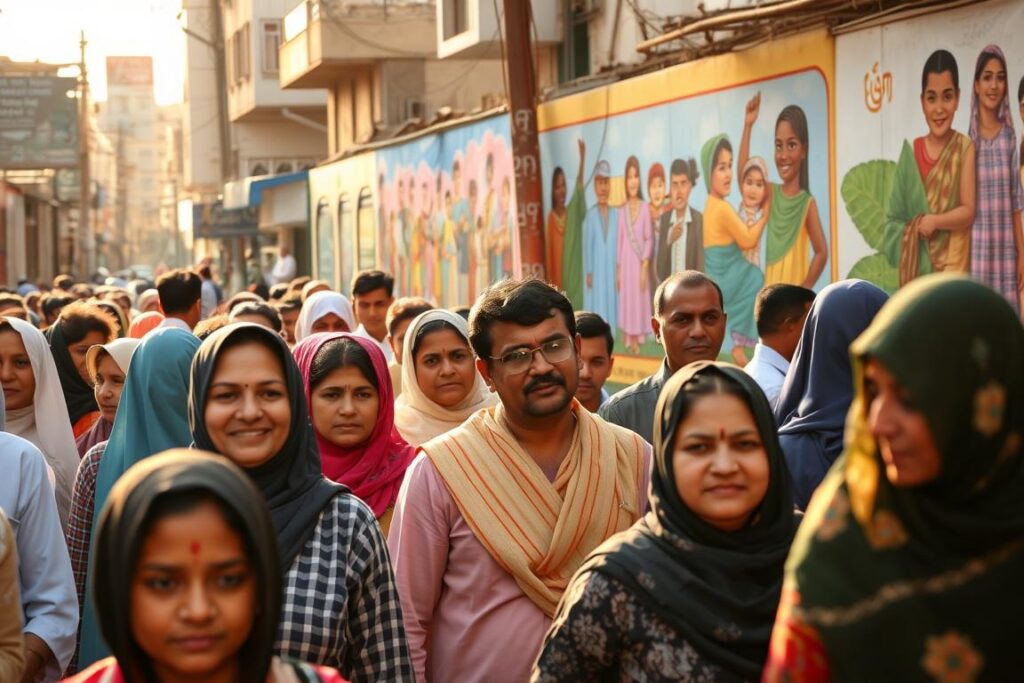
Can social protection programs help reduce poverty and inequality in Pakistan? Millions face economic struggles. There’s a need for effective solutions.
Cash transfers and social protection programs aim to solve these problems. But, their success is unclear. It’s crucial to assess their impact as more resources are invested.
Pakistan’s economic challenges highlight the importance of these programs. This article explores their role in fighting economic hardship. It aims to shed light on their effects on poverty and inequality.
Key Takeaways
- Understanding the current state of poverty and inequality in Pakistan.
- The role of cash transfers in social protection programs.
- Evaluating the effectiveness of these programs in reducing economic hardship.
- Insights into the future of social protection initiatives in Pakistan.
- Key challenges and opportunities for improvement.
Overview of Poverty in Pakistan
Poverty in Pakistan is a complex issue. It’s shaped by economic, social, and political factors. To grasp the current situation, we need to look at the latest statistics and understand the contributing factors. We also need to see how poverty varies across different regions.
Current Statistics on Poverty Rates
Pakistan has seen a decline in poverty over the years. This progress is thanks to programs like the Benazir Income Support Program (BISP). Despite this, poverty remains a significant challenge.
- The poverty headcount rate has dropped from 39.4% in 2001 to about 24% now.
- More people are living above the poverty line thanks to better economic opportunities and social safety nets.
Factors Contributing to Poverty
Several factors contribute to poverty in Pakistan, including:
- Economic instability: The economy’s ups and downs, inflation, and lack of investment in people’s skills.
- Lack of education: Not enough access to quality education, making the workforce less skilled.
- Unemployment: High joblessness, especially among the young.
- Regional conflicts: Instability in some areas hampers economic growth.
Regional Disparities in Poverty Levels
Poverty in Pakistan varies greatly by region. Rural and conflict-affected areas face higher poverty rates than cities.
- Rural areas struggle more due to fewer services and opportunities.
- Places like Balochistan and Khyber Pakhtunkhwa have higher poverty rates than provinces like Punjab.
Understanding Inequality in Pakistan
In Pakistan, inequality touches many areas of life. It affects how wealth is spread out, who gets to go to school, and who can see a doctor. It’s a big problem that changes society in many ways.
Economic Inequality and Wealth Distribution
In Pakistan, the rich and the poor are far apart. A few people own most of the wealth. The top 10% of people have over 40% of the country’s money. Meanwhile, the bottom 10% has less than 2%.
The Gini coefficient shows Pakistan’s income gap is big. This is bad for the economy and for keeping society stable.
Social Inequality: Gender and Education Gaps
In Pakistan, women and girls face big social barriers. They get less chance to work and go to school. Women’s literacy rates are much lower than men’s, especially in the countryside.
Education is key where we see social inequality. Girls and poor kids often can’t get good education. This makes inequality worse.
The Urban-Rural Divide
There’s a big difference between city and country life in Pakistan. Cities have better schools, hospitals, and jobs. But, rural areas lack these things.
This gap is not just about money. It also affects social services and buildings. For example, rural areas have less access to good healthcare and schools. This makes social inequality worse.
The Impact of Cash Transfers
Cash transfer programs are key in Pakistan’s fight against poverty. They give financial help to low-income families. This helps them cover basic needs and improve their lives.
Types of Cash Transfer Programs in Pakistan
Pakistan has many cash transfer programs for the poor. The Benazir Income Support Program (BISP) gives monthly money to eligible families. BISP has helped millions of Pakistanis deal with money troubles.
The Ehsaas Program also offers cash help for the poor and vulnerable. These programs are flexible and respond to the needs of the recipients. They make sure support goes to those who need it most.
Effectiveness of Cash Transfers on Poverty Reduction
Research shows cash transfers can greatly reduce poverty. They give families a steady income for food, healthcare, and education. The impact is huge for children, letting them go to school and get healthcare, breaking the poverty cycle.
In Pakistan, cash transfers have shown great results. For example, BISP has raised the living standards of families. It also helps them invest in their children’s future.
Case Studies: Success Stories
Many success stories show the power of cash transfers in Pakistan. A study on BISP found better nutrition for children in those homes. Another study on the Ehsaas Program showed better economic stability for families.
- The Benazir Income Support Program has supported over 5 million families, providing them with financial assistance and social services.
- The Ehsaas Program has expanded its reach, incorporating various social protection measures, including cash transfers, to combat poverty.
These stories show how cash transfers can really change lives for the poor and vulnerable in Pakistan.
Social Protection Programs in Pakistan
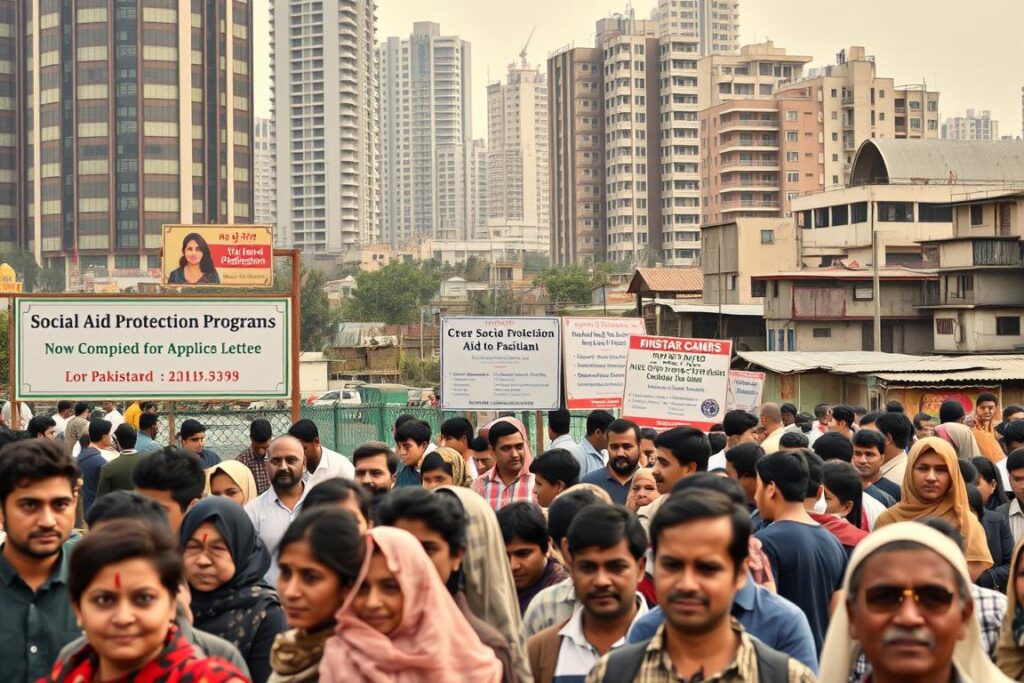
Social protection in Pakistan is key to fighting poverty and inequality. These efforts offer financial help to the most needy.
Overview of Social Protection Initiatives
Pakistan has started many social protection programs. They aim to cut down poverty and boost economic stability. The Benazir Income Support Program (BISP) is a major one. It gives money to low-income families.
Key Features of BISP:
- Cash transfers to eligible beneficiaries
- Support for education and health services
- Empowerment of women through financial inclusion
Key Players in Social Protection
Many groups help run social protection programs in Pakistan. This includes the government, international groups, and NGOs.
| Institution | Role |
|---|---|
| Government of Pakistan | Policy formulation and program implementation |
| World Bank | Financial and technical assistance |
| UNICEF | Support for child-focused social protection initiatives |
Challenges Facing Social Protection Programs
Despite progress, social protection in Pakistan faces big challenges. These include not enough money, poor targeting, and coordination issues.
Fixing these problems is vital for better social protection. We need to work on targeting, funding, and coordination to succeed in the long run.
The Role of Government Policies
Addressing poverty and inequality in Pakistan needs effective government policies. These policies must be comprehensive and inclusive. The government plays a key role in shaping the country’s socio-economic landscape.
Key Policies Addressing Poverty and Inequality
The Pakistani government has introduced several key policies to reduce poverty and inequality. These include:
- Education Policies: Initiatives to improve access to education, especially for girls and in rural areas.
- Healthcare Reforms: Programs to enhance healthcare services, making them more accessible and affordable for the poor.
- Employment Schemes: Policies to promote employment opportunities, including vocational training and job creation programs.
Impact of Policy Changes on Poverty Rates
The impact of these policies on poverty rates has been varied. Some policies have shown significant success, while others have faced challenges in implementation.
Success Stories:
- The Benazir Income Support Program (BISP) has been instrumental in providing financial assistance to the poorest families.
- Initiatives like the Punjab Education Foundation have improved educational outcomes in certain regions.
Future Policy Recommendations
To further address poverty and inequality, future policies should focus on:
- Inclusive Economic Growth: Policies that promote economic opportunities for all segments of society.
- Social Protection: Strengthening social safety nets to protect the most vulnerable populations.
- Regional Development: Targeted interventions to address regional disparities in poverty and inequality.
By adopting a multi-faceted approach, the government can make significant strides in reducing poverty and inequality in Pakistan.
International Aid and Support
International aid has been key in helping Pakistan fight poverty and improve social welfare. The country has gotten a lot of help from donors and organizations worldwide.
Major International Donors and Their Contributions
Many big donors have helped Pakistan fight poverty. The World Bank, for example, has given a lot of money for health, education, and infrastructure projects.
- The World Bank has funded projects worth billions of dollars to support Pakistan’s development goals.
- The United Nations, through its various agencies, has also played a crucial role in providing humanitarian aid and supporting development programs.
- Other significant donors include the Asian Development Bank, the European Union, and various bilateral aid agencies from countries like the United States, Japan, and the UK.
The Impact of International Aid on Poverty Alleviation
International aid has made a big difference in Pakistan. It has helped more people get basic services like healthcare and education, especially in poor areas.
“International aid has been instrumental in supporting Pakistan’s efforts to reduce poverty and promote economic development.”
Aid has also helped with social protection programs. These programs are very important for helping the most vulnerable people.
Success and Challenges of Aid Programs
International aid has had many successes, but there are still challenges. One big challenge is making sure aid is used well and reaches the right people.
- It’s important for donors and the government to work together to avoid wasting resources and ensure aid is used effectively.
- There also needs to be more openness and accountability in how aid money is spent.
- Also, aid programs need to focus on being sustainable in the long run. They should help build local skills and encourage self-reliance.
By working on these issues, international aid can keep helping Pakistan fight poverty and support social protection.
The Role of NGOs in Combating Poverty
In Pakistan, NGOs are key in the fight against poverty. They run programs to help disadvantaged communities. Their work helps the government and international aid reach those in need.
Leading NGOs in Pakistan
Many NGOs are working hard to reduce poverty in Pakistan. The Pakistan Poverty Alleviation Fund (PPAF) and the National Rural Support Programme (NRSP) are leading the way. They offer microfinance, livelihood support, and social mobilization.
The PPAF is key in improving rural areas through community projects. NRSP supports poor communities with various development programs.
Innovative Approaches by NGOs
NGOs in Pakistan use new ways to fight poverty. They use microfinance to help low-income people start businesses. They also run livelihood programs to give communities skills for better jobs.
“Microfinance has been a game-changer for many low-income families in Pakistan, providing them with the capital needed to invest in their futures.” –
Success Stories from NGO Initiatives
NGO efforts have led to many success stories in Pakistan. For example, the Akshay Patra Foundation works with local groups to feed school kids. This boosts their health and gets more kids in school.
| NGO | Initiative | Impact |
|---|---|---|
| PPAF | Microfinance and Livelihood Support | Improved economic conditions for rural populations |
| NRSP | Social Mobilization and Community Development | Empowered marginalized communities |
| Akshay Patra Foundation | Mid-Day Meal Program | Increased school enrollment and improved nutrition |
These stories show how important NGOs are in fighting poverty in Pakistan. Their creative methods and focused help have greatly improved many lives.
Community-Based Solutions
Local communities in Pakistan are taking action against poverty and inequality. They are creating their own solutions. This is key to meeting local needs and making sure everyone benefits from development.
Grassroots Movements and Their Impact
Grassroots movements are changing communities. They let locals identify and solve their own problems. For example, efforts to improve education and healthcare are helping reduce poverty.
Key Features of Successful Grassroots Movements:
- Community-led planning and implementation
- Focus on sustainable development
- Inclusive approaches that engage all segments of the community
Examples of Successful Community Initiatives
In Pakistan, many community projects are showing great results. The Akshay Patra Foundation has started mid-day meal programs in schools. This has helped more kids go to school and eat better. Local cooperatives are also helping small farmers, boosting their income.
Looking closely at these projects, we see how they fight poverty and support people. Here’s a table with some examples:
| Initiative | Focus Area | Impact |
|---|---|---|
| Mid-day Meal Program | Nutrition and Education | Increased school enrollment by 20% |
| Local Cooperatives | Agricultural Support | Improved income for small-scale farmers by 15% |
Importance of Local Engagement
Getting locals involved is key to success. When they help plan and do the work, programs fit their needs better. This makes them more effective and helps them last longer.
Local involvement is crucial for keeping projects going. When people are part of the effort, they are more likely to keep supporting it. This makes the projects sustainable over time.
Future Trends in Poverty and Inequality
Pakistan’s future in poverty and inequality will be shaped by economic growth, changes in population, and new technologies. As the country grows, knowing these trends is key for leaders and experts.
Economic Growth Projections
Pakistan’s economy is set to grow, but at a slow pace. Reports say the GDP will increase by 4-5% in the next few years. This could help reduce poverty.
Key drivers of economic growth include:
- Increased foreign investment
- Expansion of the services sector
- Growth in the manufacturing industry
But, managing inflation and fiscal deficits is crucial to keep this growth going.
Potential Changes in Demographics
Changes in demographics, like a large youth population, will affect poverty and inequality in Pakistan. This young population could be a big asset if the right policies are put in place.
“Pakistan’s youth bulge presents both opportunities and challenges. Investing in education and skills training can unlock the potential of the young population, contributing to economic growth and poverty reduction.” – Expert Opinion
The government and others must focus on quality education and jobs to make the most of this demographic advantage.
The Role of Technology in Poverty Alleviation
New technologies offer hope for reducing poverty in Pakistan. More people have mobile phones and internet, making it easier to access financial services, education, and healthcare.
Digital financial services have helped millions in Pakistan get banking services, receive payments, and save money. Projects like the Pakistan Digital Economy Project aim to use technology to boost the economy and cut poverty.
Using technology wisely in development programs can greatly help reduce poverty and inequality in Pakistan.
Conclusion and Call to Action
Dealing with poverty and inequality in Pakistan needs a mix of government actions, international help, and local efforts. Cash transfers and social protection have been key in fighting poverty and boosting economic stability.
Key Takeaways
Looking at poverty and inequality in Pakistan shows we must keep supporting social protection. These efforts have been effective in cutting down poverty and pushing for economic fairness.
Supporting Initiatives
Everyone can help in the fight against poverty and inequality. Donating to trusted groups, volunteering, and spreading the word about these issues can make a big difference. Together, we can build a fairer world.
To tackle poverty in Pakistan, we must keep investing in social protection. We also need to support policies that help with income and economic equality. By joining forces, we can make a better future for Pakistan’s people.