Table of Contents
Are rising farmland prices and agriculture land costs causing global food prices to go up?
This issue affects people all over the world, impacting the global economy a lot. We will look into what’s causing food price increases, how they affect different places, and what risks we might face.
The rising costs are not just a worry for shoppers. They also affect the global economy a lot. It’s important to understand why global food inflation is happening to tackle these problems.
Key Takeaways
- Rising farmland prices and agriculture land costs contribute to global food inflation.
- The issue has significant implications for the global economy and consumers worldwide.
- Understanding the causes and impacts is crucial for navigating these challenges.
- Different regions are affected differently by the surge in food prices.
- Potential risks lie ahead, making it essential to examine the factors driving food price increases.
Understanding Global Food Inflation: An Overview
Food inflation is when food prices go up. It’s a big problem for the economy. It changes how much things cost and affects trade worldwide. Knowing what it is, its history, and current trends is key.
Definition of Food Inflation
Food inflation is when food prices go up over time. It’s shown as a percentage, often monthly or yearly. International farmland values and worldwide agricultural real estate are important because they affect how much food costs.
This issue touches many, from consumers to farmers and leaders. When food prices go up, people might spend less or eat differently.
Historical Context
Food inflation has been shaped by many things, like supply and demand, weather, and the economy. Big events like droughts, wars, and economic troubles have raised food prices before.
In 2007-2008, food prices jumped because of droughts and more demand for biofuels. This was a major crisis.
| Year | Global Food Price Index | Major Events |
|---|---|---|
| 2007 | 121.1 | Droughts in major grain-producing countries |
| 2008 | 154.4 | Global financial crisis, increased biofuel demand |
| 2010 | 138.4 | Russian wheat export ban due to drought |
Current Trends Worldwide
Today, food inflation is influenced by climate change, geopolitical tensions, and supply chain disruptions. These factors also affect farming property pricing, making farming more expensive. This leads to higher prices for everyone.
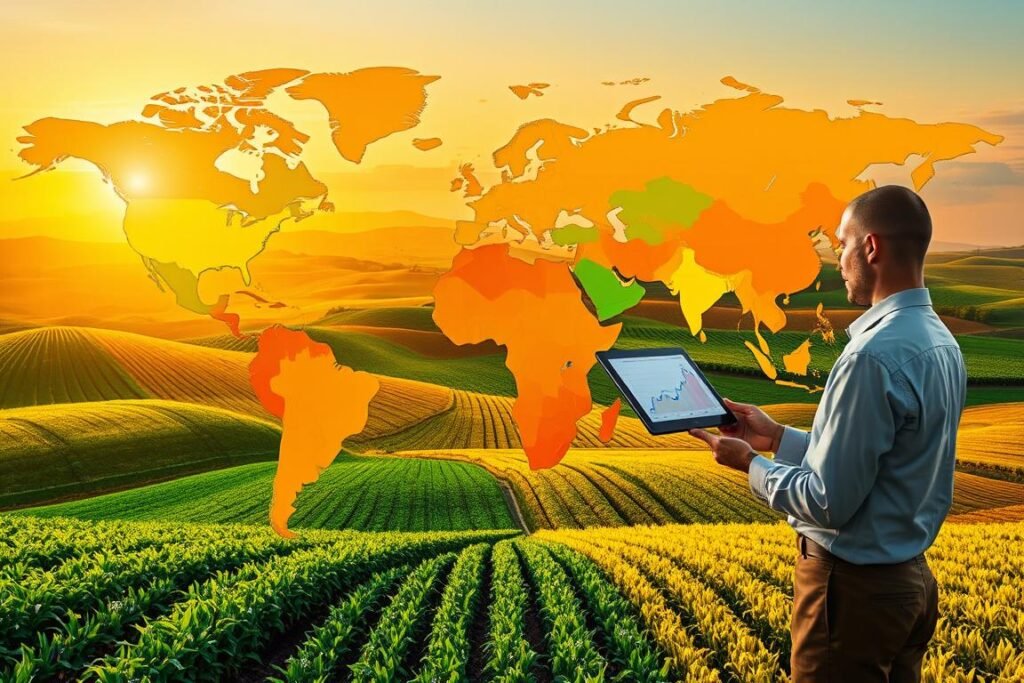
As the world’s economy changes, it’s important to keep up with these trends. This helps us guess how food prices might change in the future. The image below shows how complex global food systems are.
Looking at food inflation now and its past helps us understand the challenges and chances ahead.
Key Factors Driving Food Prices Up
Food prices are rising worldwide due to several key factors. It’s important to understand these to find ways to lower food costs.
Read more information watch this video https://www.ifpri.org/event/the-impact-of-global-change-on-food-security-in-2050-assessing-the-risks-through-the-lens-of-food-trade/
Supply Chain Disruptions
Supply chain problems are a big reason for higher food prices. Issues like truck driver shortages and higher fuel costs can cause delays and increase costs. For example, not enough truck drivers or higher fuel prices can make transporting food more expensive.
Investing in better logistics and infrastructure is key to fixing these issues. This can help reduce costs and keep food prices stable.
Climate Change Impacts
Climate change is also affecting food prices. Weather events like droughts and floods can damage crops and lower farm output. This makes food scarcer and more expensive.
Investors are now focusing on sustainable farming to deal with climate change. This shift will likely change how we value farmland and invest in agriculture.
“Climate change is altering the landscape of global food production, necessitating adaptive strategies to ensure food security.”
Geopolitical Tensions
Geopolitical tensions also play a part in food price volatility. Trade barriers and export bans can disrupt food supplies, raising prices. For instance, limits on grain exports can cause shortages and higher prices globally.
Farmland values are influenced by these geopolitical factors. New methods for valuing farmland are being developed to reflect these changes. This ensures that farming investments are both profitable and sustainable.
| Factor | Impact on Food Prices | Mitigation Strategy |
|---|---|---|
| Supply Chain Disruptions | Increased costs and delays | Invest in logistics and infrastructure |
| Climate Change | Crop failures and reduced productivity | Adopt climate-resilient agricultural practices |
| Geopolitical Tensions | Trade disruptions and price volatility | Diversify trade partners and negotiate trade agreements |
The Role of Global Markets

Global markets are key to understanding food inflation. They shape food prices in many ways.
Commodity Prices and Their Influence
Commodity prices directly affect food costs. Prices of items like wheat, corn, and soybeans change due to supply and demand, weather, and world events. For example, a drought in a big wheat producer can cause prices to rise.
This price increase affects the cost of bread and other wheat products. Agricultural real estate analysis helps us see how these factors work. It shows how land use, soil health, and farming methods impact crop yields and prices.
| Commodity | Price Change | Impact on Food Prices |
|---|---|---|
| Wheat | +10% | Increased cost of bread and baked goods |
| Corn | +5% | Higher prices for corn-based products |
| Soybeans | -2% | Reduced cost of soy-based products |
The Impact of Currency Fluctuations
Currency changes also affect food prices. Exchange rates influence the cost of importing and exporting food. A strong currency can lower food prices by making imports cheaper. But a weak currency can raise prices by making imports more expensive.
The farmland price outlook is also influenced by currency changes. These changes can affect farming profits and farmland value.
Understanding global market effects on food prices is crucial. It helps us predict and prepare for food cost changes. This knowledge is vital for strategies to fight food inflation.
Effects on Consumers in the United States
Global food inflation affects people in the United States in many ways. It changes how much money they have to spend on food and what they eat. Some groups face more challenges than others.
Rising Grocery Costs
Higher grocery prices are the first thing people notice. The cost of basic foods goes up, making it harder for families to budget. On average, American households spend a lot on food, and this amount is growing.
Impact on Household Budgets
| Category | Pre-Inflation | Post-Inflation |
|---|---|---|
| Average Monthly Grocery Bill | $500 | $600 |
| Percentage of Income Spent on Food | 15% | 18% |
Nutritional Choices and Accessibility
When food prices go up, people might choose cheaper, less healthy options. This can harm their health, especially for kids and the elderly.
The Challenge of Healthy Eating
- Increased consumption of processed foods
- Reduced intake of fresh fruits and vegetables
- Potential for malnutrition in vulnerable populations
Food Insecurity Concerns
Food insecurity is becoming a bigger problem as food prices rise. Families that were once able to afford healthy food may now struggle. This leads to more people facing food insecurity.
Statistics on Food Insecurity
| Year | Food Insecurity Rate |
|---|---|
| 2022 | 12% |
| 2023 | 15% |
The Economic Implications of Food Inflation
Food inflation affects more than just our wallets. It impacts the whole economy. When food prices go up, businesses face higher costs. This can lead to higher prices for many goods and services.
Impact on Domestic Economy
Food inflation hits our economy in many ways. Higher food prices mean more money spent on food. This leaves less for other things we need.
- Increased costs for consumers
- Potential decrease in demand for non-food items
- Impact on low-income households who spend a larger proportion of their income on food
It also affects agriculture land cost. As food prices rise, so does the value of farmland. This can make farming more expensive for those who rent land.
Effects on Global Trade Relations
Food inflation also affects global trade. Countries with high food prices may import more expensive food. This can weaken their currency and make things worse.
- Trade balance impacts due to expensive food imports
- Potential for currency fluctuations
- Increased focus on domestic food production to reduce reliance on imports
The value of farmland worldwide is another key issue. As demand for food grows, farmland in key agricultural countries becomes more valuable. This attracts investors and can change who owns the land.
Government Responses to Food Inflation
Governments are taking action to fight rising food prices. They aim to help their economies and people.
Policy Measures and Regulations
Many governments are using different ways to tackle food inflation. They give farmers subsidies to grow more food. They also set price limits to keep costs stable for consumers. Plus, they invest in new farming tech to boost crop yields.
The U.S. Department of Agriculture is helping farmers. They support farmers in using green practices and getting better at dealing with weather changes.
Key Policy Measures:
- Subsidies for farmers
- Price controls
- Investments in agricultural technology
- Trade policies to reduce tariffs on food imports
These steps aim to lessen food inflation’s impact now and make farming more sustainable later.
Short-term vs. Long-term Strategies
Governments must balance quick fixes with lasting changes. Quick actions might give money directly to people and farmers. But, long-term plans focus on making farming better, like making supply chains more efficient and encouraging green farming.
The Impact of Government Responses:
| Strategy | Short-term Effects | Long-term Effects |
|---|---|---|
| Subsidies for Farmers | Immediate increase in food production | Sustainable farming practices |
| Price Controls | Temporary relief for consumers | Potential market distortions |
| Agricultural Technology Investments | Increased efficiency in farming | Improved crop yields and resilience |
How governments tackle food inflation will shape the future of farming and land prices worldwide. Good strategies can ease current problems and help build a stronger food economy for the future.
Analyzing Regional Variations in Food Inflation
Food inflation changes a lot from one place to another. It’s important to know these differences to make better policies. This helps reduce the impact of food inflation.
There’s a big difference in food prices between cities and countryside. Urban areas face different price issues than rural areas. This is because of supply chains, how people buy food, and the local economy.
Differences Between Urban and Rural Areas
Urban places have more complex food supply chains and a bigger demand for food. Rural areas might have lower food costs because of direct access to food sources. But, they struggle with getting and storing food.
- Urban areas have higher living costs, making food inflation worse.
- Rural areas might be less affected by global food price changes because they use more local food.
A study on global land market trends showed that buying land in rural areas can affect local food prices. Also, agricultural land investment can change how much and at what price food is available.
Case Studies from Different States
Looking at different states can teach us a lot about dealing with food inflation. States with lots of farms might see food prices differently than those that import a lot of food.
“The impact of food inflation varies widely across different states, depending on factors like agricultural production and local economic conditions.”
Comparing states like California, Iowa, and Florida shows how food inflation affects each place differently. California’s diverse farms face unique challenges. Iowa’s focus on corn and soybeans means it might see food prices differently.
| State | Primary Agricultural Products | Impact of Food Inflation |
|---|---|---|
| California | Avocados, Grapes, Berries | Moderate |
| Iowa | Corn, Soybeans | Low |
| Florida | Citrus Fruits, Tomatoes | High |
Knowing these regional differences helps policymakers create better plans to fight food inflation. These plans can be made to fit the needs of each area.
Future Risks and Predictions
It’s important to look ahead and plan for future food inflation risks. We need to think about what might happen in the next ten years. We should also watch for signs that food prices might change.
Evolving Scenarios
The next decade could see big changes in food prices around the world. These changes might come from new ways to value farmland and better ways to analyze agricultural real estate. These could affect how food is made and sold, changing prices everywhere.
Some possible changes include:
- More farmers using green practices to help the planet.
- New farming tech like precision agriculture could make farming cheaper and more efficient.
- People might want different foods, leading to changes in what crops are grown.
Indicators of Change
To get ready for these changes, we need to keep an eye on certain signs. These signs could tell us when food prices might go up or down. Here are some important ones to watch:
| Indicator | Description | Potential Impact |
|---|---|---|
| Weather Patterns | Changes in weather, like droughts or floods, can hurt crop yields. | This could make food prices go up because there’s less to sell. |
| Global Economic Trends | Changes in the world economy, like a recession or growth, can affect how much food people want. | This could change food prices and inflation. |
| Technological Advancements | New tech in farming can make it more efficient and cheaper. | This could lead to lower food prices if it’s used a lot. |
By knowing what might happen and watching for these signs, we can get ready. We can make plans to deal with the risks of rising food prices.
The Role of Technology in Addressing Food Inflation

Technology is a key solution to global food inflation. It helps make food more secure and affordable. With a growing population, tech innovations are boosting farm productivity and making food supply chains more efficient.
Technology impacts food inflation in agriculture and supply chain management. It helps farmers and producers work better, cut waste, and make food production more efficient.
Innovations in Agriculture
Agricultural technology, or AgTech, is changing how we grow food. Key innovations include:
- Precision Farming: Uses data, GPS, and IoT to boost crop yields and cut waste.
- Vertical Farming: Grows crops in stacked layers, often in cities, to increase yield.
- Genetically Modified Crops: Creates crops that resist climate change, pests, and diseases better.
These innovations boost productivity and make farming more sustainable. For example, precision farming helps farmers use resources wisely, reducing environmental harm.
Supply Chain Technology Solutions
Technology is also changing the food supply chain. It makes it more efficient and open. Notable advancements include:
- Blockchain: Improves traceability and accountability in the supply chain.
- AI and Machine Learning: Helps predict demand and supply, preventing shortages and surpluses.
- Logistics and Transportation: Optimizes routes and cuts transportation costs with advanced algorithms.
By using these technologies, the supply chain can work better together. This reduces costs and makes the food system more resilient.
In summary, technology is crucial in tackling global food inflation. It boosts farm productivity and supply chain efficiency. As we keep innovating, we can better fight food inflation and ensure a food-secure future.
Conclusion: Navigating the Future of Food Prices
Understanding the future of food prices is complex. Global food inflation is shaped by many factors. These include supply chain issues, climate change, and global tensions.
Consumer Awareness and Sustainable Practices
Consumer awareness is key to fighting food inflation. Knowing what drives food prices helps people make better choices. Supporting local farmers and reducing waste are also important.
The cost of land for farming and global land values greatly affect food prices. These factors shape our global food scene.
Building a Resilient Food System
To create a fair food system, we must tackle food inflation’s causes. We need to invest in new farming tech, make supply chains better, and support green farming. Together, we can build a food system ready for the future, ensuring food for everyone.
FAQ
What is driving global food inflation?
How do commodity prices influence food inflation?
What are the effects of food inflation on consumers in the United States?
How do governments respond to food inflation?
What role does technology play in addressing food inflation?
What are the future risks associated with global food inflation?
How can consumers make informed decisions about food prices?
What is the impact of farmland prices on global food inflation?
How do global land market trends affect agricultural land investment?
Read more articale visit our website agriculture111.com