
Are escalating global trade conflicts threatening the world’s food security? The recent surge in protectionism has raised concerns about the potential consequences on the global agricultural landscape.
The impact of these conflicts on agriculture is multifaceted. It affects not just farmers but also consumers and the broader economy. As global trade wars intensify, understanding their far-reaching implications becomes crucial.
The complexity of these issues demands a closer look at how agricultural trade wars are reshaping the industry.
Key Takeaways
- The global trade conflicts are having a significant impact on agriculture.
- Agricultural trade wars are affecting farmers, consumers, and the economy.
- Understanding the implications of global trade wars is crucial.
- The complexity of these issues demands a closer look.
- Global trade conflicts are reshaping the agricultural industry.
Understanding Trade Conflicts in the Agricultural Sector
Trade conflicts in agriculture are complex and affect global markets and food production. These conflicts impact not just the countries involved but also global food security.
Defining Trade Wars and Their Agricultural Dimension
A trade war happens when countries put tariffs or quotas on each other’s goods. This is often in response to unfair trade practices. In agriculture, these disputes can mess up supply chains and change market prices.
Key Terminology and Concepts
Understanding terms like tariffs, quotas, and subsidies is key. Tariffs are taxes on imports, and quotas limit imports. Subsidies are government support for local producers.
Economic Principles Behind Trade Disputes
Trade disputes are driven by comparative advantage and protectionism. Countries use tariffs to protect their industries. This can lead to other countries retaliating, starting trade wars.
Major Agricultural Exporting and Importing Nations
Countries like the United States, Brazil, and the European Union play big roles in global agriculture. Knowing their interests helps understand trade conflicts.
Why Agriculture Becomes a Strategic Target in Trade Disputes
Agriculture is a key target because of its economic and political importance. It’s crucial for food security and a big part of many countries’ GDP. This makes it a central issue in trade talks and disputes.
Historical Context: Evolution of Agricultural Trade Tensions
To grasp the growth of agricultural trade tensions, we must look at key historical moments. These moments have greatly influenced the global trade scene.
Notable Agricultural Trade Disputes of the 20th Century
The 20th century saw many big fights over agricultural trade. These fights showed how complex international trade can be.
The Chicken War of the 1960s
The “Chicken War” between the U.S. and the European Economic Community (EEC) in the 1960s was a big deal. It started when the EEC put tariffs on U.S. chicken imports. The U.S. then raised tariffs on EEC goods.
1980s US-EU Agricultural Subsidies Battle
In the 1980s, the U.S. and the EU fought over agricultural subsidies. Both sides used subsidies, which messed up global markets and caused trade problems.
Development of International Trade Frameworks
Because of these conflicts, the world has worked to create rules for agricultural trade. The General Agreement on Tariffs and Trade (GATT) and the World Trade Organization (WTO) have been key. They set rules and ways to solve trade disputes.
Lessons from Past Trade Conflicts
Old trade fights have taught us a lot. They show the value of working together, the need for clear trade policies, and the good of global trade agreements. These agreements help lower trade tensions.
Looking at these historical events and the growth of international trade rules helps us understand today’s agricultural trade issues. It also shows us the way forward.
The Current Landscape of Agricultural Trade Wars
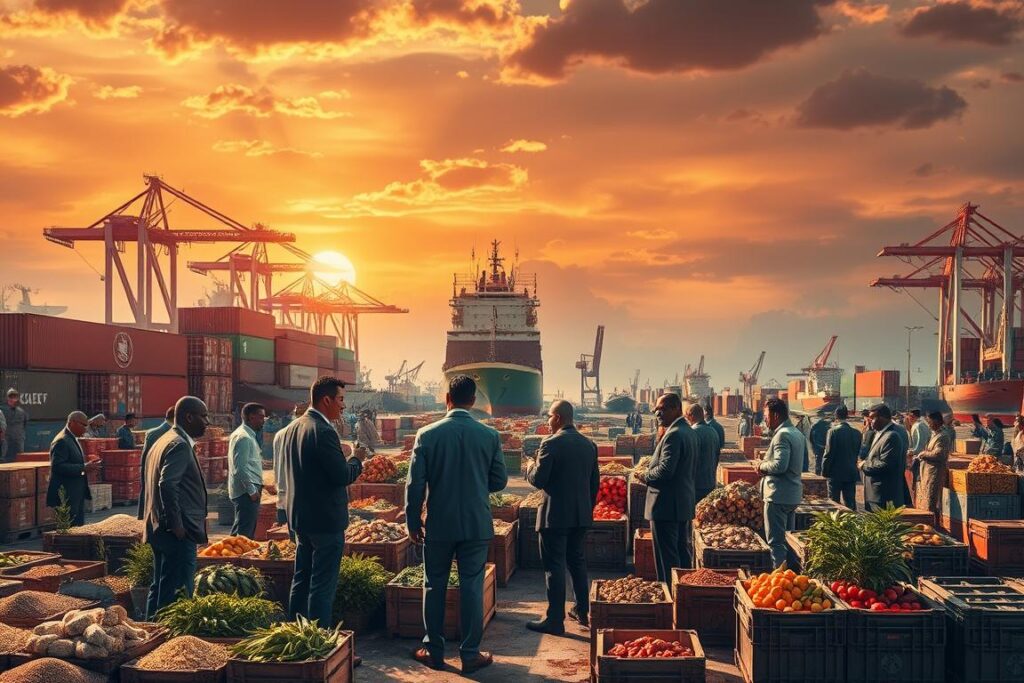
Trade tensions between big economies have hit the agricultural sector hard. This has led to tariffs, market problems, and big challenges for farmers and traders everywhere.
US-China Trade Tensions and Their Agricultural Dimensions
The trade fight between the US and China has really hurt the agricultural sector. Tariffs on farm products have caused big market problems.
Soybean Tariffs and Market Disruptions
Tariffs on soybeans have been a big issue. The US used to send a lot of soybeans to China, but tariffs cut that down a lot. US soybean farmers faced a 25% tariff, making their products less competitive in China.
Pork and Dairy Product Disputes
Other farm products like pork and dairy have also been hit. China put tariffs on US pork and dairy, cutting down exports and causing financial losses for US farmers. The dairy industry was especially hit by China’s tariffs.
EU-US Agricultural Trade Disputes
Trade fights aren’t just between the US and China. The EU and US have their own trade disputes affecting farms. Issues like hormone-treated beef and GMOs have been big points of contention.
Emerging Trade Conflicts in Global Food Markets
New trade fights are popping up in global food markets. Countries are looking at their trade policies again, which could mess up supply chains and markets. The worry about global food security is growing.
In short, the situation with agricultural trade wars is very complex. It’s important for those in the farm sector to understand these issues to deal with the challenges ahead.
Direct Impact on American Farmers and Rural Communities
The ongoing trade wars have hit American farmers and rural communities hard. They face financial troubles and must change how they farm. These changes affect many parts of farming and the local economy.
Financial Consequences for US Agricultural Producers
American farmers are struggling financially because of trade tensions. Tariffs have led to other countries retaliating, cutting down US farm exports.
Farm Income Fluctuations
Farm incomes have gone up and down because of trade wars. The uncertainty makes it hard for farmers to plan their income. This makes it tough to look ahead.
Bankruptcy Rates and Financial Stress
Trade wars have caused more farmers to go bankrupt. With fewer exports and lower prices, farmers are struggling to keep up financially.
Changes in Crop Selection and Production Strategies
Farmers are changing what they grow and how they farm because of trade changes. Some are growing crops less affected by tariffs. Others are looking for new markets.
Regional Variations in Trade War Effects
The effects of trade wars differ across the US. Some areas, especially those that export a lot, are hit harder than others.
| Region | Main Crops | Impact of Trade Wars |
|---|---|---|
| Midwest | Corn, Soybeans | Significant decline in exports due to tariffs |
| Great Plains | Wheat, Corn | Moderate impact, with some diversification to other crops |
| California | Fruits, Nuts | High impact due to retaliatory tariffs from key export markets |
Global Market Volatility and Supply Chain Disruptions
Global trade tensions have caused big changes in agricultural markets. Prices have gone up and down, and supply chains have been disrupted. These ongoing trade conflicts have made markets more unstable, affecting crops all over the world.
Price Fluctuations in Agricultural Commodities
Prices for soybeans, corn, and wheat have changed a lot because of trade tensions. For example, the US-China trade war cut down soybean exports to China. This led to more soybeans in the US, causing prices to fall.
| Commodity | Pre-Trade War Price (USD/ton) | Post-Trade War Price (USD/ton) |
|---|---|---|
| Soybeans | 350 | 280 |
| Corn | 220 | 200 |
| Wheat | 250 | 230 |
Reshaping of International Supply Chains
Trade tensions have made countries rethink their supply chains. They are looking to import from different places and find new markets.
Alternative Market Development
Countries are looking for new trade partners to avoid risks from trade conflicts. For instance, the US is trying to sell more to Vietnam and Indonesia.
Logistics and Distribution Challenges
Changing supply chains is hard, especially for logistics and distribution. Companies are adjusting their networks to fit new trade paths and partners. This is expensive and complicated.
Food Security Concerns Amid Trade Tensions
Trade conflicts are not just about market prices. They also worry about food security. Countries that import a lot are at risk of food shortages and higher prices.
Trade Policies Influence on Agricultural Markets

Agricultural markets are shaped by trade policies. These policies can either help or hurt their growth. The mix of government actions, international deals, and market trends affects farming.
Government Subsidies and Support Programs
Government subsidies are key for farmers, especially in trade disputes. The Market Facilitation Program is a good example. It helps farmers deal with economic losses from trade tensions.
Market Facilitation Program
The Market Facilitation Program gives financial help to farmers hit by tariffs and trade issues. It’s crucial for farmers to keep going despite trade wars.
Other Financial Assistance Mechanisms
There are more ways to support farmers. Crop insurance programs and disaster relief funds help farmers manage risks. These programs are important for farming.
Trade Agreement Renegotiations
Renegotiating trade agreements deeply affects agricultural markets. The United States-Mexico-Canada Agreement (USMCA) shows how new deals can change tariffs and quotas. This impacts agricultural trade.
International Organizations’ Role in Agricultural Trade Negotiations
Groups like the World Trade Organization (WTO) are key in trade talks. They set rules for global trade. This helps keep trade fair and lowers barriers.
Long-term Consequences of International Trade Tensions
Global trade conflicts are changing how we farm and make policies. The ongoing disputes between big economies bring uncertainty to farming. This affects the economy, environment, and social aspects of farming.
Structural Changes in Agricultural Export Regulation
Trade tensions have made countries rethink their export rules for farming. They’re changing policies to deal with tariffs and trade limits. Some are looking for new markets and updating trade deals to keep their farm exports going.
Technology Adoption and Innovation as Response
The farming world is turning to tech and new ideas to fight trade wars. Precision farming and digital agriculture are becoming more common. These changes help farmers deal with trade issues and make farming more sustainable in the long run.
Environmental Implications of Shifting Trade Patterns
Trade tensions are changing global trade paths, which affects the environment. Two big concerns are the carbon impact of new trade routes and how land use changes with market shifts.
Carbon Footprint of New Trade Routes
Trade changes can make products travel farther, increasing their carbon footprint. To lessen this, farmers and traders are working on better logistics and greener transport options.
Land Use Changes Due to Market Shifts
Trade changes can make farmers grow different crops and farm in new ways. This can change how land is used, affecting nature and ecosystems. It’s important to use land wisely to protect biodiversity and ecosystem services.
Strategies for Resilience During Agricultural Trade Wars
The ongoing trade tensions have led to the need for new strategies to stay strong. Farmers, businesses, and policymakers are looking at different ways to handle these challenges. They aim to lessen the effects of trade conflicts.
Diversification of Export Markets
Spreading out where you sell your products is key. This means finding new places to sell and building relationships with them. For example, American farmers might sell to countries in Southeast Asia or Latin America. This helps when trade with usual partners is tough.
- Conduct market research to identify new export opportunities
- Develop targeted marketing campaigns
- Participate in international trade shows and events
Value-Added Processing to Offset Tariff Impacts
Investing in making products more valuable can help. By turning raw materials into something more, you can avoid tariffs. This way, farmers and businesses can sell more without tariffs getting in the way.
Examples include:
- Processing soybeans into animal feed or biodiesel
- Converting corn into ethanol or high-fructose corn syrup
- Creating specialty products like organic or non-GMO goods
Collaborative Industry Approaches to Trade Challenges
Working together is crucial in the agricultural world. This means joining forces with industry groups, public-private partnerships, and more. It’s all about tackling trade problems as a team.
Industry Associations’ Advocacy Efforts
Industry groups are important for speaking up for farmers and businesses. They can talk to lawmakers, share market info, and help members deal with trade issues.
Public-Private Partnerships for Market Development
Working together with the government can open up new markets. These partnerships offer money, know-how, and help for research, product creation, and marketing. This is a big help for businesses looking to grow.
Conclusion: Navigating the Future of Agriculture Amid Trade Uncertainty
The ongoing agricultural trade wars have changed the global agricultural scene. They have led to more ups and downs in the market. It’s important for everyone involved to understand these issues well.
Agricultural producers and policymakers need to team up. They should find ways to make farming more resilient and flexible. This could mean selling to more places, adding value to products, and using new tech to fight trade wars.
The world of agricultural trade is always changing. It’s key to watch how trade policies affect the market. This way, the industry can get ready for tough times and grab new chances. It helps make sure we have a steady and safe food supply.
For further information you can watch this video https://www.linkedin.com/posts/maximo-torero-cullen_update-1-global-agrifood-implications-of-activity-7441043002153885696-r6Ye