Table of Contents
Discover 3 powerful climate shocks impacting agriculture in Pakistan. Learn how climate change affects crop yield, farmer income, and economic stability. Pakistan’s economy is heavily reliant on agriculture, which is increasingly vulnerable to climate-related shocks. A recent study revealed that the country’s agricultural sector loses millions of dollars annually due to extreme weather events.
The impact of climate change on Pakistan’s agriculture is far-reaching, affecting not only the economy but also the livelihoods of millions of people. As the country faces rising temperatures and changing precipitation patterns, it is essential to adopt climate-resilient farming practices to mitigate the effects.
Key Takeaways
- Pakistan’s agriculture sector is highly vulnerable to climate-related shocks.
- Climate change affects not only the economy but also the livelihoods of millions.
- Climate-resilient farming practices are essential to mitigate the effects.
- The country’s economy loses millions of dollars annually due to extreme weather events.
- Adopting climate-resilient practices can help reduce the economic impacts.
Understanding Climate Change and Its Effects on Agriculture
As climate change intensifies, its effects on agriculture are becoming increasingly evident, highlighting the need for adaptive strategies in Pakistan. Climate change is altering the conditions under which crops are grown, livestock are raised, and agricultural productivity is maintained.
What is Climate Change?
Climate change refers to the powerful long-term warming of the planet due to an increase in average global temperatures. This warming is primarily caused by human activities that release greenhouse gases, such as carbon dioxide and methane, into the atmosphere, leading to a trap of heat and a rise in global temperatures.
How Does Climate Change Impact Agriculture?
powerful impact of Climate change in agriculture due to several ways, including:
- Changes in temperature and precipitation patterns, affecting crop growth and yield.
- Increased frequency of extreme weather events, such as floods and droughts, which can devastate crops and livestock.
- Rising temperatures can also lead to the spread of pests and diseases, further threatening agricultural productivity.
The floods impact on agriculture can be particularly severe, leading to significant crop losses and economic hardship for farmers.
for more article related to climate change you can visit our website https://agriculture111.com
Overview of Agricultural Vulnerability in Pakistan
Pakistan’s agriculture is highly vulnerable to climate change due to its geographical location and the prevalence of traditional farming practices. The sector is already experiencing the adverse effects of climate change, including:
- Increased variability in monsoon rains, leading to floods and droughts.
- Rising temperatures affecting crop yields and quality.
- Melting of glaciers in the north, contributing to river flow variability.
Understanding these vulnerabilities is crucial for developing effective adaptation strategies to mitigate the impacts of climate change on Pakistan’s agriculture.
Key Climate Phenomena Affecting Pakistan’s Agriculture
The impact of climate change on Pakistan’s agriculture is multifaceted, with various climate phenomena affecting agricultural productivity and, subsequently, food security.
Heatwaves and Temperature Extremes
Heatwaves and temperature extremes have become more frequent in Pakistan, significantly impacting crop yields. Crops such as wheat and rice are particularly vulnerable to high temperatures during critical growth stages.
Heavy Rainfall and Flooding
Heavy rainfall and subsequent flooding not only damage crops but also lead to soil erosion, affecting long-term agricultural productivity. Effective flood management strategies are crucial for mitigating these impacts.
Drought Conditions
Droughts, on the other hand, lead to water scarcity, affecting irrigation systems and crop health. The table below summarizes the impacts of these climate phenomena on agriculture.
| Climate Phenomenon | Impact on Crops | Impact on Productivity |
|---|---|---|
| Heatwaves | Reduced crop yields due to high temperatures | Decreased agricultural productivity |
| Heavy Rainfall/Flooding | Crop damage and soil erosion | Loss of arable land and decreased productivity |
| Drought | Water scarcity affecting crop health | Reduced crop yields and productivity |
Understanding these climate phenomena is crucial for developing strategies to enhance food security in Pakistan.
Current State of Agriculture in Pakistan
Agriculture plays a crucial role in Pakistan’s economy, but it is under threat from climate change impacts. The sector contributes significantly to the country’s GDP and employs a large portion of the workforce.
Major Crops and Agricultural Trends
Pakistan’s major crops include wheat, rice, cotton, and sugarcane. The country has seen a trend towards increasing crop production through the use of modern farming techniques.
Economic Contributions of Agriculture
Agriculture is a backbone of Pakistan’s economy, providing employment and generating foreign exchange through the export of crops.
| Crop | Production (Tonnes) | Economic Value (PKR Million) |
|---|---|---|
| Wheat | 25 million | 500,000 |
| Rice | 7 million | 200,000 |
Challenges Facing Pakistan’s Agricultural Sector
The agricultural sector in Pakistan faces numerous challenges, including climate change
crop losses and affecting food security.
The sector needs to adopt sustainable practices and technologies to mitigate these challenges and ensure its long-term sustainability.
The Economic Impact of Climate Change on Agriculture
The economic stability of Pakistan’s agricultural sector is being threatened by the growing impacts of climate change. Rising temperatures, changing precipitation patterns, and increased frequency of extreme weather events are affecting agricultural productivity and, consequently, the economy.
Crop Yields and Food Security
Climate change is impacting crop yields, leading to food security concerns. Reduced crop yields not only affect the economy but also the livelihoods of millions of farmers. According to a report, crop yields in Pakistan could decrease by up to 30% by 2050 due to climate change.
Livestock Production and Economic Losses
Livestock production is also suffering due to climate change, resulting in significant economic losses. The impact on livestock health and productivity is a concern for farmers and the overall economy.
| Impact | Economic Loss |
|---|---|
| Crop Yield Reduction | 30% by 2050 |
| Livestock Production Loss | Significant economic losses |
Changes in Market Prices
Climate-related shocks are causing fluctuations in market prices, affecting both farmers and consumers. As a result, there is a need for climate-resilient farming practices to mitigate these impacts.
“Climate-resilient agriculture is crucial for ensuring food security and the economic stability of the agricultural sector in Pakistan.”
Implementing climate-resilient farming practices can help reduce the economic impacts of climate change on agriculture.
Regional Disparities in Agricultural Vulnerability
Agricultural vulnerability to climate change varies significantly across different regions in Pakistan, highlighting the need for targeted interventions.
Agricultural Vulnerability by Region
Different regions in Pakistan face unique climate-related challenges. For instance:
- The southern region is prone to heatwaves and droughts.
- The northern areas experience heavy rainfall and flooding.
Impact on Rural vs. Urban Areas
Rural areas are more vulnerable due to their heavy reliance on agriculture. In contrast, urban areas have more diversified economies, making them less dependent on agricultural productivity.
Case Studies of Affected Regions
Notable examples include:
| Region | Climate Impact | Effect on Agriculture |
|---|---|---|
| Sindh | Heatwaves | Crop losses |
| Punjab | Unseasonal rains | Food security concerns |
Understanding these regional disparities is crucial for developing effective strategies to mitigate the impacts of climate change on agriculture and ensure food security.
Adaptation Strategies in Pakistan
Pakistan is adopting various adaptation strategies to combat the impacts of climate change on its agricultural sector. These strategies are crucial for enhancing the resilience of farmers and ensuring food security.
Sustainable Farming Practices
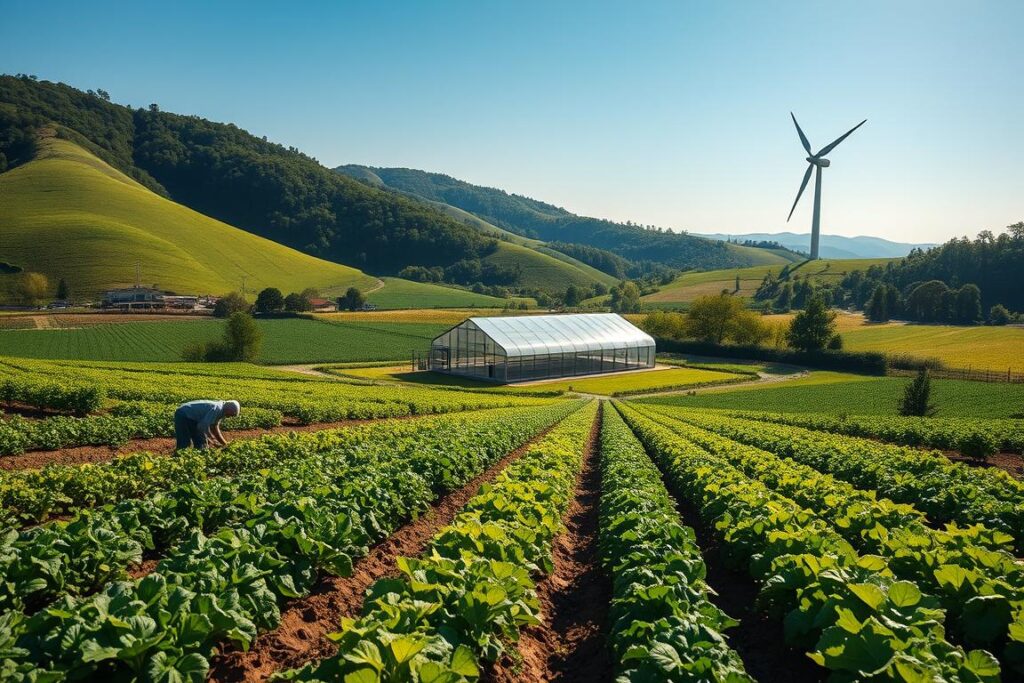
Sustainable farming practices are being promoted to reduce the environmental impact of agriculture. Techniques such as crop rotation, organic farming, and conservation agriculture are being adopted to improve soil health and reduce water usage.
Investment in Agricultural Technology
Investment in agricultural technology is vital for improving crop yields and resilience. Technologies such as precision farming, drought-resistant crops, and mobile applications for farmers are being introduced to support the agricultural community.
Government Policies for Adaptation
The government is implementing policies to support climate-resilient agriculture. These include providing subsidies for climate-resilient farming practices, improving irrigation infrastructure, and offering training programs for farmers.
| Adaptation Strategy | Description | Benefits |
|---|---|---|
| Sustainable Farming | Practices like crop rotation and organic farming | Improved soil health, reduced water usage |
| Agricultural Technology | Precision farming, drought-resistant crops | Improved crop yields, enhanced resilience |
| Government Policies | Subsidies, irrigation infrastructure, training | Support for climate-resilient agriculture, improved farmer livelihoods |
Role of International Aid and Cooperation
Pakistan’s agricultural vulnerability to climate change necessitates significant international cooperation and aid to ensure food security. The country’s exposure to climate-related disasters, such as floods, has devastating impacts on its agricultural productivity.
Bilateral and Multilateral Support
International aid comes in various forms, including bilateral and multilateral support. Organizations like the World Bank and the United Nations provide crucial funding and technical assistance to help Pakistan adapt to climate change.
Climate Finance for Agriculture
Climate finance is critical for supporting agricultural projects that enhance resilience to climate change. Pakistan has received significant funding to implement climate-resilient agricultural practices.
NGO Contributions and Community Programs
Non-Governmental Organizations (NGOs) play a vital role in implementing community-based programs that address the impacts of climate change on agriculture. These programs often focus on sustainable farming practices and enhancing community resilience.
| Organization | Type of Support | Focus Area |
|---|---|---|
| World Bank | Financial and Technical | Climate-resilient agriculture |
| United Nations | Funding and Capacity Building | Sustainable farming practices |
| Local NGOs | Community Programs | Enhancing community resilience |
The Importance of Research and Education
Research and education are pivotal in combating the effects of climate change on Pakistan’s agricultural sector. By enhancing our understanding of climate-resilient farming practices, we can better equip farmers to adapt to changing conditions.
Agricultural Research Institutions
Pakistan is home to several agricultural research institutions that play a crucial role in developing climate-resilient farming techniques. These institutions:
- Conduct research on crop and livestock management under varying climate conditions.
- Develop and disseminate climate-resilient agricultural practices.
- Provide training and resources to farmers.
Importance of Climate Education for Farmers
Educating farmers about climate change and its impacts is essential for promoting adaptation strategies. Climate education helps farmers:
- Understand climate forecasts and warnings.
- Adopt climate-resilient farming practices.
- Access resources and support for climate adaptation.
Collaboration with Global Research Entities
Collaborating with international research entities can enhance Pakistan’s capacity to address climate change. Such collaborations can:
- Share knowledge and best practices in climate-resilient agriculture.
- Access funding and resources for research and development.
- Foster innovation in agricultural technologies.
Success Stories in Combatting Climate Impacts
Pakistan’s agricultural sector is witnessing a transformation with innovative approaches to combat climate change. This shift is crucial in reducing crop losses and enhancing food security in the face of climate uncertainty.
Innovative Farming Practices
Farmers in Pakistan are adopting innovative farming techniques such as drip irrigation and crop rotation. These methods not only conserve water but also improve soil health, leading to better crop yields.
Local Community Initiatives
Local communities are playing a vital role in combating climate impacts through initiatives like community seed banks and climate-resilient agriculture training. These programs empower farmers with the knowledge and resources needed to adapt to climate change.
Government Programs with Positive Outcomes
Government initiatives, such as the provision of climate-resilient seeds and subsidies for sustainable farming practices, have shown positive outcomes. These programs are helping to mitigate the effects of climate change on agriculture and improve food security.
These success stories highlight the potential for effective climate adaptation in Pakistan’s agricultural sector, providing valuable lessons for future initiatives.
Future Projections and Challenges
Climate change is set to redefine the agricultural landscape in Pakistan, necessitating proactive measures. Rising temperatures and changing precipitation patterns are expected to significantly impact agricultural productivity.
Predicted Climate Scenarios for Pakistan
Models predict an increase in extreme weather events, including heatwaves and floods, which will severely test the resilience of Pakistan’s agricultural systems. The floods impact on crops and infrastructure will be particularly devastating if not mitigated.
Long-Term Impacts on Agriculture and Economy
The long-term effects of climate change on agriculture will have cascading impacts on the economy, potentially leading to food insecurity and economic instability. It is crucial to develop strategies to mitigate these impacts.
Need for Proactive Measures
To address these challenges, Pakistan must adopt proactive measures, including investing in climate-resilient agriculture and enhancing early warning systems for extreme weather events. This will help safeguard the future of Pakistan’s agriculture.
The Role of Technology in Mitigating Climate Risks
Pakistan’s agricultural sector is on the cusp of a technological transformation to combat climate risks. Technology is playing a vital role in enhancing climate-resilient farming practices.
Precision Agriculture and Data Use
Precision agriculture involves using advanced technology to optimize crop yields and reduce waste. Techniques include:
- Using drones for crop monitoring
- Implementing IoT devices for soil health monitoring
- Analyzing satellite data for weather forecasting
Mobile Applications for Farmers
Mobile applications are providing farmers with real-time information on best practices, weather updates, and market prices. This empowers them to make informed decisions.
Alternative Energy Resources in Agriculture
The adoption of alternative energy resources, such as solar-powered irrigation systems, is reducing reliance on fossil fuels and lowering carbon emissions.
| Technology | Benefit |
|---|---|
| Precision Agriculture | Optimized crop yields |
| Mobile Applications | Real-time information for farmers |
| Alternative Energy | Reduced carbon emissions |
Engaging Local Communities in Solutions
Engaging local communities is crucial in addressing the impacts of climate change on agriculture in Pakistan. By involving local populations, we can develop effective solutions that enhance food security and resilience.
Community-Led Initiatives
Community-led initiatives play a vital role in combating climate change. Grassroots movements and advocacy efforts empower local farmers to adopt sustainable practices, improving crop yields and reducing economic losses.
Local Knowledge and Resilience
Building resilience through local knowledge is essential. By leveraging traditional farming practices and integrating modern technology, communities can develop climate-resilient agriculture strategies, ensuring food security in the face of climate change Pakistan.
In conclusion, addressing climate change impacts on agriculture requires a collaborative approach, engaging local communities, and promoting sustainable practices. By working together, we can enhance food security and build a more resilient agricultural sector
you can watch this video https://www.youtube.com/watch?v=KvQD_mdiKMw