Table of Contents
Can a controlled environment change crop production in Pakistan? Greenhouse farming might be the answer. It improves yield and quality by controlling the climate.
This method is becoming popular worldwide, and Pakistan is joining in. It could boost crop production and lessen environmental harm. But, the costs of setting up and running a greenhouse are key to consider.
It’s vital to understand the economics of greenhouse farming. This knowledge helps farmers and investors make smart choices.
Key Takeaways
- Initial investment for greenhouse farming includes infrastructure and equipment costs.
- Operational costs comprise labor, energy, and maintenance expenses.
- Potential returns on investment are significant due to increased yield and quality.
- Government incentives and subsidies can support greenhouse farming initiatives.
- Technical expertise and training are crucial for successful greenhouse farming.
Understanding Greenhouse Farming
Greenhouse farming is changing agriculture in Pakistan. It creates a controlled space for growing crops. This method keeps crops safe from bad weather.
What is Greenhouse Farming?
Greenhouse farming is a new way to grow crops. It uses a special building made of clear materials like glass or plastic. This building helps control the temperature, humidity, and light.
Dr. Abdul Rehman, a famous agricultural scientist, says, “Greenhouse farming is the future of agriculture in Pakistan. It’s a sustainable way to solve food security problems.”
Benefits of Greenhouse Farming in Pakistan
Greenhouse farming in Pakistan has many benefits. Some key advantages are:
- It lets farmers grow crops all year, no matter the weather
- Crops grow better and stronger in a controlled environment
- It uses less water because of efficient irrigation
- Crops are less likely to get pests and diseases
A report by the Pakistan Agricultural Research Council shows. Greenhouse farming can make crops 30% more than traditional farming.
Types of Greenhouse Structures
There are many types of greenhouses, each with its own benefits and drawbacks. The most common ones are:
- Glass greenhouses let in lots of light and are very durable
- Plastic greenhouses are cheaper and easy to build
- Polycarbonate greenhouses offer a good balance of cost and performance
The right greenhouse depends on the climate, budget, and what crops you want to grow.
Site Selection and Preparation
Choosing the right spot for your greenhouse is key to a successful farm. In Pakistan, where the weather changes a lot, picking the right location is very important.
for more updates watch this video https://www.youtube.com/watch?v=FaXIQctPexg
Ideal Locations for Greenhouse Farming in Pakistan
Places with mild weather are best for greenhouses. Look for areas with no extreme temperatures, heavy rain, or strong winds. Punjab and Sindh are good because their weather can work well with greenhouses if managed right.
Soil Requirements and Preparation
The soil for greenhouses needs to drain well and be rich in nutrients. Soil preparation means checking its pH and nutrient levels and adding organic stuff if needed. This makes the soil better for growing plants.
Water Source Considerations
Having a steady water source is crucial for greenhouses since they use a lot of water. Farmers should think about the water’s quality and if it’s always available when picking a site.
| Factor | Ideal Condition | Importance Level |
|---|---|---|
| Climate | Moderate | High |
| Soil Type | Well-draining and fertile | High |
| Water Availability | Reliable and good quality | High |
Construction Materials and Techniques
Building a greenhouse in Pakistan needs careful material and technique choices. The right stuff makes the greenhouse last longer and work better. It also affects the cost.
Framing Options for Pakistani Climate
The frame must be strong and not rust easily. In Pakistan’s tough climate, galvanized steel and aluminum are top picks. They’re strong and don’t rust.
| Framing Material | Durability | Cost |
|---|---|---|
| Galvanized Steel | High | Moderate |
| Aluminum | High | Higher |
| Wood | Moderate | Lower |
Covering Materials Selection
The cover material is key for a good greenhouse. Polyethylene film and polycarbonate panels are favorites. They let sunlight in and keep cold out.
“The choice of covering material can affect the temperature and humidity inside the greenhouse, impacting crop growth.” – Expert in Greenhouse Farming
Construction Best Practices
To make the greenhouse last and work well, follow best practices. This means preparing the site right, framing accurately, and installing the cover carefully.
- Make sure the site is level and drains well.
- Choose high-quality materials that can handle local weather.
- Follow the maker’s guide for installing the cover.
Climate Control and Environmental Management
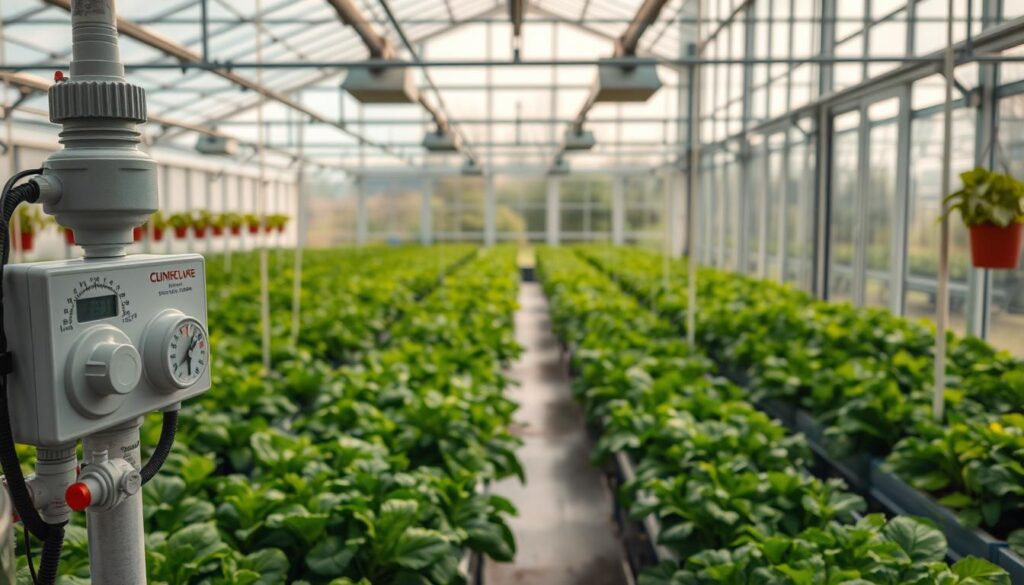
Climate control is key in greenhouse farming. It helps farmers manage temperature, humidity, and light. This is especially important in Pakistan, where the weather can be tough for crops.
Temperature Regulation in Pakistani Weather Conditions
Keeping the right temperature is crucial for crops to grow well. In Pakistan’s harsh weather, greenhouses use systems to keep temperatures between 20-30°C. This is perfect for most crops.
A study by the Pakistan Agricultural Research Council showed that controlling temperature can boost crop yields by up to 30%. This is done with heating and cooling systems like evaporative cooling and heating pads.
Humidity and Ventilation Systems
Humidity and ventilation systems are also vital. They help keep humidity levels right, preventing fungal diseases. This keeps the greenhouse healthy.
A good ventilation system also fights pests and diseases. This improves crop health. As a greenhouse expert said, “Proper ventilation is key to maintaining a healthy greenhouse environment.”
“Proper ventilation is key to maintaining a healthy greenhouse environment.” – Greenhouse Expert
Light Management Techniques
Light management is another important part of climate control. Shading, supplemental lighting, and LED grow lights help manage light. This ensures crops get the right amount of light for growth.
| Light Management Technique | Description | Benefits |
|---|---|---|
| Shading | Reducing light intensity using shade cloth or other materials | Prevents overheating, reduces stress on crops |
| Supplemental Lighting | Adding artificial light to supplement natural light | Increases photosynthesis, promotes healthy growth |
| LED Grow Lights | Using LED lights specifically designed for plant growth | Energy-efficient, promotes healthy growth and development |
Essential Equipment and Technology
Greenhouse farming needs advanced tools and tech to keep growing conditions perfect. This boosts crop yield and saves water and energy.
Irrigation Systems
Drip irrigation is key for greenhouses. It waters plants right at the roots, cutting down on waste and ensuring plants get the moisture they need.
Today’s irrigation systems can adjust water schedules based on soil moisture, temperature, and more. This precision farming method saves water and keeps crops healthy.
Heating and Cooling Equipment
Keeping the right temperature is essential for plant health in greenhouses. Heating and cooling gear helps manage temperature changes.
Boilers and heaters warm greenhouses in cold months. On the other hand, fans and evaporative coolers cool them down in hot weather.
Automation and Monitoring Tools
Automation and monitoring tools are changing greenhouse farming. They let farmers check and adjust things in real-time. These systems manage irrigation, heating, cooling, and more for the best growing conditions.
Sensors and IoT devices let farmers watch temperature, humidity, and soil conditions from anywhere. This means they can act fast and cut down on manual work.
By using these key tools and tech, greenhouse farmers in Pakistan can grow more and spend less. This makes them stronger in local and global markets.
Greenhouse Farming – Setup and Economics
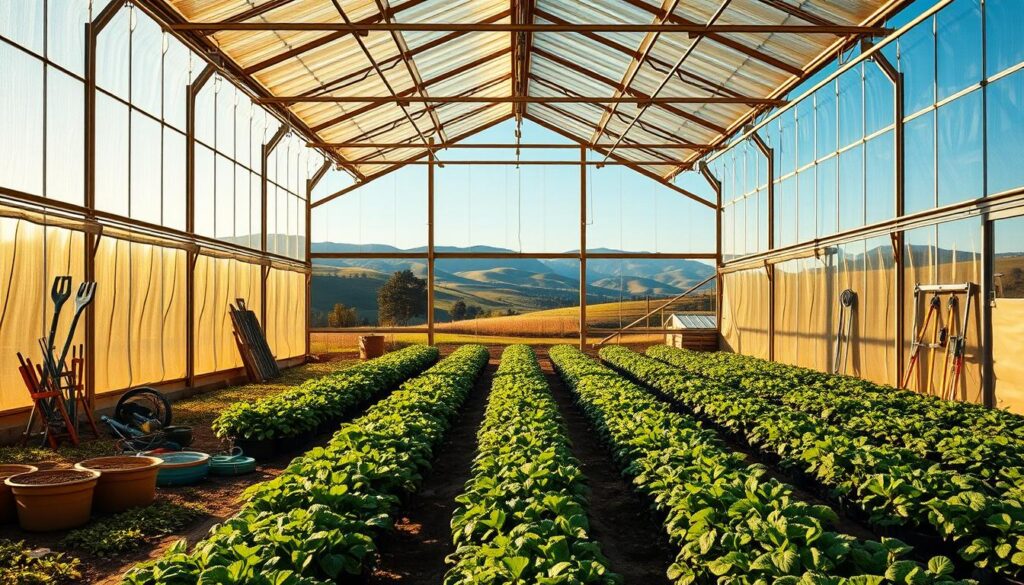
Greenhouse farming in Pakistan has its setup and economics. These are key to its success. Farmers need to know the financial side to make good choices and keep their farms going.
Initial Investment Requirements
The start-up costs for greenhouse farming are many. These include:
- Land preparation and infrastructure development
- Greenhouse structure and covering materials
- Irrigation and climate control systems
- Initial crop selection and planting materials
The cost of land preparation changes a lot. It depends on where the land is and its soil. In Pakistan, farmers might spend PKR 500,000 to PKR 1,000,000 per acre on this.
Operational Costs Breakdown
Running a greenhouse farm costs money for labor, inputs, and energy. Managing these costs well is key to staying profitable.
| Cost Component | Estimated Annual Cost (PKR) |
|---|---|
| Labor | 200,000 – 500,000 |
| Inputs (seeds, fertilizers, etc.) | 150,000 – 300,000 |
| Energy Costs | 100,000 – 200,000 |
Financial Planning and Budgeting
Good financial planning and budgeting are vital for greenhouse farming. It’s about making a detailed budget for all costs.
Return on Investment Timeline
The ROI for greenhouse farming depends on many things. These include the crops grown, market prices, and how well the farm runs. Usually, farmers can see a profit in 2-3 years.
Understanding the setup and economics of greenhouse farming helps farmers in Pakistan. It helps them face the challenges and seize the opportunities of this modern farming method.
Financing and Support Options in Pakistan
Pakistan offers many ways to help farmers with greenhouse farming. This support is key for those wanting to use new farming methods. It helps them grow more crops.
Government Subsidies and Programs
The Pakistani government has started several programs to help with greenhouse farming. They give money for setting up greenhouses and offer discounts on equipment. They also have training for farmers.
Key Government Initiatives:
- Financial help for setting up greenhouses
- Discounts on irrigation systems and other equipment
- Training and capacity-building programs for farmers
Agricultural Loans and Credit Facilities
Loans and credit are crucial for farmers to start. Banks in Pakistan have special loans for farming. For example, the Agricultural Development Bank of Pakistan offers loans with easy payment plans.
| Bank/Institution | Loan Amount | Interest Rate | Repayment Term |
|---|---|---|---|
| Agricultural Development Bank | Up to PKR 5 million | 6% – 8% | 5 years |
| Zarai Taraqiati Bank Limited | Up to PKR 3 million | 7% – 9% | 4 years |
NGO and International Support Initiatives
Many NGOs and international groups also help with greenhouse farming in Pakistan. They offer training, technical help, and sometimes money. Groups like the Food and Agriculture Organization (FAO) and the International Fund for Agricultural Development (IFAD) work hard to support sustainable farming.
With these options, farmers in Pakistan can make their greenhouse farming better. This leads to more crops and better profits.
Crop Selection and Market Analysis
Choosing the right crops is key to making money in greenhouse farming. The crops you pick can greatly affect how much money you make. It’s important to pick high-value crops that people want.
High-Value Crops for Pakistani Greenhouse Farming
Pakistan’s weather is great for growing many valuable crops. Some top choices include:
- Tomatoes
- Cucumbers
- Strawberries
- Herbs like basil and cilantro
- Cut flowers
These crops are popular both at home and for export.
Local and Export Market Opportunities
Knowing the local and export markets is key for success. At home, people want fresh food more and more. But, some crops can get even more money in export markets.
| Crop | Local Market Price (PKR/kg) | Export Market Price (USD/kg) |
|---|---|---|
| Tomatoes | 150 | 2.5 |
| Cucumbers | 120 | 3.0 |
| Strawberries | 300 | 4.0 |
Pricing Strategies and Profit Margins
Setting the right prices is crucial for making more money. Farmers need to think about costs, demand, and competition when pricing.
Building Sustainable Business Relationships
Having good relationships with buyers and suppliers is important for lasting success. This means:
- Keeping quality high
- Delivering on time
- Getting fair prices
By focusing on high-value crops and understanding the market, Pakistani greenhouse farmers can boost their profits and sustainability.
Conclusion
Greenhouse farming is a great chance for farmers and investors in Pakistan. It lets them grow crops in a controlled space, leading to better yields. Knowing how to set up and manage a greenhouse can help people make smart choices and earn money.
To succeed in greenhouse farming, you need to pick the right spot, build the greenhouse well, and control the climate. You also have to understand the costs and the market. This way, you can make sure your greenhouse is profitable.
In short, greenhouse farming in Pakistan can be both sustainable and profitable. By understanding the setup and economics, farmers and investors can face the challenges and seize the opportunities. This will help grow Pakistan’s agriculture.
FAQ
What is the initial investment required for setting up a greenhouse farm in Pakistan?
What are the benefits of using automation and monitoring tools in greenhouse farming?
How can I finance my greenhouse farming project in Pakistan?
What are the most profitable crops to grow in a greenhouse in Pakistan?
How can I manage climate-related risks in greenhouse farming?
What are the key factors to consider when selecting a site for a greenhouse farm?
How can I improve crop yields and quality in my greenhouse?
What are the advantages of using drip irrigation systems in greenhouse farming?
Read more information visit our website agriculture111.com