Are you having trouble growing healthy plants in your garden? Even with the best seeds and fertilizers, it’s tough. The answer might be hidden beneath the surface.
Understanding your garden’s soil quality is key to better garden productivity. By doing soil testing, you can find out what nutrients your soil lacks and its pH levels. These factors greatly impact how well plants grow.
With this knowledge, you can choose the right fertilizers and soil amendments. This leads to healthier plants and a more abundant harvest.
Key Takeaways
- Soil testing reveals nutrient deficiencies and pH levels affecting plant growth.
- Understanding soil quality is crucial for improving garden productivity.
- Informed decisions about fertilizers and amendments lead to healthier plants.
- Soil testing is a key step in achieving a thriving garden.
- Better soil management results in a more bountiful harvest.
Understanding the Foundation of Garden Success
Healthy soil is key to a successful garden. It affects how plants grow, absorb nutrients, and fight off diseases. Knowing the basics of soil health is vital for any gardener.
What Makes Soil the Cornerstone of Plant Health
Soil gives plants the nutrients, water, and support they need to grow. The health of the soil directly affects the health of the plants. Important factors include soil structure, nutrient levels, and beneficial microorganisms.
Key factors affecting soil health:
- Soil structure and texture
- Nutrient content and availability
- Presence of beneficial microorganisms
- pH levels
The Connection Between Soil Quality and Garden Productivity
Soil quality greatly affects garden productivity. Rich, nutrient-filled soil supports healthy plants, leading to better yields. Poor soil, on the other hand, can stunt growth, reduce yields, and make plants more vulnerable to pests and diseases.
Common Soil Types in Pakistan
Pakistan has many soil types, including sandy, clay, and loamy soils. Knowing your garden’s soil type is crucial for making the right soil management choices.
Common soil types in Pakistan:
- Sandy soils: Well-draining but often lacking in nutrients.
- Clay soils: Nutrient-rich but can be prone to waterlogging.
- Loamy soils: Balanced mix of sand, silt, and clay, ideal for most plants.
Soil Testing and Its Importance
Soil testing is a game-changer for gardeners in Pakistan. It reveals key information about soil health and nutrients. Knowing your soil’s makeup is crucial for a thriving garden.
What Soil Testing Reveals About Your Garden
Soil testing gives insights into nutrients, pH levels, and soil health. This info helps gardeners choose the right fertilizers and water practices.
Nutrient content analysis spots deficiencies that slow plant growth. Lack of nitrogen, phosphorus, or potassium can hurt crop yields.
How Testing Prevents Common Garden Failures
Poor soil conditions often cause garden failures. Testing can find issues like nutrient gaps, pH imbalances, and salinity problems. This lets gardeners fix these problems.
- Identifying nutrient deficiencies
- Correcting pH imbalances
- Managing salinity levels
Economic Benefits of Proper Soil Management
Proper soil management through testing saves money. It boosts crop yields, cuts waste, and reduces fertilizer use.
| Economic Benefit | Description | Potential Savings |
|---|---|---|
| Improved Crop Yields | Optimized soil conditions lead to healthier plants and higher productivity. | Up to 20% increase in yield |
| Reduced Fertilizer Use | Targeted application of fertilizers based on soil test results. | Up to 30% reduction in fertilizer costs |
| Minimized Soil Amendments | Corrective measures taken based on soil test recommendations. | Up to 25% reduction in amendment costs |
Frequency Recommendations for Pakistani Gardens
Soil testing frequency varies based on soil type, crop rotation, and climate. Pakistani gardeners should test soil at least once a year, before the growing season starts.
Annual testing keeps track of soil health changes. For intensive farming or gardening, more frequent tests might be needed.
Essential Soil Properties to Test
Knowing the key soil properties is key for a healthy garden in Pakistan. Soil tests give important info about what your soil is like. This lets gardeners make smart choices about how to care for their soil.
pH Levels and Their Impact on Plant Growth
The pH of your soil is very important for plants. It affects how well plants can use nutrients and how microbes work. Most plants do best in slightly acidic to neutral soil, with a pH between 6.0 and 7.0. Testing the pH helps gardeners see if they need to make any changes.
Nutrient Content Analysis
Soil health depends a lot on its nutrient content. Testing shows if there are too little or too much of certain nutrients. Nutrients are divided into macronutrients, secondary nutrients, and micronutrients, each playing a special role in plant growth.
Macronutrients: N-P-K
Macronutrients like nitrogen (N), phosphorus (P), and potassium (K) are crucial for plants. Nitrogen helps leaves grow, phosphorus is good for roots and flowers, and potassium keeps plants healthy.
Secondary Nutrients: Calcium, Magnesium, Sulfur
Secondary nutrients like calcium, magnesium, and sulfur are also important. Calcium helps with cell walls, magnesium is key for photosynthesis, and sulfur boosts disease resistance.
Micronutrients: Iron, Zinc, Manganese
Micronutrients like iron, zinc, and manganese are needed in smaller amounts but are still vital. Iron helps make chlorophyll, zinc is important for enzymes, and manganese aids in photosynthesis.
| Nutrient | Function | Deficiency Symptoms |
|---|---|---|
| Nitrogen | Promotes leaf development | Yellowing leaves |
| Phosphorus | Supports root and flower development | Purple or red leaves |
| Potassium | Helps with overall plant health | Weakened stems |
Soil Texture and Structure Assessment
Soil texture and structure are very important. They affect how well the soil holds water, drains, and supports roots. Testing shows what kind of texture and structure your soil has, which can be influenced by organic matter.
Organic Matter Content
Organic matter makes soil better for plants. It improves fertility, structure, and health. Testing for organic matter shows how well your soil can support plant growth.
Salinity and Drainage Considerations
Soil salinity and drainage are key for plants. Too much salt can harm plants, and poor drainage can make the soil waterlogged. Testing helps find these problems so gardeners can fix them.
How to Collect Soil Samples Properly
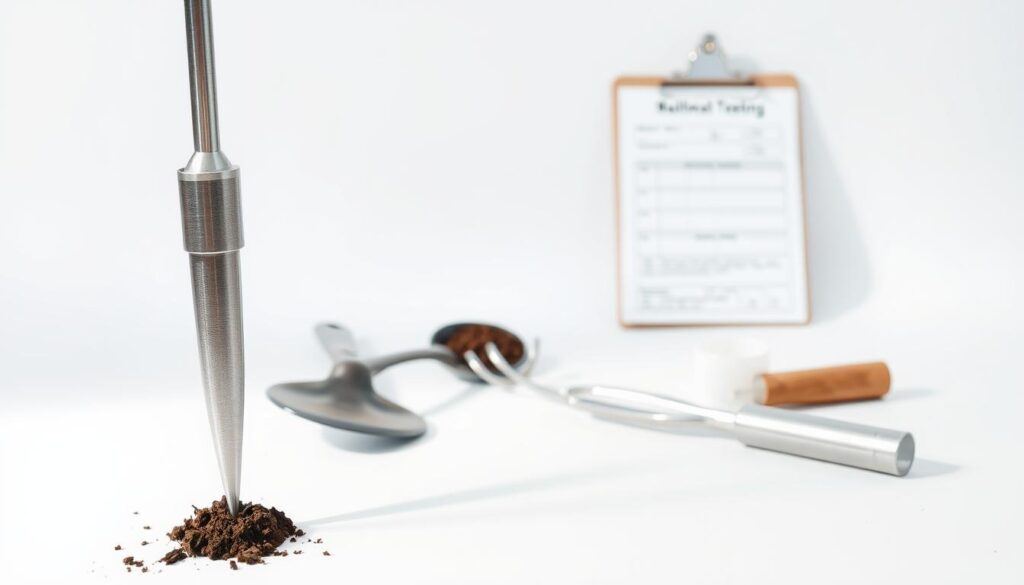
To get the most out of your soil test, you need to collect samples correctly. Soil sampling is a straightforward process. When done right, it provides valuable insights into your soil’s health and fertility.
Best Time of Year for Soil Testing in Pakistan
In Pakistan, the best time for soil testing is during the dry season. This is usually from October to December or from March to May. Avoid testing during the wet season as it can lead to inaccurate results due to leaching of nutrients.
Step-by-Step Sampling Technique
Follow these steps for effective soil sampling:
- Choose a representative area of your garden.
- Clear the surface of debris and vegetation.
- Dig a hole 6-8 inches deep.
- Take a slice of soil from the side of the hole.
- Repeat this process in multiple areas of your garden.
- Mix the collected soil samples together.
Tools Needed for Effective Sampling
You’ll need a few simple tools for soil sampling:
- A soil probe or auger.
- A trowel or spade.
- A clean bucket for mixing samples.
- Plastic bags or containers for storing samples.
Common Sampling Mistakes to Avoid
Common mistakes include sampling too deeply, not sampling enough areas, and contaminating samples with foreign materials. Avoid these mistakes to ensure accurate test results.
Proper Sample Storage and Handling
Store your mixed soil sample in a clean, dry container. Label it clearly with your name, date, and sample location. Keep the sample away from direct sunlight and moisture.
DIY Soil Testing Methods
In Pakistan, DIY soil testing is a budget-friendly way to check your soil’s health. It helps gardeners make smart choices about their soil without spending a lot.
Home Test Kits Available in Pakistan
Many home test kits are found in Pakistan, designed for local gardeners. They check pH levels and key nutrients. Popular brands give tips for working with local soil.
Simple Visual and Touch Tests
Gardeners can do simple tests to see their soil’s texture and structure. For example, a simple squeeze test shows soil type. Sandy soils are gritty, while clay soils are smooth.
DIY pH Testing Techniques
DIY pH testing uses litmus paper or pH testing kits. These methods quickly show soil pH. This helps gardeners adjust their soil.
Limitations of DIY Testing
Though DIY testing is easy, it has its limits. It might not always be accurate. These tests don’t give a full picture of soil health.
When to Upgrade to Professional Testing
If you face ongoing soil problems or plan big gardening projects, consider professional soil testing. It offers precise and detailed results.
Professional Soil Testing Services in Pakistan
In Pakistan, gardeners know that soil testing is key to a healthy garden. Now, they can choose from many services to manage their soil well.
Government Agricultural Labs and Services
Government labs are important for soil testing. They use the latest tech and have experts to check soil samples and give detailed reports.
The Soil and Water Testing Laboratory in Lahore is a great example. Dr. Muhammad Ashraf, a soil scientist, says, “Government labs make soil testing affordable and accessible for farmers and gardeners.”
“Soil testing is not just about analyzing soil; it’s about understanding the foundation of our agricultural productivity.” – Dr. Muhammad Ashraf
Private Testing Facilities
Private labs are also big in Pakistan’s soil testing world. They do everything from simple pH tests to detailed nutrient checks.
University Extension Services
Universities in Pakistan also offer soil testing through their extension services. These services are led by soil science experts, giving valuable insights into soil health.
Cost Comparison and What to Expect
Soil testing costs differ by provider. Here’s a look at the prices:
| Service Provider | Basic Test Cost | Comprehensive Test Cost |
|---|---|---|
| Government Labs | PKR 500 | PKR 2,000 |
| Private Facilities | PKR 1,000 | PKR 5,000 |
| University Services | PKR 800 | PKR 3,500 |
Turnaround Times and Seasonal Considerations
How long it takes to get soil test results varies. Government labs usually take 7-10 days. Private labs can do it in 3-5 days. University services might take up to two weeks.
Knowing these details helps gardeners plan their soil testing and care better.
Interpreting Your Soil Test Results
Soil test results are key to unlocking your garden’s full potential in Pakistan’s diverse agricultural landscape. After sending your soil samples to a lab, understanding the results is crucial. It helps you make informed decisions about your garden’s care.
Understanding Lab Reports
Lab reports can be complex but they give detailed info about your soil’s pH levels, nutrient content, and more. Look for sections on nutrient content, like nitrogen, phosphorus, and potassium levels. These are vital for plant growth.
Key Indicators of Soil Health
Several key indicators in your soil test results will give you insights into your soil’s health. These include:
- pH levels
- Nutrient content (NPK)
- Organic matter percentage
- Soil texture and structure
Regional Soil Benchmarks for Pakistani Gardens
Understanding regional soil benchmarks is essential for comparing your soil’s health against typical conditions in your area. For instance, soils in different provinces of Pakistan may have varying levels of salinity or nutrient content.
| Region | Typical pH Range | Nutrient Content |
|---|---|---|
| Punjab | 7.0 – 8.0 | Moderate NPK |
| Sindh | 7.5 – 8.5 | Low Nitrogen, High Phosphorus |
| Khyber Pakhtunkhwa | 6.5 – 7.5 | High Organic Matter |
Tracking Changes Over Time
Regular soil testing allows you to track changes in your soil’s health over time. By comparing your results year after year, you can see the impact of your gardening practices. This helps you make necessary adjustments.
When to Seek Expert Consultation
If you’re unsure about how to interpret your soil test results or need personalized advice, consider consulting with a soil expert or agronomist. They can provide tailored guidance based on your specific soil conditions and gardening goals.
Addressing Common Soil Issues in Pakistani Gardens
Soil quality is key in Pakistani gardening. Many gardeners face pH imbalances, nutrient deficiencies, and salinity. These problems hurt plant health and growth, making it crucial to fix them.
Correcting pH Imbalances
Soil pH is vital for nutrient availability and microbial activity. pH imbalances can cause plants to grow poorly and yield less.
Raising pH in Acidic Soils
To fix acidic soils, gardeners use lime. The lime needed varies based on soil type and pH level. For example, a soil test might show a pH of 5.5, needing lime to reach a better range for plants.
Lowering pH in Alkaline Soils
For alkaline soils, elemental sulfur or aluminum sulfate can lower pH. The choice between these depends on soil type and desired change rate.
Improving Nutrient Deficiencies
Nutrient deficiencies limit plant growth. Soil nutrient tests help find these, allowing for targeted fixes.
Organic Amendment Options
Organic amendments like compost, manure, and green manure boost soil fertility. They release nutrients slowly, helping plants grow steadily.
Chemical Fertilizer Approaches
Chemical fertilizers offer quick fixes but must be used carefully to avoid over-fertilizing. A balanced fertilizer (e.g., NPK 10-10-10) is often suggested for general use.
Managing Salinity Problems
Soil salinity is a big problem in some Pakistani areas, especially where irrigation water is salty. Managing it means leaching salts and using plants that tolerate salt.
Leaching Techniques
Leaching involves using extra water to flush out salts. This method needs careful monitoring to avoid waterlogging.
Salt-Tolerant Plants for Pakistani Gardens
Choosing salt-tolerant plants is a smart way to handle salinity. Plants like Atriplex and certain grasses can handle salty conditions better.
Enhancing Soil Structure and Drainage
Soil structure and drainage are key for root health and plant performance. Improving these can involve different techniques based on soil type.
Techniques for Clay Soils
For clay soils, adding organic matter can improve structure and drainage. Raised beds can also help by reducing compaction.
Solutions for Sandy Soils
Sandy soils benefit from organic amendments that increase water-holding capacity. Mulching is another effective way to keep moisture in.
Working with Loamy Soils
Loamy soils are generally well-balanced but can still benefit from organic matter additions. This helps maintain fertility and structure.
Regional Solutions for Different Pakistani Provinces
Different provinces in Pakistan face unique soil challenges. For example, soils in Punjab may need different management than those in Sindh or Balochistan.
| Province | Common Soil Issue | Recommended Solution |
|---|---|---|
| Punjab | Nutrient deficiencies | Balanced fertilizers, organic amendments |
| Sindh | Salinity | Leaching, salt-tolerant crops |
| Balochistan | Drainage issues | Improved irrigation management, raised beds |
Understanding and addressing these regional soil issues can improve soil health. This leads to more productive and sustainable gardens in Pakistan.
Conclusion: Cultivating Success Through Soil Knowledge
Understanding soil is key to a successful garden. By testing and analyzing soil, gardeners in Pakistan can unlock their garden’s full potential. This knowledge helps gardeners make better decisions about soil care, leading to healthier plants and more yields.
In this article, we’ve looked at why soil testing is important. We’ve also covered how to collect and analyze soil samples, and how to fix common soil problems. By using these tips, gardeners can overcome obstacles and achieve success. Good soil management is essential for a garden that thrives and brings joy.
As you care for your garden, remember that soil knowledge is powerful. By staying informed and adjusting to your soil’s needs, you can make your garden flourish. With the right approach, you’ll enjoy a rich harvest and a beautiful outdoor space that improves your life.